The snow had to move. That was the awkward detail inside a Dior holiday window at Saks Fifth Avenue in 2023. A miniature Statue of Liberty held a handbag, surrounded by artificial snowfall. If the flakes piled up on the figure, the illusion would collapse into a housekeeping problem. BluEdge’s job included engineering the airflow so the snow kept swirling. A beautiful drawing had become a question about where air goes.
- Two connected businesses: brand production and business technology.
- Actual output: retail installations, campaign content, 3D models, and managed print operations.
- The useful lesson: test the troublesome detail before you multiply it.
That little snowstorm explains an otherwise puzzling company. BluEdge produces window displays, packaging mockups, large-format graphics, CGI, and video. It also sells equipment and manages printers and documents. Its customers include creative agencies, architects, retailers, universities, and healthcare organizations. The common requirement is practical: make the finished thing behave the way the plan says it should.
The blueprint was only the beginning
In 1898, George W. Earle bought a struggling blueprinting operation in New York. Edwin J. Bernstein joined to handle administration and bookkeeping, then eventually bought Earle’s interest. The business that became National Reprographics grew alongside clients who needed technical drawings reproduced. Its history describes employees learning the operation from the ground up, including printing, checking, trimming, and shipping.
The work expanded as the tools changed. Buying Merit Studios in 1978 added photo enlargement for murals, backdrops, posters, and displays. In 1982, a joint venture with client Gibbs & Hill introduced CAD services. Seen together, those moves suggest a practical habit: follow the customer into the next production problem, even when the new equipment looks nothing like the old equipment.
A name can become a narrow doorway
By 2016, the company had a branding problem. Its color operation had a separate identity, Rethink Color. Management wanted another brand for 3D printing. Consultants Bernhardt Fudyma Design Group researched the business and spoke with clients. Their recommendation reversed the brief: bring the services together and rename the whole company.
“Internally we felt the company was getting too siloed.”
Doug Magid, president, in a 2016 IRgA interview
The team rejected the first 15 proposed names. BluEdge arrived in a later round, connecting blueprint blue with the idea of an edge. The decision mattered because a reputation for one service could obscure the others. The company also introduced services and improved its website. A broader promise needed something concrete behind it.
Twelve originals. Five hundred jobs to finish.
Consider Instagram’s “Yours to Make” campaign. Agency Johannes Leonardo gave BluEdge 12 base creative assets. BluEdge reports producing and securing approval for more than 500 deliverables in five weeks. Still images needed retouching, extensions, shading, and color balancing. Video brought typography, encoding, frame-rate translation, and mastering. Each version had to preserve the campaign while satisfying its destination.
5 weeks of production and approvals
The campaign reached 114 locations in eight U.S. cities and 46 locations in the UK. Those are BluEdge’s reported deployment figures, rather than a measure of sales impact. They reveal what the company supplied: the painstaking conversion of a creative concept into many usable pieces. BluEdge says the agency subsequently invited it onto another large project.
The office printer belongs in this story
The less photogenic business involves ordinary working days. BluEdge says its on-site managed-print associates serve more than 150 clients across over 250 locations. They handle supplies, troubleshooting, production, and coordination with off-site facilities. Programs include monitoring and reviews. Standard supplies, maintenance, and training for BluEdge-provided equipment sit within a unit-rate cost structure.
BluStream, its web-to-print storefront, attacks a related nuisance: repeated ordering of approved materials. Templates, permissions, spending caps, and approval workflows give distributed teams some guardrails. Published setup fees start at $1,500 for Basic; Professional is $3,750 and Enterprise starts at $4,500. Monthly maintenance starts at $110. These are storefront fees, so a buyer should scope production and fulfillment separately.
BluBuild addresses public-project bidding with controlled documents, revision notifications, access records, and print ordering. The competitive argument across these services is fewer handoffs. A customer can combine software, equipment, support, and production. Six commercial locations and RMX Network partners extend delivery. This places BluEdge between print providers, fabrication shops, post-production studios, and managed-service firms.
Keeping that range of work together also depends on retaining knowledge. BluEdge says more than half of its managers, directors, and vice presidents in established business areas advanced internally. Its account of employee development emphasizes training and mentorship. For a client buying technical judgment, continuity in the people doing the work is a relevant distinction.
The sandwich still needs a retoucher
A May 2026 project account makes the judgment part unusually visible. Working with Walrus Advertising for a food-delivery brand, BluEdge helped prepare grilled-cheese imagery for bus shelters. The initial AI concept was rejected. Proportions looked unnatural; textures, lighting, and focus lacked consistency. A second supplied AI image still needed correction. The problem appeared before printing: the sandwich did not look convincing.
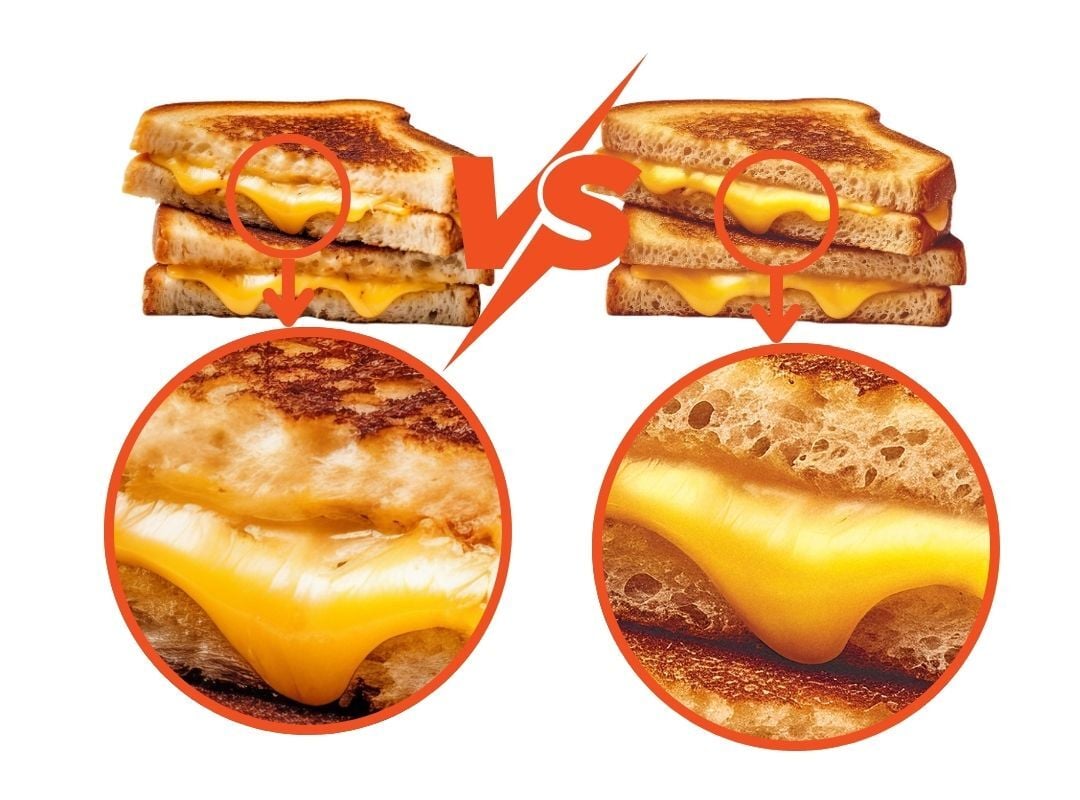
The team combined regeneration with retouching to correct structure, edges, materials, and transitions. Another 2026 case began with two handbag photographs and delivered multiple views plus model video in three business days. The interesting capability is knowing what requires correction. A fast first image has limited value when the finished asset cannot withstand a closer look.
Copy the test, then scale it
There is a useful purchasing lesson here. Bring a producer the final formats, installation conditions, approval requirements, and troublesome details early. Prototype the snowfall. Inspect the sandwich. Lock the template before inviting every branch to order. This approach earns its complexity when many outputs must agree. For a simple one-off print, a custom portal may add unnecessary work.
Material choices belong in that early conversation too. BluEdge describes using the mindful MATERIALS library, offering recycled paper stocks, and simplifying builds for reuse or recycling. Those practices give buyers specific options to ask about. The useful question is what can be changed in this particular job’s materials, construction, and eventual disposal.
For buyers, the connection is useful when responsibility might otherwise scatter across vendors. Ask who owns color approval, who checks the delivery specifications, and who can change the physical build after a prototype review. The point of combining capabilities is a clearer path from brief to delivery, with somebody accountable at each step.
BluEdge remains family-owned across four generations and describes long relationships as its goal. Its more persuasive argument lives in the work: a file prepared correctly, a printer kept running, a little snow moving past a miniature handbag. The idea gets its public moment because somebody has attended to the private mechanics.