In 2009, two parts of the Bureau of National Affairs were heading in different directions. Its printing business lost 22 percent of its revenue. Its software business grew 1.5 percent. Both belonged to the same specialist publisher. Both served a world swimming in documents. But one sold a way to put words on paper; the other helped people get something done.
- The asset: specialist knowledge for people whose decisions need to stand up to scrutiny.
- The shift: from publishing updates to supporting research, calculations and legal work.
- The lesson: follow the customer beyond the moment they finish reading.
Two years later, Bloomberg agreed to pay approximately $990 million for BNA. The price was $39.50 a share, in cash. This was a purchase of an established business, with employee shareholders, rather than a startup financing. The attraction described in the deal materials was a combination: BNA’s subject expertise and content, joined to Bloomberg’s data and technology.
The valuable part was the interpretation
David Lawrence founded BNA in 1929. Its full name, the Bureau of National Affairs, sounds rather like a government department. It was a publisher. Its territory was the complicated intersection of government and business, where a court decision or tax rule could become somebody else’s urgent problem.
There is an economic distinction here. A reader might be curious about a new regulation. A tax director has to work out whether it changes a calculation. A lawyer has to determine whether it changes advice already given. The underlying document may be public. Finding it, understanding its context and applying it take time. BNA built its business around those additional jobs.
That specialty survived changes in ownership and format. BNA began operating as an employee-owned business in 1947. Bloomberg acquired it in 2011. In September 2019, Bloomberg BNA became Bloomberg Industry Group. The new name acknowledged a business that had grown beyond periodicals into professional products.
“we’ve transformed from a periodical publisher to a product- and technology-focused company”
Josh Eastright · September 2019
The printing press blinked first
The earlier financial results make that transformation less abstract. In its 2009 filing, BNA reported a third consecutive annual decline in printing revenue. Commercial print volumes were under pressure; subscribers were also migrating toward electronic products. Software was growing during the same downturn. These results show pressure on a delivery business, rather than the disappearance of demand for specialist information.
The distinction matters to anyone selling expertise. Moving an article onto a screen changes distribution. Connecting that expertise to a calculation, a contract or a deadline changes the product. Bloomberg Industry Group’s subsequent expansion makes sense through that second lens.
Three doors into the working day
Start with Bloomberg Law. Its subscription platform brings together primary and secondary legal materials, reporting, expert analysis and research tools. A lawyer can investigate litigation, examine court dockets and find practical guidance. The platform competes with established research services such as Westlaw and LexisNexis. Its pitch includes flat, all-inclusive research pricing, which gives buyers a different question to ask from simply comparing document counts.
Bloomberg Tax addresses a related problem with a different output. Professionals need to turn tax law into supportable numbers. Its portfolio includes research, provision software, fixed asset tools and Workpapers. Workpapers combines data preparation and calculations with controls such as version tracking and signoffs. Research can appear inside the workflow, reducing the distance between finding a rule and using it.
Bloomberg Government serves professionals whose work depends on public policy. It supplies subscription news, information and analytics for government affairs. The common thread across the three businesses is a customer with a decision to make. The products differ because a legal matter, a tax provision and a policy brief require different kinds of work.
The next sale happens after the answer
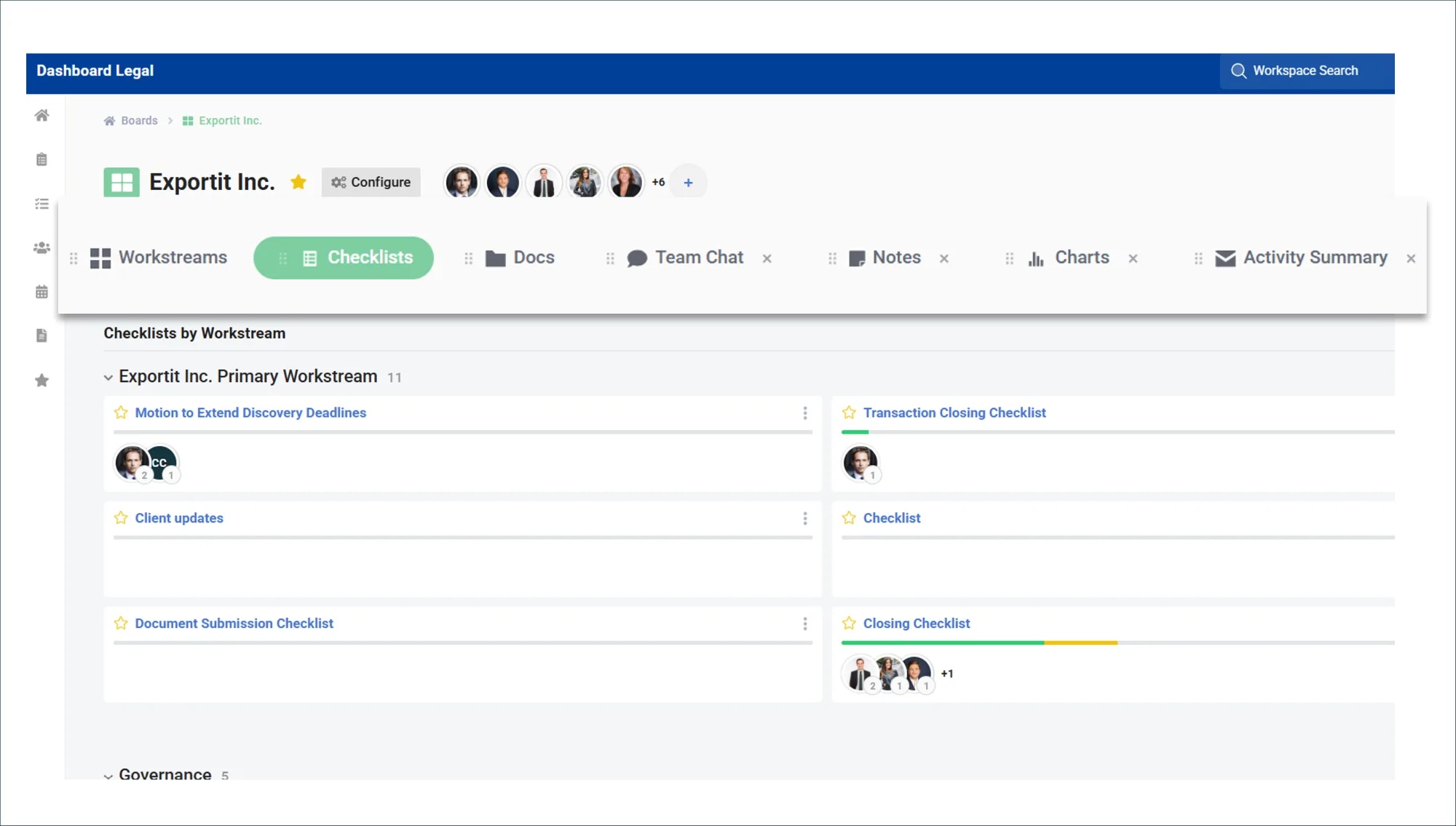
In April 2024, Bloomberg Industry Group acquired Dashboard Legal, a project management and collaboration product built for lawyers. It added task assignment, deadlines and shared visibility into matters, with integrations including Outlook, iManage and NetDocuments. Once a lawyer knows what needs doing, a team still has to organize who does it.
In June 2026, the company acquired Regology, adding AI-powered regulatory intelligence. The announcement cited customers dealing with increasing regulatory complexity. By October, Bloomberg Law and Bloomberg Regology were presenting connected capabilities for monitoring change, analyzing its implications and supporting the response.
Then came a particularly revealing announcement. On October 15, 2026, Bloomberg Law introduced a connector bringing docket information and litigation intelligence into Microsoft Copilot. Customers could access that material inside an AI tool they already used. Expertise could travel to another interface, rather than requiring every question to begin on Bloomberg’s own platform.
The people doing that work remain part of the story. The company promotes collaboration and professional development in its recruiting materials. Its newsroom also has a long union history. In 2022, employees planned a demonstration over wages and telework while management defended its offer. A business built on accumulated human expertise still has to negotiate the conditions under which that expertise is produced.
Copy the sequence, then test the fit
The practical lesson is an inference from this history: begin with a recurring professional problem, learn its details, then remove the steps between understanding and execution. It is a more demanding strategy than adding software to a publication. It requires knowledge of how customers calculate, review, assign and document their work.
For buyers, that suggests a concrete test. Bring one real matter, calculation or regulatory change to a demonstration. Check the coverage, trace the supporting material and see whether the integrations fit. Ask for a quote that distinguishes research access from separate workflow products. An occasional question may not justify a broad subscription. A recurring, consequential task offers a stronger reason to pay.
BNA’s history supplies a useful commercial question: what happens after the reader closes the article? For this company, that question has led from a specialist publishing business into an expanding set of professional tools.