The useful thing about a bad spreadsheet is that it rarely keeps its badness to itself. It invites phone calls, breeds duplicate versions, and turns last Tuesday's answer into this Tuesday's uncertainty. In multifamily housing, where a small change in rent, occupancy, or concessions can alter a property decision, that familiar grid of cells had become a surprisingly expensive place to hide the market.
Blerim Zeqiri knew the ritual from the inside. He began at Alliance Residential Company in 2005, while double-majoring at Arizona State University, and moved through revenue management, research, asset management, and acquisitions. Each role offered a different view of the same apartment economy. Operators needed to know what nearby properties were charging. Asset managers needed to compare performance. Acquisition teams needed a credible picture of a market before committing capital. Too often, the intelligence arrived through manual surveys and files that stopped being current the moment somebody attached them to an email.
The annoyance followed him long enough to become a company. In 2016, Zeqiri founded Radix in Scottsdale. He recruited two friends who were software engineers, Eugene Kobrinsky and Alex Viderman, to build a web-based business intelligence platform for multifamily. The original name carried its own tidy explanation: BI for business intelligence; radix, from Latin, for root or origin. A technical product was given a name suggesting that every good decision ought to be traced back to its source.
“Excel is not a database.”Blerim Zeqiri, on the limits of static market surveys
The apprenticeship was the product research
Founder biographies often compress the years before the founding into a line. Here, those years are the plot. Zeqiri did not encounter the problem as a consultant peering into an industry for a quarter. He watched the same information travel through several functions for more than a decade. The advantage was less a flash of inspiration than a detailed inventory of friction: the calls required to gather competing rents, the inconsistent entries, the hours spent formatting, the version-control tangle, and the delay between collecting a number and acting on it.
His early pitch was almost modest. Apartment operators should spend less time gathering data and more time using it. Radix's first flagship product, Benchmark, put competitive surveys into a live web environment. A market observation could keep living, accumulating context as newer data arrived. A team could compare unit types, properties, and submarkets without first performing spreadsheet archaeology.
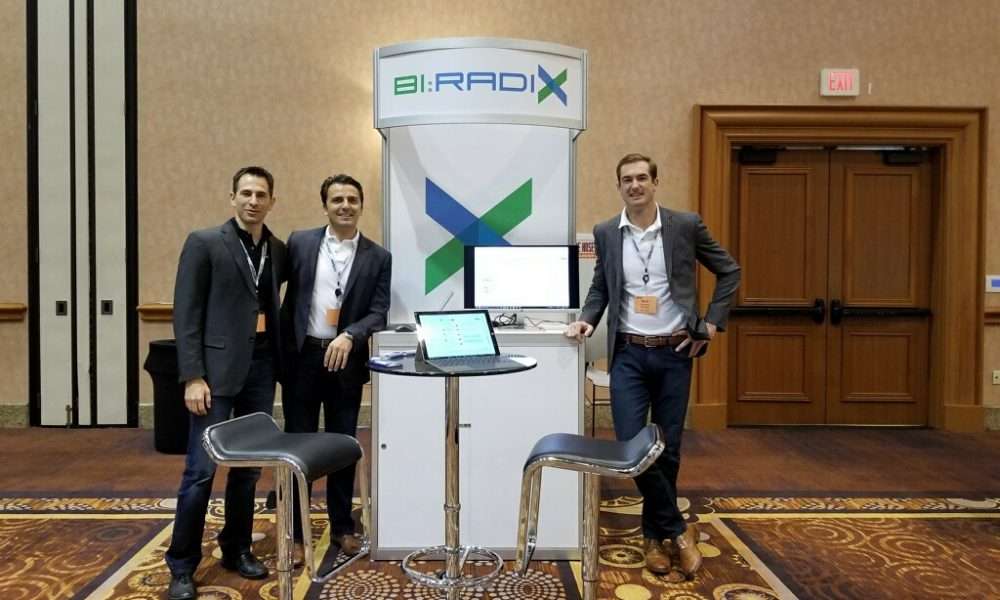
The adoption curve supplied the next clue. Benchmark reached one million indexed units in under a year. By 2019, it had passed two million and was used by more than 25 of the NMHC Top 50 apartment managers. Radix reported five million apartment homes in 2021. A year later, when Level Equity invested $11 million in a Series A, the platform held more than seven million active units across more than 270 markets.
Numbers at that scale can tempt a company to describe itself by volume. Zeqiri kept returning to decisions. The data mattered because it could tell an operator whether a concession was working, show how occupancy compared with nearby properties, or give an asset manager a faster read on a shifting submarket. The database was useful only when it shortened the distance between a fact and a choice.
The circle gets wider
Radix then began expanding around the apartment asset itself. Research added deeper market trends. Proforma pushed toward valuation. The 2024 acquisition of redIQ brought underwriting data into the system, connecting operational benchmarks to the investment process. Zeqiri described the goal as complete asset-lifecycle insight, from investment through disposition. Roughly 30 percent of multifamily transactions passed through redIQ at the time of the acquisition, and the platform had processed more than 500,000 rent rolls during 2023.
The progression is easier to understand as a sequence of questions. What is happening at competing properties? How is this market moving? What is this asset worth under different assumptions? What happens after the purchase? Each product moved the company one decision forward or one audience outward.
Benchmark launches and turns the weekly comp survey into a living data environment.
Research and Proforma extend the platform into market trends and asset valuation.
Radix acquires redIQ, adding underwriting and rent-roll intelligence.
RealRents brings verified listings and fuller price discovery to renters.
Then came the less obvious audience: the renter. In 2024, Radix launched a public resident portal offering access to property data, concessions, discounts, and availability. RealRents followed in 2025, designed to show the fuller cost of housing, including fees and deposits. A platform born to help industry professionals understand competitors was now asking what information an apartment shopper should see before making contact.
“Renters deserve access to real-time information.”Blerim Zeqiri, announcing the resident portal
That expansion reveals Zeqiri's larger thesis. Market transparency is not simply a consumer courtesy or a compliance task. It can improve how both sides behave. Renters can evaluate affordability before spending time on a property. Operators can receive better-qualified leads, standardize charges across a portfolio, and reduce the unpleasant surprise that corrodes trust at the leasing desk.
The base rent is only the opening line
Rental pricing has a peculiar theatrical quality. The number on the billboard gets top billing; fees and deposits wait in the wings. Zeqiri has become increasingly direct about the gap. In 2025, he argued that the first major landlords to embrace full transparency would earn brand loyalty. His comparison was Uber's advantage over the taxi industry: clarity can feel like a feature when opacity has long been ordinary.
The operational challenge is real. A large property portfolio can inherit fee names and rules through acquisitions, local practices, and one-off decisions. In 2026, Radix analyzed 1,408 properties and found 639 distinct fee types even after removing duplicate labels. Ten fee types represented 53 percent of charges. The remaining 629 made up the other 47 percent, a long tail of complexity with its own little administrative weather.
The long tail of apartment fees
Share of fees in Radix's 2026 analysis · 1,408 properties
The study offered a practical response before a philosophical one: inventory every fee, compare it with peers, label whether it is refundable, tie it to an actual cost, and check that it does not overlap another charge. This is vintage Zeqiri. Begin with the messy operational fact. Structure it. Make it comparable. Only then ask software to turn the pattern into intelligence.
It also shows how far the original spreadsheet problem has traveled. The first issue was stale competitive data. The present issue is fragmented pricing information scattered across property systems and consumer listings. Both fail for the same reason: the relevant truth exists, but not in a form that the person making the decision can readily use.
A root system, not a feature list
Radix now serves owners, operators, investors, lenders, brokers, and renters. It has an office in Kosovo, opened in 2018 to add management, engineering, and design talent. Its products span analytics, underwriting, and consumer search. The company is investing in artificial intelligence, but its durable advantage remains decidedly unmagical: years of domain knowledge attached to a large, structured data ecosystem.
Zeqiri's own route reinforces the point. He studied business management and political science, started as an intern, learned an industry through several jobs, and invited engineers into a problem he could explain from experience. He did not need to pretend the original workflow was glamorous. It was repetitive and error-prone, which made it valuable territory. Dull work is often where software finds the most honest demand.
His collaboration with industry veterans also folds the old career into the new company. Brad Cribbins, formerly a senior leader at Alliance, joined Radix as chairman in 2020. Zeqiri has described Cribbins as a forward-looking leader whose belief in data could accelerate the company. The connection is more than networking. It is institutional memory returning as governance.
There is still a tension inside the Radix project, and it is a productive one. Operators want intelligence that sharpens their competitive position. Renters want clarity that helps them compare offers. Investors want a defensible valuation. Regulators want disclosures they can evaluate. Zeqiri's wager is that these interests do not require separate realities. Better-structured data can let each participant see the market at the level they need.
The ambition is larger now, but the founder's method remains recognizable. Find the hours being wasted. Find the information trapped in the wrong format. Find the decision waiting on a trustworthy number. Then make the number easier to see. A spreadsheet started the story. A more transparent rental market is where Zeqiri wants it to lead.