A housing voucher pays part of the rent. A credit history describes part of a life. In the lawsuit against SafeRent Solutions, the awkward question was what happened when a screening system gave the second considerable weight and failed, the plaintiffs alleged, to account for the first. A report intended to reduce uncertainty had become a source of it.
- SafeRent supplies rental screening, identity checks and income verification.
- MyRental serves smaller landlords with per-applicant purchases.
- A 2024 settlement restricted scoring for voucher applicants, without an admission of wrongdoing.
A score meets a subsidy
Mary Louis and Monica Douglas, Black rental applicants with housing vouchers, challenged SafeRent’s scoring in 2022. Their complaint alleged that credit history and debts unrelated to tenancy disadvantaged Black and Hispanic applicants, while the algorithm overlooked the voucher’s contribution to paying rent. The dispute was about the relevance of information, as well as its accuracy.
The Justice Department intervened with a statement of interest. In July 2023, the court allowed the Fair Housing Act claims to proceed, holding that SafeRent was subject to the Act. That ruling permitted a case to continue; it did not establish discrimination. Still, it punctured a comfortable assumption: supplying the screening tool could put a company within the law’s reach.
The business behind the report
SafeRent occupies the space between an application and a signed lease. Its buyers are property managers, landlords and real estate agents. They want to know whether an applicant is who they claim to be, what relevant records exist, and whether the rent looks affordable. SafeRent assembles information and offers workflows for examining it.
There is a longer history here than the current enthusiasm for artificial intelligence suggests. The predecessor SafeRent business was formed in Colorado in October 1998, with Linda Bush among its founding members. It later passed through First American and CoreLogic. CoreLogic disclosed selling its remaining Rental Property Solutions business for $51.2 million in February 2021. The CFPB identifies Park Hill Holdings as SafeRent’s acquirer.
Under the software sits a consumer-reporting business. SafeRent resells information from Equifax, Experian and TransUnion, and says it maintains housing court and address information. Credit-bureau information is obtained when a client orders a screening report. That distinction matters: the company is bringing evidence together from different custodians, rather than possessing one all-knowing file.

Three prices, three different bundles
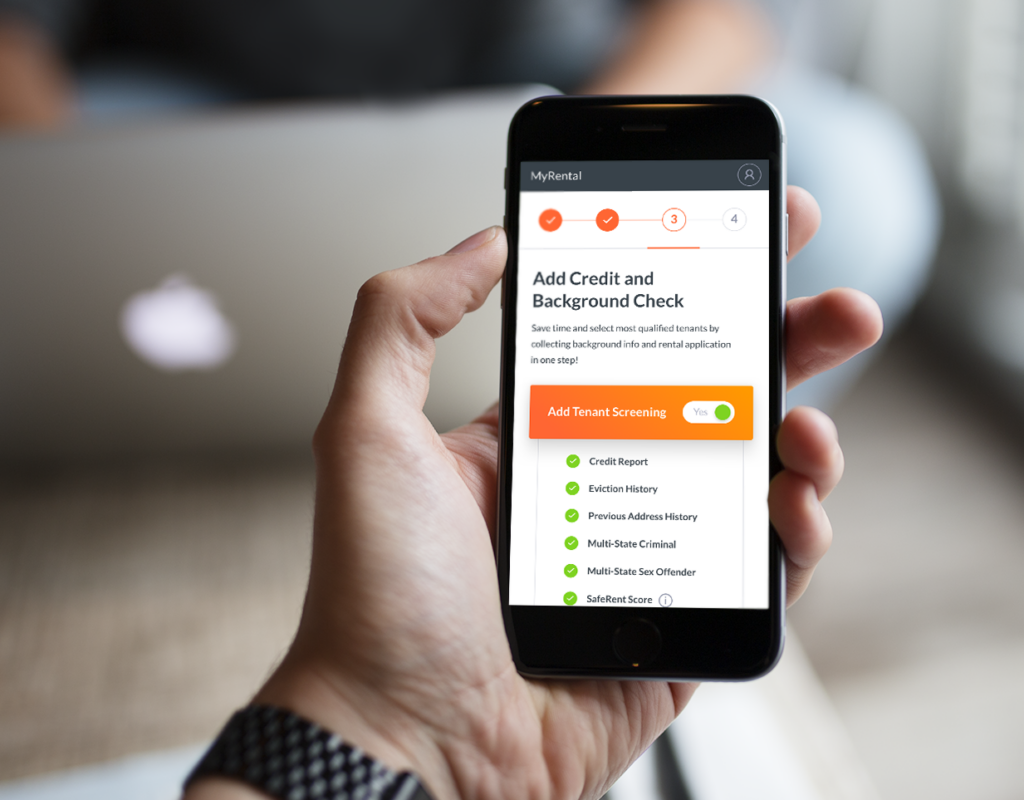
MyRental gives the independent owner a smaller front door into that business. Its published Basic package costs $24.99 per applicant and includes housing court data, address information and several background searches. Premium costs $38.99 and adds a credit report, a TU Rental Score and a renter-pay option. Signature costs $43.99 and adds Income Insights.
There are no sign-up or monthly fees; individual reports are also available. Court fees and surcharges can apply. Geography changes the contents: MyRental says criminal information is unavailable in Massachusetts, and some records are restricted elsewhere. The renter-pay option is unavailable in seven listed states. A package name is therefore the beginning of a purchasing decision, rather than its conclusion.
The pay stub loses its monopoly
Income verification offers a more concrete example of what the company can improve. SRS Income Connect lets managers configure a sequence of vendors. When the first lacks the necessary information, the workflow moves to the next. The useful idea is modest: a missing answer from one source need not end the inquiry.
Argyle’s customer case study describes SafeRent implementing Direct Connect Payroll in about six weeks. Applicants connect payroll accounts so verified income can flow into the report. The partner reports verification times falling from as many as four days to hours, and a 10% higher completion rate with customized workflows. These are case-study claims, rather than independent performance guarantees.
“Nearly 60% of our successful verifications come through SMS.”Tennelle Davis, SafeRent technical project manager, in Argyle’s case study
The phone becomes part of the process design. That is a detail operators can copy: put the invitation where applicants will complete it, and reduce unnecessary document handling. AppFolio’s integration places SafeRent screening and verification requests inside the property-management system. Convenience comes from removing handoffs, not merely making another dashboard attractive.
An identity check comes before the paperwork
SafeRent ID Trust tackles an earlier question. Its three stages are identity validation, synthetic verification and applicant authentication. The company describes flags involving Social Security numbers, phone trust, shared addresses and other signals. A potential fraud risk can pause the process before a screening report is ordered, leaving the operator to decide what follows.
- 01 Validate identity
- 02 Check synthetic signals
- 03 Authenticate applicant
Potential warning → operator review before ordering the report
Within a crowded market that includes RentGrow, RealPage screening and TransUnion’s landlord tools, SafeRent’s practical proposition is the combination: configurable checks, multiple verification sources, a self-service channel and integration with existing software. Whether it fits a property depends on the records available, the workflow required and the operator’s ability to review what returns.
The cost of a tidy answer
The Louis settlement received final approval in November 2024. Its $2.275 million total comprised a $1.175 million fund for claimants, administration and representative awards, plus up to $1.1 million for legal fees and costs. SafeRent admitted no wrongdoing. It told the Associated Press that litigation was costly and time-consuming while maintaining that its scores complied with applicable law.
The agreement imposed five-year practice changes. It removes scores and score-based recommendations from specified affordable-model reports, and requires certification that market or no-credit applicants are not voucher recipients before supplying those scores. Replacement scoring faces validation conditions. Underlying information can still be supplied. The distinction between evidence and recommendation was written into the product.
For renters, the CFPB identifies routes to a free annual SafeRent file, a freeze and disputes over inaccurate information. For operators, the lesson is to examine both the evidence and the rule used to interpret it. A workflow can collect information efficiently. The important question remains whether that information answers the question the landlord actually needs to ask.