A honeymoon is a curious place to write a business plan. There are usually more persuasive things to do. Blake Geffen and her husband, Wayne, were in the Maldives, working through an idea about handbags and jewelry. The idea had followed them out of their wedding preparations and into married life. She wanted a way to borrow the accessories she loved. They began planning a company that would let other people do the same.
They still joke about the bellinis they skipped. It is an appealing origin story, partly because it contains such a specific exchange: a little holiday idleness surrendered for a great deal of future work. Geffen had spotted a frustration in her own shopping. She was willing to spend her honeymoon asking whether it could support a business.
A honeymoon with homework
The trouble began with the number of occasions a wedding seems capable of generating. A bridal shower, a bachelorette party, the wedding weekend, the honeymoon: each suggested another look, and each look suggested accessories. In 2017, Geffen wanted high-end pieces without purchasing an entire supporting collection. Her search did not produce the borrowing experience she wanted. Wayne encouraged her to build it.
She had spent years close to the business of making people want things. A Boston University graduate, she worked in fashion public relations, including on LaForce’s fashion and retail team. Before that, she had held two retail jobs in high school. The shop floor and the publicity office gave her different views of the same encounter: a customer deciding whether something belonged in her life.
On returning from the honeymoon, she continued working in PR while developing Vivrelle in the hours around it. Weekends meant investor pitches, conversations with vendors and the search for people who could help build a website or market the idea. The leisure activity had acquired a schedule. In September 2018, Blake and Wayne launched the company.
Geffen’s goal for month one. She later recalled reaching it in the first hour.
The target was modest enough to picture as a roomful of people. The response gave the founders a more demanding problem: how to deliver the experience they had persuaded those people to try. A waiting list is encouraging. It is also a list of promises.
The first package had other ideas
One of the earliest promises left the office looking rather rumpled. When the first order came through, the team scrambled despite its preparations. They had forgotten to print the shipping label on sticker paper. Tape did its awkward best. The package went out with a crinkled label, an unfortunate introduction for a company devoted to beautiful accessories.
Geffen and the team called the member after dropping the parcel at the post office. They explained that this would not be the normal standard. The customer became a long-term member and a friend. Geffen kept the episode as a lesson in responding to mistakes. There would be other hiccups; what mattered was the decision immediately after one.
“Treat others the way you want to be treated.”
Blake Geffen, on her guiding principle
That familiar instruction becomes surprisingly exact in a subscription business. The member is coming back next month. There will be another request, another choice, another chance to make the exchange feel easy. The work continues after the parcel arrives.
Geffen described Instagram as a working part of that service. Members could ask questions, request items and respond to new-arrival stories through direct messages. She also talked about handwritten notes and emails thanking the team. The shared closet had a conversational life around it. Someone was listening when a member wanted a particular piece.

A closet with somewhere to sit
The physical business grew through spaces that would be familiar to many founders: co-working accommodation, then a small office and showroom. Geffen remembered the move into a 1,000-square-foot space as a moment when the company felt established. Members supplied the next instruction. They liked coming in, trying pieces and spending time with the team.
That preference changed the shape of the business. A website can show a handbag from several angles. A visit lets a member put it on her shoulder, compare it with another and ask an actual person what they think. The founders had created a digital route to the closet; customers wanted to walk through its door.
In 2022, Vivrelle opened a 14,000-square-foot New York showroom with a bar and lounge alongside the accessories. Geffen described it as a more immersive expression of the brand. The furniture made a statement of its own. A place to sit suggests that choosing need not be hurried.
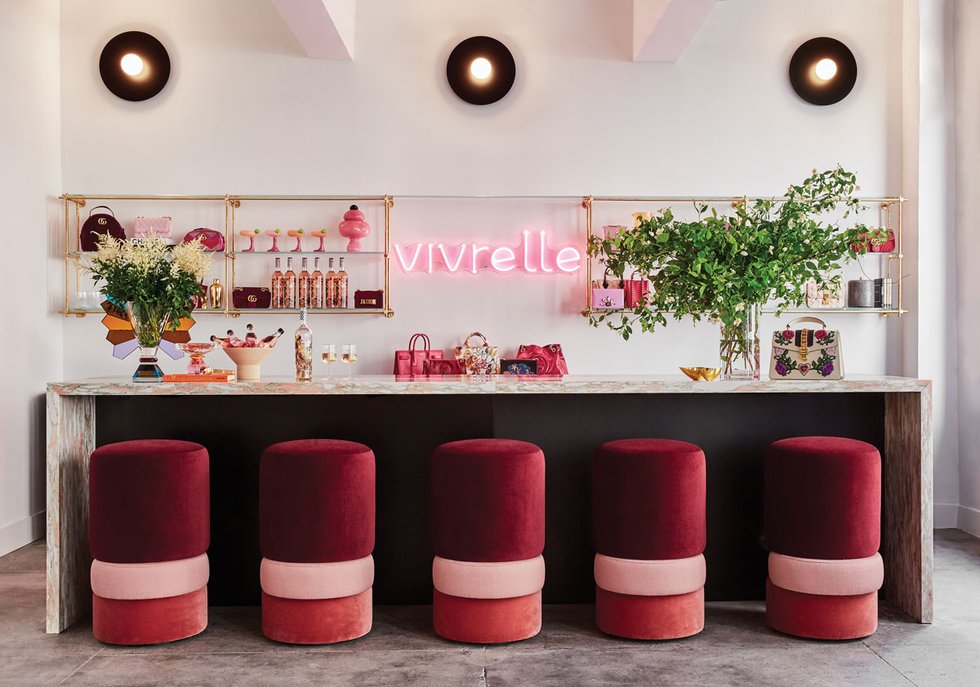
Members also influenced the contents. Their feedback helped steer Geffen toward statement pieces, vintage finds and collaborations. She has described the difficulty of growing quickly while keeping inventory and personal service at the level early members expected. More customers require more choices, more coordination and technology that can keep up. The pleasant visit rests on a fairly exacting operation.
The company her clients would have hired
As a publicist, Geffen had worked with founders and CEOs she admired. Becoming one placed her on the other side of those conversations. She wanted to be an approachable, motivating leader herself. The brand she now explained was also the business she had to run.
Outside investors joined that project. Vivrelle announced a $26 million Series A in April 2021, led by Origin Ventures. A $35 million Series B followed in November 2022, led by 3L Capital. Lily Collins, Nina Dobrev and Morgan Stewart McGraw participated alongside the investment firms. Their names gave a fashion company an appropriately recognizable guest list.
In June 2025, Vivrelle announced $62 million in Series C funding from Protagonist, with plans to expand its assortment, showroom presence and technology. Geffen’s responsibilities now extended far beyond choosing the next desirable accessory. Money could help purchase inventory and build systems. The founder still had to decide how the enlarged service should feel.
Her relationship with the investor also became operational. She has credited Protagonist’s Harry Hurst with hands-on help rethinking the company’s capital strategy. In 2026, Inc. included her in its Female Founders 500, recognizing the financing and fashion retailer partnerships. The publicist had become the person a publicist might be asked to introduce.
Teaching the closet to answer back
One answer to the growing assortment was Ella AI. Launched with REVOLVE and FWRD, the styling tool connected Vivrelle’s borrowable accessories with clothing available to buy. A member could describe an occasion, a trip or a preference and receive suggestions across the participating inventories.
Geffen said the project had taken more than a year from idea to launch, developing through earlier styling features. Her ambition was practical: help members assemble everyday outfits and special-occasion looks without so much guesswork. The technology returned to her original wedding problem. A lovely accessory still had to work with the rest of the outfit.
The conversation could now begin with a request rather than a product page. Geffen described a service intended to learn preferences through use and make suggestions more personal over time. The promise was recognizable to anyone who has asked a trusted stylist for help. Delivering that familiarity to more members became another part of her job.
The other evening shift
At home, Geffen has three children and another set of preferences to manage. She has spoken about patience and positivity as lessons parenting brought into her leadership. The way she responds to people, she believes, affects the atmosphere around them. A crowded household supplies regular practice.
For Geffen, the connection is in how she treats the people around her. She has described taking a step back in chaotic moments and trying to remain patient. Her children were teaching her while she was teaching them. Leading a team gave those lessons another setting, with different requests arriving and another group of people taking their cues from her response.
The evenings have their own system. After dinner and baths, the family spends time together before moving upstairs. Bedtime order follows who woke up first that morning. Each child gets individual attention from both parents. Clothes for the next day are chosen and laid out. Fashion, even here, benefits from a little advance planning.
“Anything we can do tonight to make tomorrow easier is a win,” she says. That is a rather serviceable operating principle for a house with three children. The routine takes roughly forty minutes to an hour. It gives each child a turn, and the adults a way through a part of the day that rarely organizes itself.
Room to choose again
Vivrelle’s recent chapters have carried Geffen’s work into new settings. The company returned to Bridgehampton in summer 2026 with Kith Women, following its previous summer’s FWRD partnership. The placement followed the members: Geffen wanted the business available where they were already spending time.
By October, she was still emphasizing the value of learning from the people using the service. “You can’t build a business in a vacuum,” she said. Members could reveal uses, wishes and frustrations that the original plan had missed. The closet would keep changing because its customers did.
The Maldives business plan began with a bride who wanted options. Years later, Geffen’s work still circles that desire: something suitable for this occasion, something different for the next. There is pleasure in a purchase carefully chosen. She has built her working life around the pleasure of leaving the next choice open.