The trouble with making a thing cheap is that people start using it. Biostate AI learned this in the most literal possible way. Its founders set out to lower the price of RNA sequencing, the laboratory process that reads which genes are active in a sample. More samples arrived. More data arrived with them. Eventually, co-founder Ashwin Gopinath said, the data began to overwhelm the scientists paid to interpret it. A company built to remove one bottleneck had manufactured another.
- What it sells: RNA sequencing services and tools that help researchers analyze omics data.
- What it charges: a February 2026 price card lists $60 for a standard sample and $110 for a specialty sample, before add-ons.
- What changed: the analysis backlog prompted an internal automated scientist, later developed into K-Dense.
- What remains to prove: whether large molecular datasets produce reliable predictions useful in clinical decisions.
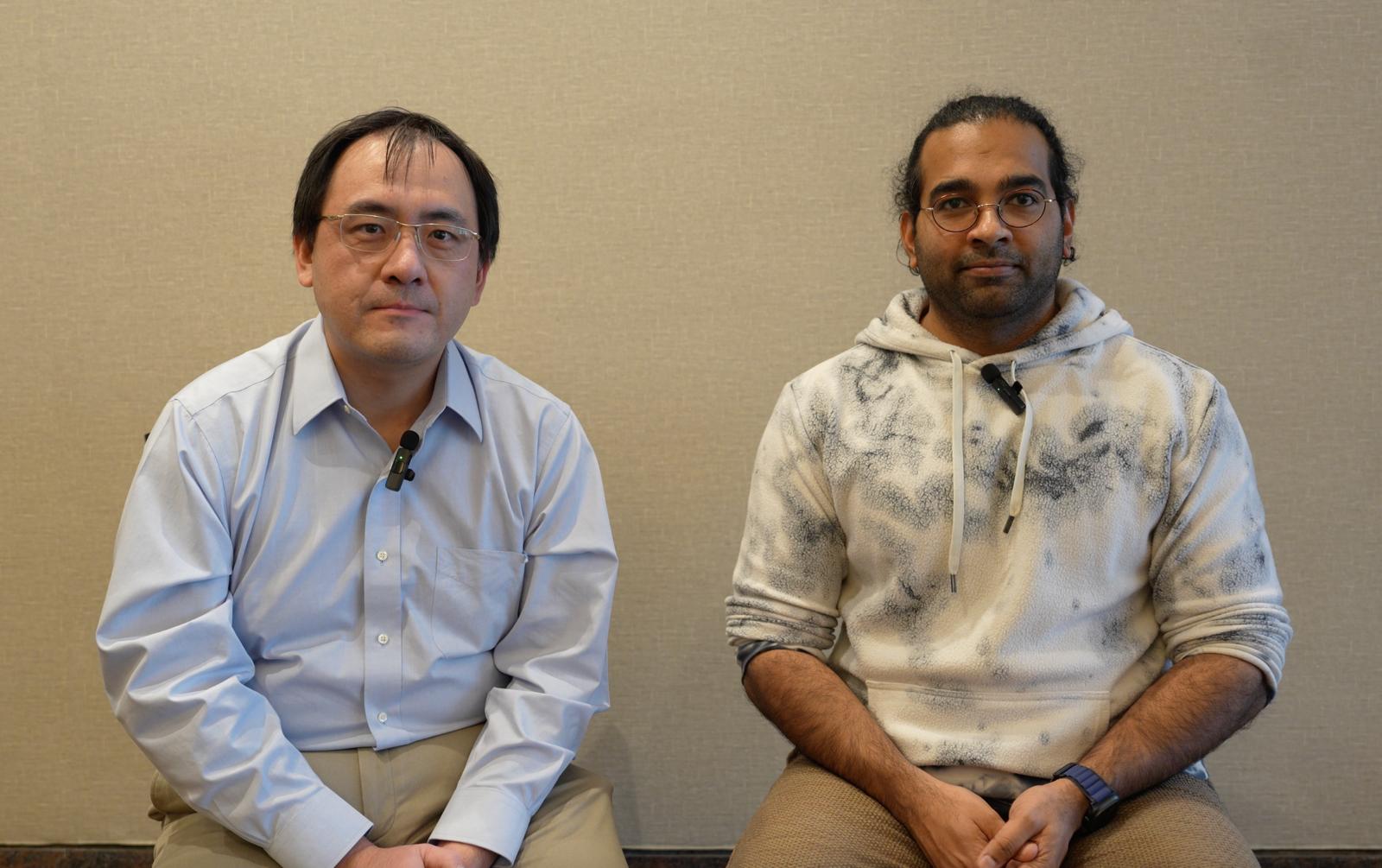
Biostate, founded in 2023 by former professors David Zhang and Gopinath, occupies an unusual stretch of the biotechnology supply chain. It handles wet samples, builds the software to interpret their output, and wants to use the resulting data to model how disease changes over time. Its paying customers are research labs, hospitals, biotech companies and other institutions. Patients may someday benefit, but the thing available to order now is chiefly a research service.
The sample is only the beginning
DNA tells you what a body might be able to do. RNA gives a more immediate account of what its cells are doing. That distinction matters if the question is how disease responds to treatment, or how a patient’s condition changes between visits. The drawback is the bill. When sequencing is expensive, researchers run smaller studies, collect fewer time points, or focus on a narrow set of transcripts.
Biostate’s laboratory answer combines two processes with names only a molecular biologist could love. BIRT, short for Barcode-Integrated Reverse Transcription, labels samples early so they can be pooled. PERD, Probes for Excess RNA Depletion, removes abundant ribosomal RNA that can consume sequencing capacity while adding little to the question at hand. The company says the combination lowers library preparation costs and needs less input material. Its sequencing page says 24-sample pooling cuts library preparation cost by 70%. Those figures are company claims; the more useful test for a prospective customer is whether its own sample type yields usable data at the quoted price.
The distinction between standard and specialty is doing real work. The $60 tier calls for relatively clean input, including extracted mammalian RNA at a specified concentration. Blood, preserved tissue, unusual organisms and degraded RNA sit in the $110 tier. An octopus appears in the company’s own examples. This is perhaps the only biotech price list in which an axolotl helps explain the fine print.
The analyst became the scarce reagent
The founders had met as Caltech labmates before their careers diverged. Zhang worked in bioengineering at Rice University and founded earlier diagnostics companies. Gopinath taught at MIT and worked on proteomics and AI. Their combined expertise suggested a neat plan: make high-volume data collection affordable, then train models that learn patterns across diseases and treatments. There was a less neat intermediate step. Someone had to read the results.
“We realized we’d never be able to keep up with analyzing all this data using human scientists.”Ashwin Gopinath, describing the company’s internal backlog
Biostate first offered OmicsWeb, a conversational bioinformatics assistant launched in July 2024. A biologist could ask about an RNA dataset and get gene-level interpretation and visualizations without writing code. It was an answer to a familiar laboratory frustration: sequencing machines can finish their work while the analysis still waits in a queue. Then the company went further. Gopinath has described building an automated scientist because its own bioinformatics team could not scale with the work. That internal system grew into K-Dense, released in beta in 2025 and later set up as a spinout.
This is the copyable lesson in the company’s story. A lower-cost input often moves the constraint downstream. If you make data collection ten times easier, count the people and tools needed to use the data before celebrating the savings. Biostate turned that operational headache into another product. In March 2026, the K-Dense spinout was selected for the Accel Atoms AI cohort backed by Google’s AI Futures Fund. That is evidence of outside interest in the tool; it says little by itself about clinical performance.
A model needs more than molecules
Biostate’s longer ambition is to predict disease evolution and treatment response. For that, anonymous RNA counts are a poor substitute for samples linked to diagnoses, treatment histories and outcomes. In March 2026, the company said it worked with more than 30 hospitals, nonprofits and clinical partners across the United States, India and China, giving it access to more than 100,000 consented human samples. Access is not the same as a finished training set, and a research association is not a cleared diagnostic. Still, the clinical context is the part of the strategy that could make the molecular data worth more than a large spreadsheet.
The collaborations cover several difficult questions. Biostate names the Accelerated Cure Project in multiple sclerosis, Weill Cornell in leukemia and Massachusetts General Hospital in melanoma. Its Indian subsidiary announced a study with Narayana Health intended to include 12,000 cardiac patients. The point of using different populations is practical: a model that learns one hospital’s patients beautifully may perform badly somewhere else. Broad geographic reach gives Biostate a chance to test that problem. It does not solve it automatically.
The company has raised capital to sustain this expensive loop. Its May 2025 Series A brought in $12 million, led by Accel, after a reported $4 million seed round. It sells sequencing per sample and has offered discounted academic work. In a 2024 interview, Zhang described retaining a copy of sequencing data for nonexclusive model training; the scope of such use depends on the applicable agreements and consent. That arrangement is central to the economics. Customers buy a cheaper experiment, while Biostate also gains data that may improve future products.
A modest purchase, an immodest ambition
Biostate’s market neighbors include conventional sequencing providers, in-house bioinformatics teams and software companies that only touch data after the laboratory work is done. Its difference is the attempt to join these steps. Researchers can buy the sequence, inspect the output in a copilot, and potentially join a larger clinical research program. The practical appeal is clearest for a lab that needs many samples or repeated measurements and has limited analysis staff. The model is less compelling when a project needs a highly bespoke assay, strict limits on secondary data use, or validated clinical answers immediately.
The company talks about predicting future health. For now, its strongest public facts are closer to the bench: a price card, sample requirements, named collaborators and a product born of its own clogged workflow. That is enough to make the story interesting. The grand prediction can wait for the data, and for the sort of validation that a patient, unlike a pitch deck, is entitled to demand.