BREAKING  Tim Sweeney's TriVerity wins FDA clearance - first-in-class host-response test +  29 immune genes, three scores, ~30 minutes +  $200M+ raised to read the immune system +  Three landmark Nature Medicine papers, 2025 +  60+ clinical studies on four continents BREAKING  Tim Sweeney's TriVerity wins FDA clearance - first-in-class host-response test +  29 immune genes, three scores, ~30 minutes +  $200M+ raised to read the immune system +  Three landmark Nature Medicine papers, 2025 +  60+ clinical studies on four continents
Co-Founder & CEO / Inflammatix

Tim Sweeney

He stopped hunting for the germ and started reading the patient. The blood already knows what is wrong - somebody just had to teach a machine to listen.

SurgeonMachine LearningHost ResponseSepsisFDA-Cleared
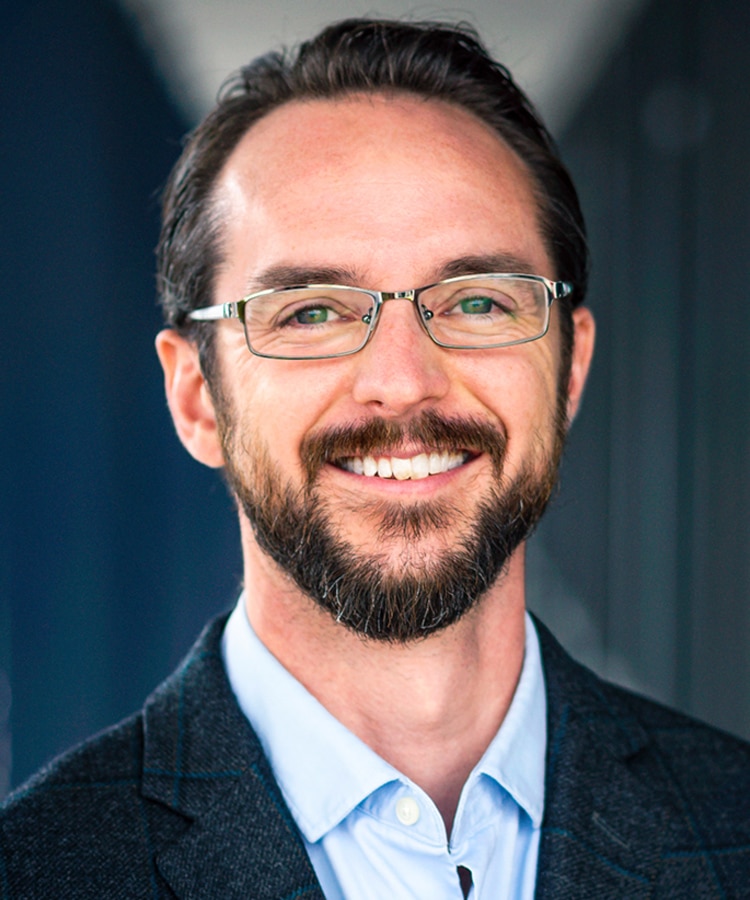
Tim Sweeney, co-founder and CEO of Inflammatix
Tim Sweeney - he reads immune systems for a living.
29Immune genes read
3Scores per test
$200M+Capital raised
4Continents studied
The Dispatch

A blood test that answers the question doctors actually ask

Walk into an emergency room with a fever and the machines around you are looking for the wrong thing. They hunt for the pathogen - a needle in a bloodstream - and often miss. Tim Sweeney's company flipped the camera around. Instead of searching for the invader, TriVerity reads the body's own response to it.

Sweeney is co-founder and CEO of Inflammatix, a molecular diagnostics company in Sunnyvale, California. Its lead product, TriVerity, draws a small sample of blood, measures the expression of 29 immune-response genes, and runs the pattern through a machine-learning model. About thirty minutes later it returns three numbers: how likely the infection is bacterial, how likely it is viral, and how likely the patient is to crash into critical illness. In January 2025 the U.S. Food and Drug Administration cleared it as a first-in-class host-response test.

That last word - "host" - is the whole idea. For a century, infection diagnostics have tried to find the bug. Sweeney's bet is that the more useful signal is written in the immune system itself, in the rise and fall of gene activity that a clinician can never see by eye. "It's like saying someone 'has cancer,'" he says. "What does that mean? Breast, lung, colon? What subtype, what mutation? That's how cancer treatment advanced, and that's where critical illness is heading."

The stakes are not abstract. The CDC estimates that roughly 40% of antibiotics are given inappropriately, fueling resistance and side effects in patients who never needed them. A test that can tell bacterial from viral in half an hour is a quiet act of stewardship - one fever at a time.

What makes Sweeney unusual is the stack of disciplines he carries into a single decision. He can speak the language of the operating room, the statistics of a machine-learning model, the grammar of an FDA submission, and the math of a venture term sheet, often in the same meeting. Inflammatix has run more than 60 clinical studies across thousands of patients on four continents to prove the idea travels - that an immune signature found in one hospital still means the same thing in another. That breadth is the reason a host-response test that lived in a Stanford lab is now a cleared product a clinician can order.

"I went to my attending and asked, 'What else can we do?' And the answer was: nothing."
Tim Sweeney, on the ICU night that started everything
Origin

The essay, the operating room, and the patient he could not save

Before he was a CEO, before the MD and the PhD, Tim Sweeney was a Colorado teenager who wrote his college application essay about someday starting a biotech company. It reads now like a spoiler. He went to the University of Chicago and triple-counted his interests into degrees in biology, chemistry, and biological chemistry, then to Duke for both an MD and a PhD, then to Stanford to train as a general surgeon.

Surgery is where the idea found him. There was a trauma patient in the ICU whose organs were failing despite every machine and drug available. "I had him on all the fancy organ support tools," Sweeney recalls, "but he was maxed out on therapy. I went to my attending team and asked, 'What else can we do?' And the answer was: nothing. At that point, all there is is prayer."

A surgeon who runs out of options tends to either accept the limit or refuse it. Sweeney refused. During residency he picked up a postdoctoral master's in biomedical informatics under Stanford professor Purvesh Khatri, and the two began building computational algorithms to make sense of messy, mismatched immune datasets that nobody had stitched together before. The pattern they kept finding was not in the pathogen. It was in the host.

Khatri became the co-founder and chief scientist. A third partner, Jonathan Romanowsky, arrived through the Stanford network carrying fifteen years of diagnostics commercialization experience. In 2016 they turned the research into Inflammatix and licensed the underlying intellectual property from Stanford.

The first instinct of most academic spinouts is to license the technology to a big diagnostics company and let someone else build the hardware. Inflammatix got those term sheets. It walked away from them. Sweeney realized that whoever controls access to the customer controls the terms forever, so the company chose the harder road: build its own device. The decision cost nine grinding months of fundraising before Northpond Ventures said yes.

He describes the whole arc in one tidy phrase: "It's a bedside-to-bench and back-to-bedside story. First you identify the need at the bedside. Then you do the computational work at the bench. Then you build a device to bring it back to the bedside." The patient in the ICU was the bedside. TriVerity is the return trip.

How It Works

Reading a barcode written in your own blood

Forget the binary of "sepsis or not sepsis" - a label Sweeney calls almost useless to a clinician at the bedside. TriVerity does something stranger and more honest: it scores the immune response in three directions at once.

1

Draw

A small blood sample goes into a cartridge - no sending it off to a far-away lab and waiting days for an answer.

2

Read

The system measures how strongly 29 immune-response genes are switched on, capturing the body's live reaction to whatever it is fighting.

3

Score

Machine-learning models turn that pattern into three probabilities - bacterial, viral, severity - in roughly 30 minutes.

Bacterial likelihoodillustrative
Viral likelihoodillustrative
Severity / critical-care riskillustrative
"You're not still in the ICU because of the car accident. You're there because of runaway inflammation and immune dysfunction."
Tim Sweeney, on why critical illness needs its own diagnosis
The Arc

Idea to FDA, the long way

2011-2015

Surgery resident at Stanford; earns a postdoctoral MS in biomedical informatics under Purvesh Khatri. The host-response idea takes shape.

2015-2017

Research associate at Stanford's Institute for Immunity, Transplantation and Infection - refining the algorithms behind the diagnostic.

2016

Co-founds Inflammatix with Khatri and Jonathan Romanowsky; licenses the core IP from Stanford. Chooses to build a device, not license out.

2024

Closes a Series E round; cumulative funding - venture plus non-dilutive government grants from BARDA, DARPA, and NIH - passes $200 million.

Jan 2025

TriVerity receives FDA 510(k) clearance as a first-in-class host-response test for acute infection and sepsis.

Sep 2025

Inflammatix publishes three landmark papers in Nature Medicine, building consensus across dozens of institutions for transcriptomic diagnosis of sepsis.

In His Words

A surgeon's plain talk

It's like saying someone "has cancer." What does that mean? Breast, lung, colon? That's how cancer treatment advanced, and that's where critical illness is heading.

This is the culmination of years of work. It's moving a rapid transcriptomics profile from an idea to a clinically validated tool out in the world.

So much of startups, as you know, is luck. So much of it is luck.

If anything, it would have been just a little more belief, a little less worry, take some deep breaths, enjoy the ride.

What's Next

From one blunt label to druggable subtypes

Sweeney's ambition runs past diagnosis. He points to oncology as the map: in the 1960s a doctor could only say "cancer," and treatment was crude because the label was crude. Molecular subtyping changed everything. He wants the same revolution for critical care - a world where the ICU is not one undifferentiated emergency but a set of distinct immune states, each with its own therapy.

"If someone is going to go to the ICU, how do we eventually go from zero drugs for sepsis to a framework that actually allows us to find druggable subtypes?" he asks. The 2025 Nature Medicine trio of papers, he argues, is the scaffolding - an FDA-cleared platform plus cross-institution consensus that turns a research idea into clinical practice.

His own measure of success is stubbornly unglamorous. Not the FDA letter, not an IPO. Standard of care - the moment the test is simply what good medicine does, the way a troponin test is just what you order when you suspect a heart attack.

He is also candid about how much of the journey he cannot take credit for. "So much of startups is luck," he says, and when asked what he would tell his younger self, the answer is less a strategy than a deep breath: "A little more belief, a little less worry, take some deep breaths, enjoy the ride." It is the kind of thing a mountaineer says about a summit, and a surgeon says about a long case - the people who already know that the hard part is not the idea but the patience to see it through.

Margins & Marginalia

Things that don't fit in a pitch deck

The spoiler essay

His college application essay was about someday starting a biotech company. He filed the prophecy decades before he fulfilled it.

Pain cave

A Colorado mountaineer, he frames startup endurance the way climbers do - you have to make it through the pain cave to reach the top.

Surgeon to CEO

He trained to operate with his hands, then pivoted to building machine-learning models. Few people hold both skill sets.

Triple major

At the University of Chicago he earned degrees in biology, chemistry, and biological chemistry - three angles on the same obsession.

The walk-away

Inflammatix turned down signed term sheets to license its technology, choosing nine hard months of fundraising over losing control.

Bedside to bench

He insists on the round trip: spot the need at the bedside, solve it at the bench, then carry the device back to the bedside.

Spread the word