Before the investment pitches, there were friendship bracelets. Bikesh Lakhmichand sold the ones his sister made at school, an early encounter with the useful arrangement in which one person makes something and another finds a buyer. Years later, having become a software trainer and then an investor, he would spend considerably more time on that second half of the bargain.
The connection is almost too neat. A computer science background draws the eye towards the product: what it does, how elegantly it works, whether its maker can deliver. A business introduces other characters, many of whom have the impertinence to be customers. They may admire the engineering and decline to pay. Bikesh’s career has steadily made more room for them.
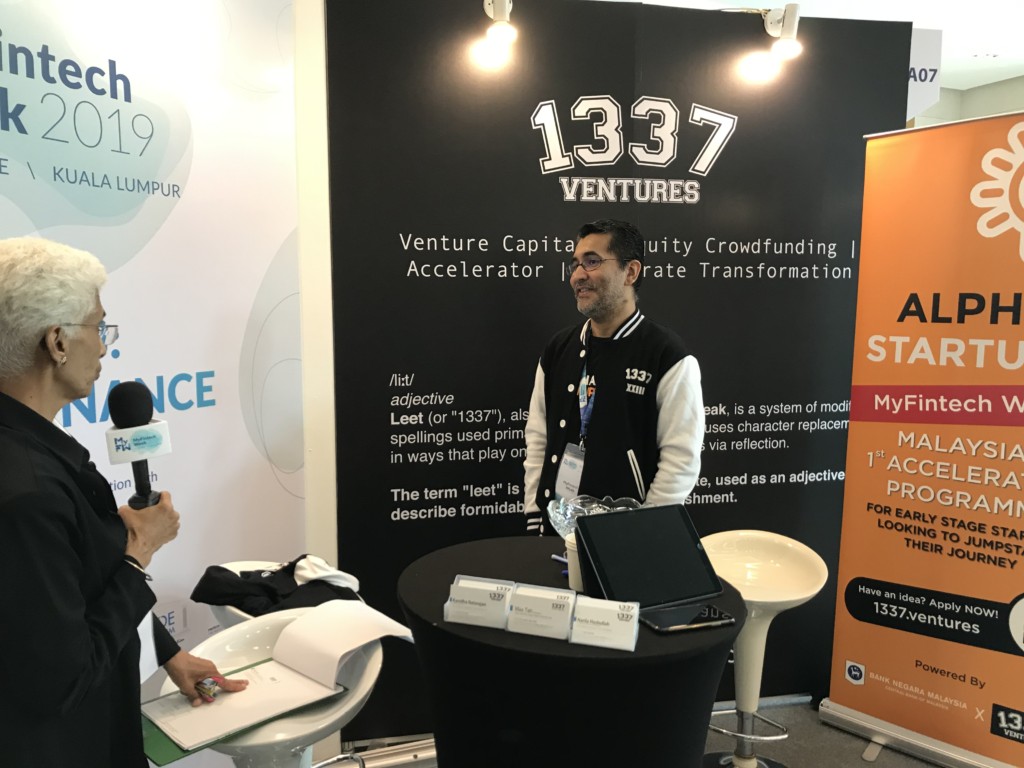
Today, the Kuala Lumpur-based CEO and founding partner of 1337 Ventures works across startup investment, founder education and corporate innovation. The firm’s name is pronounced “Leet”, a wink to computing culture. Much of the work behind it concerns less cryptic matters: finding buyers, making introductions, preparing founders and keeping the next stage within reach.
A useful talent for explaining things
Teaching arrived before venture capital. While studying, Bikesh earned extra money helping students with programming and taking on software projects. There was a market for somebody who could make difficult material understandable. He recognised that he enjoyed being that person.
He co-founded iTrain with Eric Ku in 2005. The training business gave that informal talent a commercial home. Technology education also placed him close to people acquiring the skills to try something of their own. Developers learning to make mobile applications were leaving jobs and starting companies. The classroom was producing possibilities beyond its original syllabus.
His early experiments were not uniformly appreciated by the authorities. As a student, he bypassed access controls in a computer lab and was suspended from using it. “I was a trouble maker la,” he later recalled. It is a compact anecdote, with the penalty conveniently attached. Resourcefulness, as any university administrator might observe, benefits from an agreed definition.
The more consequential discovery was that he could break a problem into steps another person could use. That ability explains the continuity between iTrain and the ventures that followed. The subject matter widened from software to companies, but the pleasure of helping someone get unstuck remained.
An accelerator needs a way in
Bikesh started 1337 Ventures in 2012. The attraction was straightforward: work with promising early companies and invest in some of them. The practical problem appeared just as quickly. Founders could arrive with enthusiasm and technical ability while still needing help with the fundamentals of building a business.
There was already a social setting for some of this activity. The iTrain Developer Playground gave people somewhere to learn and collaborate. Bikesh remembers the MyTeksi team, later known as Grab, using the space for brainstorming and hack activities. A room does not acquire retrospective ownership of every good idea discussed inside it. It can, however, make those discussions possible.
Alpha Startups, launched in May 2014, addressed the preparation gap more deliberately. It gave early founders a way to work through assumptions and learn the business disciplines around an idea. An investor looking for companies had also become a teacher helping people prepare them. That is a longer route to a pitch, although possibly a more useful one.
- LearnAlpha Startups
- PitchPitch Tuesday
- ConnectLeet Launchpad
Programme roles, not a promise of investment.
A customer is an excellent critic
The lesson about selling also changed his investment judgement. Technical competence had been a natural attraction for somebody with his background. Experience made him pay closer attention to whether a team could bring its product into the market. Being able to make something and being able to sustain a company required complementary skills.
In a 2023 conversation with Freda Liu, he described three questions behind an investable business. Is the problem substantial enough? Is the proposed solution meaningfully better than what exists? Are the right people there to deliver it? The sequence begins with demand and ends with a complete team. A handsome demonstration must answer to both.
His corporate work applies a similar discipline. At a 2018 talk on digital transformation, he challenged the habit of placing innovation entirely in the IT department. Understanding what customers want matters before choosing the technology that will serve them. His example of virtual reality was pleasingly concrete: a business considering headsets ought to ask whether its customers actually have them.
His interest in sustainability brings the same questions into a different setting. In his conversation with Liu, he argued that consumer choices can push businesses to change and that investors need a longer perspective when assessing sustainable ventures. He also stressed the role of regulators in turning optional intentions into action. The emphasis is characteristic of his public advice: identify the people whose decisions can move a business, then understand what would make them act. A good intention still needs a customer, a workable model and a reason for others to participate.
There is some comedy in how often expensive innovation eventually encounters an inexpensive question. Bikesh’s point was practical. Large companies employ people capable of experimentation too, provided their organisations allow it. His work with corporates has included design thinking, changes in capability and opportunities to test ideas against real needs.
“Early-stage founders need structure, speed, and honest feedback.”
Bikesh Lakhmichand, July 2025
Capital needs a continuation
The investment firm had its own lessons in adaptation. In 2014, it returned the unused portion of government funding and moved to a privately run model. Bikesh wanted greater freedom to move quickly and work across boundaries. Building an institution for entrepreneurs required some entrepreneurial revisions of its own.
He has also described the difficulty of persuading investors to back unfamiliar early-stage businesses. Consulting, workshops and events helped sustain operations while the team built experience and relationships. His account of those years contains a reminder easily lost in the presentation of venture capital: the investor has a business to keep running as well.
In May 2019, 1337 Ventures announced its approval as an equity crowdfunding operator and plans for Leet Capital. Bikesh presented the move as a continuation of the support system around founders. Preparing a company and finding ways for investors to participate belonged in the same conversation.
That expansion also reached established businesses. Through the Elevate Programme with Capital Markets Malaysia, his work has included helping companies understand investment readiness and capital-market options. A startup at its first pitch and a mature company considering its next financing move occupy different rooms. Explaining the unfamiliar remains part of the job in both.
The classroom keeps changing shape
Alpha Startups has changed its format over time. By 2021, its digital accelerator was bringing founders together online; Arus Oil and Cult Creative emerged as winners of that year’s cohort 36. The mix of businesses matters. A programme built around commercial fundamentals can accommodate very different products without pretending that their customers are interchangeable.
The July 2025 announcement for cohort 64 described a ten-week hybrid format: an in-person beginning, virtual mentoring, independent modules and a live Demo Day. Twenty startups would be selected. Customer validation and routes to market sat alongside access to mentors and partner tools. The course had become a structured encounter with the questions founders would face outside it.
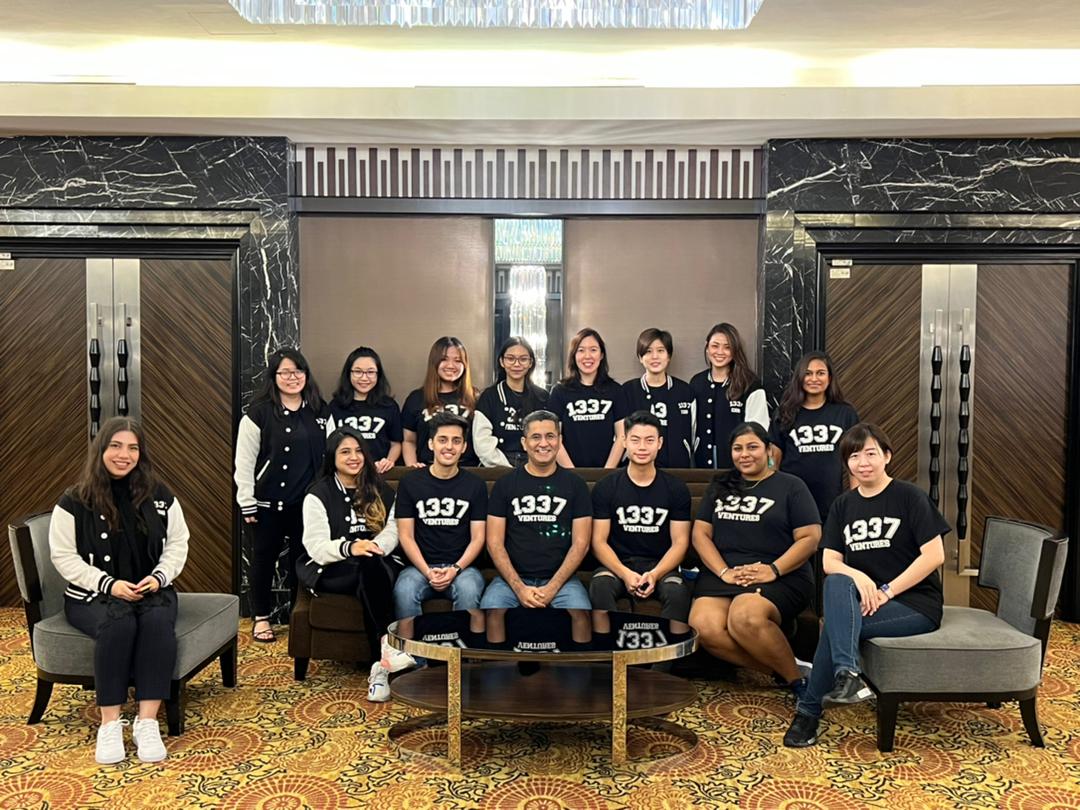
Bikesh’s own description of leadership has changed with the scale of that work. Reflecting on the firm’s tenth anniversary in 2022, he emphasised giving analysts autonomy to discover opportunities, while providing the resources and training to do the work. He also valued younger colleagues’ sense of purpose and different perspectives.
For a teacher, delegation has a particular elegance. The object is to make another person capable of proceeding. Insisting on supplying every answer would rather spoil the lesson. His account suggests a founder learning to apply inside his own firm the independence he wants other founders to develop.
The next door to open
By 2026, the connection between startup products and corporate demand had become especially visible. Leet Launchpad’s fourth edition, held at Microsoft Malaysia on 31 March, brought together founders, investors and business leaders. Seven startups presented, with participants from Malaysia, Singapore and the Philippines. The setting gave selected teams an audience beyond their own circles.
The question was whether useful solutions were reaching the companies that could buy them. In his remarks around the event, Bikesh discussed established businesses with resources and operating scale that lacked strong internal technology-building capabilities. For startups, those businesses represent potential customers. Introductions become more valuable when there is something specific to discuss.
His June 2026 comments as a BizSmart Challenge judge returned to a similarly grounded set of interests: founders who know their numbers, understand their growth story and can build trust. That standard leaves room for ambition while requiring a business underneath it. A pitch gets more persuasive when its owner can explain the workings.
The teaching continues in public. In August, he promoted free online sessions on fundraising and pitching. An October webinar announcement put idea validation, early adopters, market sizing and team-building back on the timetable. After years in investing, he was still making time for the questions that arrive before a company is ready for an investor.
Bikesh has spoken of wanting successful entrepreneurs to become angel investors themselves. It is an appealing cycle: people who once needed help acquiring the means to offer it. For now, his work keeps returning to a recognisable task. Someone has built something. Somewhere there may be a buyer, a partner or a person who knows the next step. He tries to get them into conversation.