There is a charming error people make about publicists. They imagine the publicist standing beneath the lights, gliding down a red carpet with a famous client, perhaps whispering an urgent sentence into a headset. Dayna Ghiraldi-Travers has stood on red carpets. She once escorted Billy Joel down one. Yet the more accurate picture of her trade is much less cinematic: six windows open on a laptop, six tour schedules in six cities, and a sentence being rewritten because the first sentence was not interesting enough.
That last activity is the business of Big Picture Media. The New York-founded boutique agency runs publicity for musicians, albums, tours, festivals, films, soundtracks, nonprofits, events and brands. Its alumni and clients stretch from Sum 41, Thrice and Taking Back Sunday to The Eagles, Peter Gabriel, Hans Zimmer, Warped Tour, Emo Nite and the New York Coffee Festival. The categories look unruly. The job beneath them is consistent: decide what deserves attention, identify who might care, and make the introduction feel like it was meant for that person.
The hundred-square-foot loophole
Big Picture Media began in 2007 with an obstacle that became a plot device. Ghiraldi-Travers left Press Here Publicity, where a contract prevented her from opening a competing agency in New York for three months. So she moved to Massachusetts with her future husband. Her first office was a roughly 100-square-foot room in their apartment. The equipment list was a laptop and a cell phone.
The company exists because she had just been forced to turn down a publicity project from Dustin Kensrue of Thrice. It clarified the choice: if she wanted to work on the music she believed in, she needed control over what she accepted. Within three months, the new firm had Thrice, Circa Survive and City and Colour on its roster. When the restriction expired, the couple packed up and returned to New York.
The early economics were equally spare. With no payroll to carry, Ghiraldi-Travers could charge cautious fees and work around an artist's budget. The less charming part was the schedule: she has described working seven days a week, as many as twenty hours a day, closing her eyes and waking up to pull the laptop toward her again. Fear of failure passed for a capacity plan. It worked, but it was not sustainable.
The angle is the product
A press release can announce that an album exists. It cannot, by itself, explain why a stranger should spend four minutes listening to it. Ghiraldi-Travers has said the agency reads lyrics looking for the angle: perhaps the record helped its maker through depression; perhaps a song came from grief; perhaps the artist has a philanthropic life that changes the meaning of the work. BPM is not merely formatting news. It is searching for the revealing fact.
“We are not just servicing press releases. We are actually thinking of angles.”Dayna Ghiraldi-Travers, founder and CEO
This sounds obvious until you consider the default alternative. The modern publicity machine makes distribution cheap. A database can produce contacts. An email platform can produce volume. Generative tools can produce smooth copy. None can guarantee taste. In 2024, Ghiraldi-Travers was blunt about automated campaigns, arguing that listening to an album and writing from it is part of honoring the artist's work. For BPM, attention begins with attention paid.
An editor at Atwood Magazine supplied unusually helpful outside confirmation. BPM's introductions led the publication toward artists and events it might otherwise have skipped, and the agency helped shape what the interviews could explore. This is the valuable middle ground between access and editorial judgment. The publicist does not write the story. The publicist makes a credible case that a story is present.
A retainer buys a rhythm
In 2021, the agency said its rates began around $2,500 a month, depending on the client, and that it usually preferred a three-month project. That number is a historical marker, not a current quote. The more revealing detail is what surrounded it: client communication every day, press reports every two weeks, and a final document collecting the coverage. Sometimes staff could accept a reduced-fee or no-fee project if it did not compromise paying work.
The business model is project retainers, but the experience being sold is reassurance under uncertainty. Publicity cannot promise a magazine cover or a television booking. It can make the work visible, the reasoning legible and the next move prompt. That is why daily correspondence and biweekly reports matter. They turn an opaque service into a sequence a client can see.
The first thing to fail is often the story
Ghiraldi-Travers has encountered musicians with strong songs and nothing distinctive to say about them. These are difficult campaigns. The problem is not a lack of email addresses. It is that the artist is interchangeable in the reader's mind. BPM asks about interests beyond music, personal voice and philanthropic commitments because the answer may reveal the bridge between the work and the world.
When a project stalls, the agency changes variables. The founder may revise the pitching, find another journalist, or use a different photograph. What changed her own mind about the shape of the company was the pandemic. Live events stopped, projects moved online and the physical office became a bill for storing computers. BPM let the office go, kept its staff employed without furloughs or pay cuts, and opened its internship program beyond New York. A constraint on geography became access to a wider talent pool.
The all-female agency that was not planned
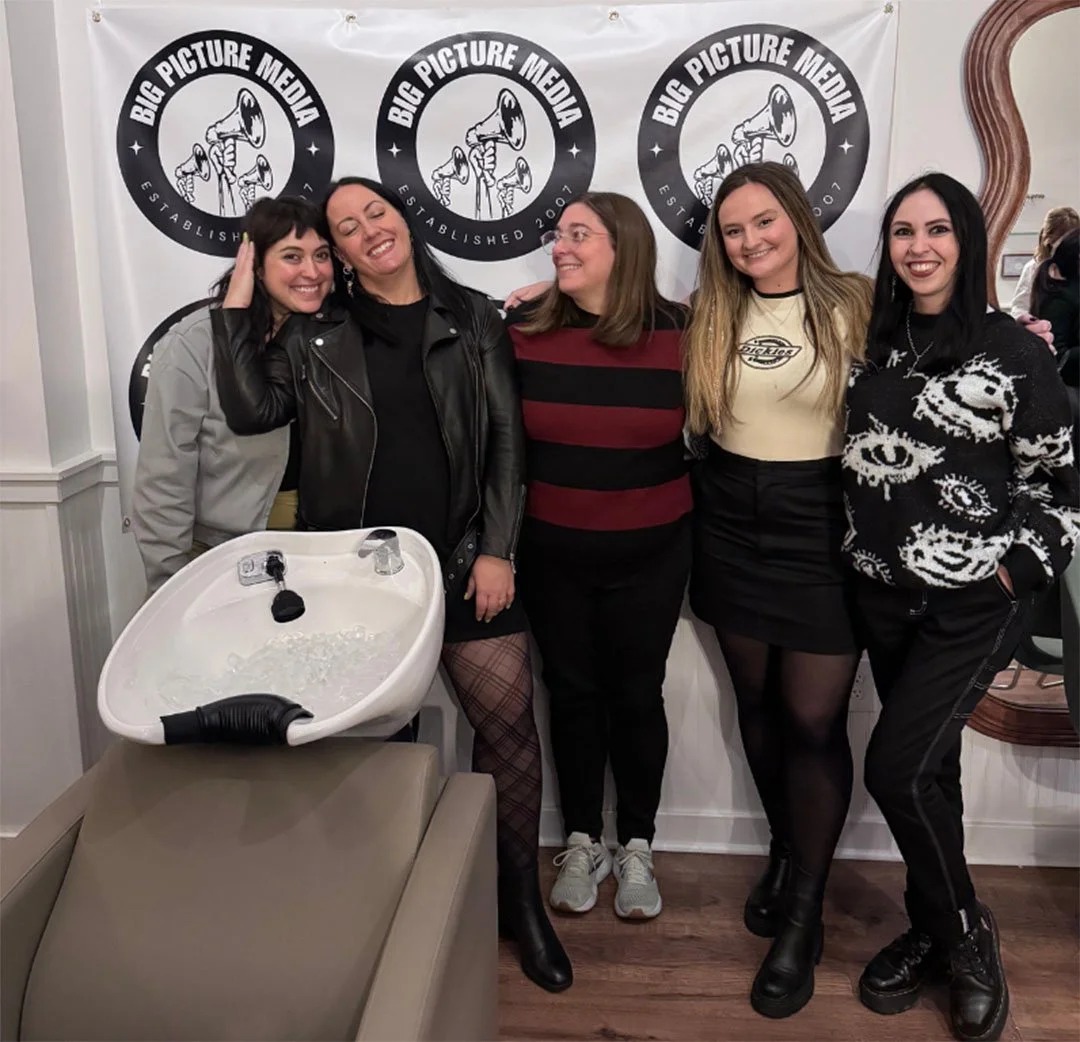
Big Picture Media describes its publicist team as all female, but Ghiraldi-Travers has repeatedly resisted turning that fact into a founding myth. The agency has employed and interviewed men. Her account is simpler: she hired the person she believed belonged in each seat. What was deliberate was a culture of positivity, candor, internal promotion and genuine enthusiasm for the assignment.
The internship program became the mechanism. In 2019, she said it could attract more than 100 resumes in a semester, with roughly 40 interviews and ten selections. Becky Kovach entered as an intern and, after more than a decade with the company, became director of publicity in 2025. Natalie Schaffer, who joined in 2013, became vice president. That is more instructive than a slogan about culture: the junior door has led to the leadership floor.
It also lets a small firm widen its taste. One publicist may care about heavy music, another about film, books, Japanese artists, food or hospitality. Projects can be passed around before the agency says yes. Passion is not decorative here. A publicist must sound like the artist's most persuasive fan without ceasing to be a credible adult.
- Write the angle in one sentence before writing the release.
- Give every pitch a specific recipient and a specific reason.
- Set a visible reporting rhythm before the campaign begins.
- Change one variable at a time when the response is weak.
- Decline work the team cannot advocate for honestly.
This method will not rescue work that is not ready, manufacture editorial interest on command or compensate for an artist who refuses to participate. It also depends on enough time, access and budget for thoughtful outreach. A three-month campaign cannot be compressed into a weekend merely because distribution is instantaneous. The closer the client expects publicity to behave like paid advertising, the worse the fit.
The useful form of small
Big Picture Media sits between the solo freelancer and the global communications firm. Its competition includes specialist agencies, label publicity departments and independent consultants. Its advantage is not that it can reach everyone. It is that a compact team can know why it is reaching someone.
That distinction has carried the firm from pop-punk into legacy rock, film scores, nonprofits, fashion, festivals, hospitality and books. The expansion works when the subject gives the publicist something real to believe and the publicist has a credible place to take it. The categories change. The little act of interpretation does not.
The publicist is still unlikely to appear in the photograph. That may be the point. If the campaign works, the reader sees an artist, an event or an idea with unusual clarity. Behind it sits somebody with too many windows open, reading the second verse again.