A tailor has a prospective father-in-law to impress. Professionalism will help. So, in a VistaPrint advertisement described by Bharath Sastry, the small objects of a working life become evidence of a larger ambition. The business has an identity. Its owner has something to show for himself. Romance, it seems, can occasionally benefit from a well-organised stationery order.
The situation is comic; the feeling underneath is recognisable. A business carries the hopes of the person who started it. Sastry, CEO of VistaPrint India, has spent years working with products whose appeal includes that emotional weight. His career has taken him through chocolate brands, online car buying and personalised printing. Across those changes, he keeps considering the customer’s reasons for caring.
In the printing business, the question gets unusually literal. Someone puts a name on an object and asks the world to notice. A visiting card has limited space. The ambition attached to it is under no such obligation.
Chocolate, cars, and a change of scale
Sastry studied engineering at IIT Madras and went on to an MBA at IIM Calcutta. His working life then moved into consumer marketing and business leadership. At Cadbury, he worked on familiar Indian brands and on bringing Dairy Milk to Indonesia. Those assignments gave him experience with products already occupying a place in people’s routines, memories and shopping decisions.
His later move into online commerce brought another set of practical questions. In January 2015, he was speaking as CarTrade.com’s business head for consumers about increasing awareness of its used-car offering. The campaign featured dogs discussing the difficulty of finding the right car. Anyone expecting a solemn procession of product specifications had apparently come to the wrong advertisement.
There was a clear commercial purpose behind the joke: make the service memorable and bring consumers to it. The medium could be playful while the objective remained precise. That combination would recur when Sastry moved into customisation.
- CadburyConsumer brands
India & Indonesia - 2015CarTrade
Consumer business - 2016Joins
VistaPrint - 2025CEO
VistaPrint India
He joined VistaPrint in 2016. By January 2017, he was publicly discussing its advertising as India CMO. One campaign centred on an entrepreneur named Mani and the products his business had created. Sastry’s explanation emphasised the owner’s involvement with those objects and the pleasure of showing them to potential customers. The entrepreneur’s point of view supplied the story.
His CEO responsibilities would encompass the less photogenic necessities too: products, finance, people, manufacturing and overall business performance. A persuasive advertisement can bring someone to the website. The rest of the organisation has to honour the invitation.
First choose. Then grow.
Sastry’s published thinking gives the career a useful organising principle. In a 2021 essay on ecommerce, he proposed a sequence: “Go Narrow… then Wide”. Begin by selecting the customer opportunity the brand can serve. Make an honest assessment of its capabilities. Form a proposition around the customer’s need. Expansion follows those decisions.
His warning concerns the attraction of too many opportunities at once. A market may be large without being a sensible place for a particular business to compete. Size alone cannot settle the question. A team needs a reason to believe its offer will work for the people it hopes to reach.
Brand promiseCommunication
Innovation
The second part makes room for communication and product development. There is also an accountant waiting politely near the exit: Sastry recommends examining how long a newly acquired customer, or group of customers, takes to repay the marketing cost through purchase profits. Reach must eventually make financial sense.
It is a practical way of joining his two working worlds. Consumer marketing asks whether a proposition means anything to someone. Ecommerce makes the path from attention to purchase particularly visible. His framework gives both questions a place, in an order a team can act on.
A small order, a personal stake
Customisation adds another decision-maker to product design: the customer. In his writing on personalisation, Sastry distinguishes between a company adapting an offering to its audience and a company allowing people to design the offering themselves. VistaPrint belongs in that second conversation. Customers bring their own names, images and preferences to the purchase.
He connects that participation with identity, thoughtfulness and pride. A personalised gift can communicate attention. A business item can express belonging. The object’s practical use remains, while the buyer supplies something that makes it particular to a relationship or an enterprise.
There is also information in those choices. His argument is that allowing customers to personalise can help a business understand their preferences and spot opportunities for future products. Design becomes part of the conversation between buyer and seller. The customer has, quite literally, filled in some of the blanks.
Single-unit customisation is available on selected products. The business identity can begin before the bulk order.
The product range makes that proposition tangible. In 2021, VistaPrint India’s additions included journals, rubber stamps, laptop sleeves and playing cards, alongside branded apparel and pens. These were different occasions for personal expression, from working equipment to presents. The appeal depended partly on letting someone order a small quantity rather than requiring the appetite of a procurement department.
In August 2025, Sastry was still discussing that accessibility: online design tools, low quantities and products that small businesses could make their own. The continuity matters. The catalogue can grow while the underlying customer problem remains recognisable.
The pride behind the packaging
In April 2022, VistaPrint India launched Mera Naam, Meri Shaan, translated as “My Name, My Pride”. Its forty-second advertisement showed small-business owners in their working lives, finding confidence in merchandise and packaging bearing their names. The campaign gave a familiar printing service a human situation.
Sastry described the feeling through several moments: a business being appreciated, an owner building a legacy, an entrepreneur beginning with hope. We are attempting to celebrate this emotion
, he said. The observation allows for a business to have a personal return alongside its financial one.
The film was created by Abhijit Avasthi of Sideways Consulting, who also spoke about identity and the respect associated with running an enterprise. Their explanations meet at an everyday truth: having made something is satisfying; seeing other people recognise it adds another pleasure. A label can become a modest piece of evidence.
Room to do the work
Sastry’s organisational writing turns the attention inward. In a 2021 article, he outlined focus, a culture oriented towards performance and adaptability. Employees should understand the company’s choices and how their responsibilities contribute. The work of leadership includes making those connections clear enough to guide action.
His account of adaptability also makes room for restraint. Keep long-term priorities few and strategic. Avoid detailing the distant future so tightly that changing course becomes difficult. Stay open-minded. The point is to help people respond when conditions change, with enough direction to know what matters.
“Focus, Expansion, and Fun.”
Bharath Sastry’s description of the VistaPrint India journey
By 2024, his C-Suite Conversations appearance was being presented around enjoyment, passion and a collaborative approach to leadership. It is an appealing counterpart to his written emphasis on performance. People have results to deliver and a working life to inhabit. Both occupy the same hours.
There is no need to turn enjoyment into a complicated management ceremony. In Sastry’s public account, it belongs close to the activity itself: understanding customers, finding an answer, working with colleagues and watching a business develop. Satisfaction comes from having a useful part in what happens.
The desk with a closing time
Then there is the furniture. In 2020, Sastry described a workspace in a quiet corner of his Mumbai home, at a desk purchased in Indonesia. It had a top he could close after work. An elegant feature, especially for a person whose job could otherwise fit indefinitely inside a laptop.
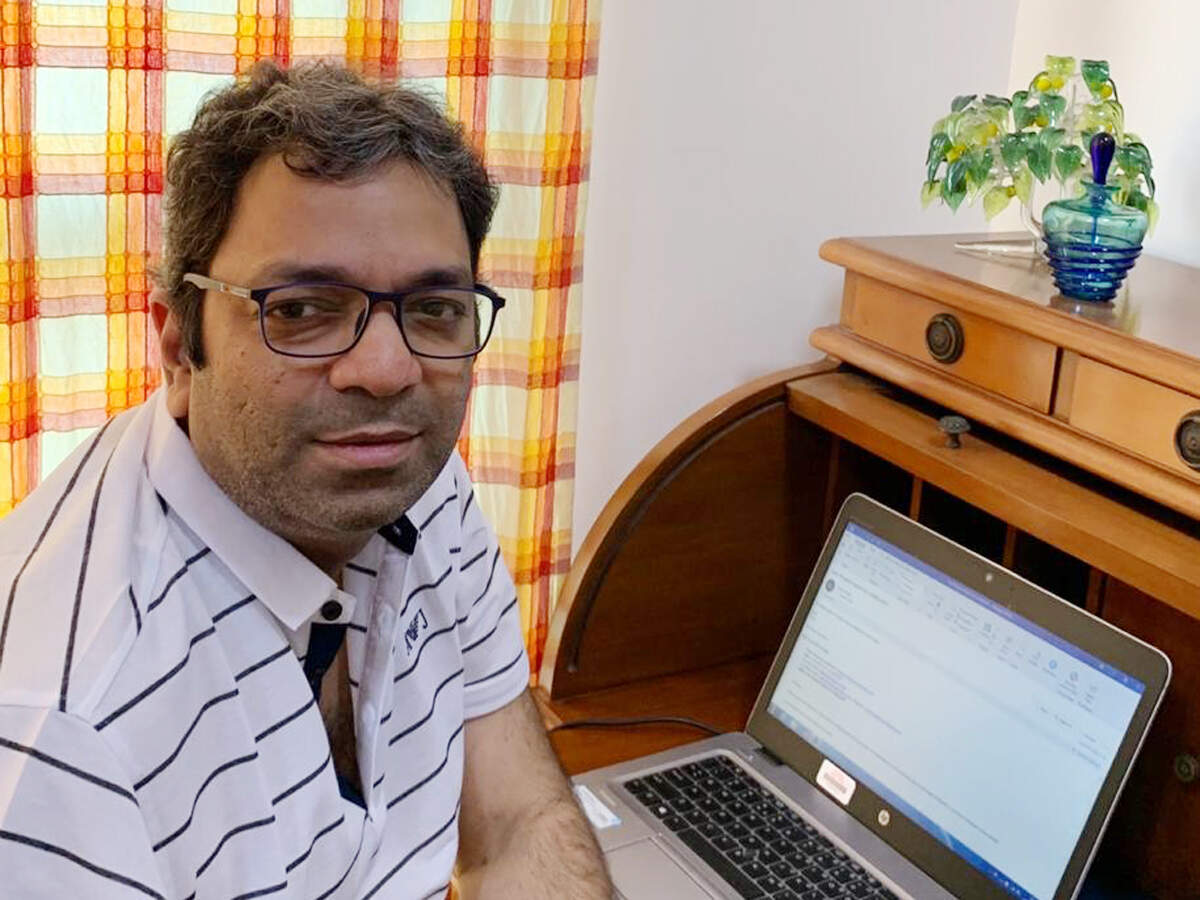
His off-duty reading includes R. K. Narayan. I am catching up on old RK Narayan novels.
He liked having books available on his Kindle wherever he happened to be. The interest supplies a quieter image of the consumer marketer: someone spending time with other people’s stories when the working day permits.
His entertainment tastes have their own logic. In 2020, he named MasterChef Australia, admiring the way its contestants improved through the competition. He also named Dairy Milk’s cricket-field dancing advertisement as a favourite, praising the connection between its underlying observation, execution and audience response. Enjoyment and professional curiosity seem comfortable sharing the television.
He has described weekends he prefers to leave it unplanned
. A drive or an evening at home can take its turn. There is room here for a life that refuses to become a case study. Even a marketer deserves to watch something without producing a slide afterwards.
The personal details bring the business argument back to scale. Sastry’s work concerns the things people choose because those things fit into a life: a familiar chocolate, the right car, a gift, a card with a new business name. Understanding that life is demanding work. The finished object can be small enough to hold between two fingers.
Writing, interviews & places to visit
- VistaPrint website
- Bharath Sastry on LinkedIn
- C-Suite Conversations: watch the interview
- C-Suite video archive
- CoBB: the career and brand-building conversation
- His ecommerce marketing essay
- His writing on organisational performance
- Life beyond work
- 2025: personalisation and small businesses
- More articles by Bharath Sastry