A software business can buy many things with its profits. More programmers. Better computers. Perhaps an office with a coffee machine that inspires fewer complaints. Benna Iqbal took a different route: his software consulting earnings helped finance a holding company. The work that began with websites would eventually lead to aircraft records, aviation tools and power infrastructure. Code was the starting point. Ownership gave the story somewhere else to go.
Today, Iqbal is the founder, chairman and group chief executive of GI Corporation, a privately held American industrial group. His responsibilities include strategy, capital allocation and the operations of businesses working across software and physical industry. He is based in Austin; the company is headquartered in Houston. The distinction suits a career whose map keeps expanding while its business becomes increasingly concerned with where things are made.
A business before the diploma
Iqbal began freelance web development at fifteen. At the American University of Sharjah, where he studied computer engineering, he established Global Invisions, a software development and services business. GI dates its beginnings to 2008. The company's early work involved product development and technology services; the business later became known as GI Consulting.
After graduating in 2015, he moved to the United States and established GI Holdings in New York, using profits from his consulting work. That sequence gives his career its particular shape: a service business preceded an investment business. Software work supplied both an occupation and the money for the next undertaking.
In 2016 he joined Stanford Graduate School of Business's executive education program. He later recalled the value of exchanging experiences with people facing similar business decisions. His recollection of university was equally personal. He acknowledged business difficulties and failures, and credited the people he knew at AUS with supporting him.
“The friendships and professors I met there were my rock.”
Benna Iqbal, reflecting on his years at AUS in 2021
The aircraft has paperwork, too
The move into aviation retained a recognizable connection to his first trade. GI Aerospace worked on TARA, a platform for technical records. Aircraft maintenance involves the aircraft itself and the information accompanying it. A software company can find a place in that second world without manufacturing an entire aeroplane. Paperwork, for once, gets an interesting supporting role.
In August 2017, GI announced that chief technology officer Hadi Mohamed Shakir would represent GI Aerospace at the Royal Aeronautical Society's Airworthiness and Maintenance Conference in London. The proposed subject was efficiency and cost within aircraft maintenance. TARA was described as combining record keeping, electronic technical logs and data processing to provide maintenance insights.
The conference setting matters. This was software being presented in the language of an established industry: maintenance processes, operating costs and the practical application of research. The proposed audience included people concerned with civil and military aviation. Iqbal's growing group was taking its technical work into a field with its own vocabulary and obligations.
In December 2018, Aviation Week listed a report on GI Aerospace's planned blockchain application for tracking aircraft parts. Its description mentioned digital signatures, lifecycle records and 3D models. In September 2019, GI announced plans to showcase TARA at MRO Europe in London. Iqbal subsequently posted about the conference and the company's use of blockchain in aviation records management. The record traces a recurring subject rather than a single conference appearance.
A portfolio acquires a front door
While its aviation software was finding an audience, the group was also establishing physical offices. On June 28, 2018, GI opened its India operations office in Kochi. Hibi Eden, then a member of Kerala's legislative assembly, inaugurated it. Among the guests was Helena Pereira, identified at the event as a vice president of Unilever Gallo Worldwide.
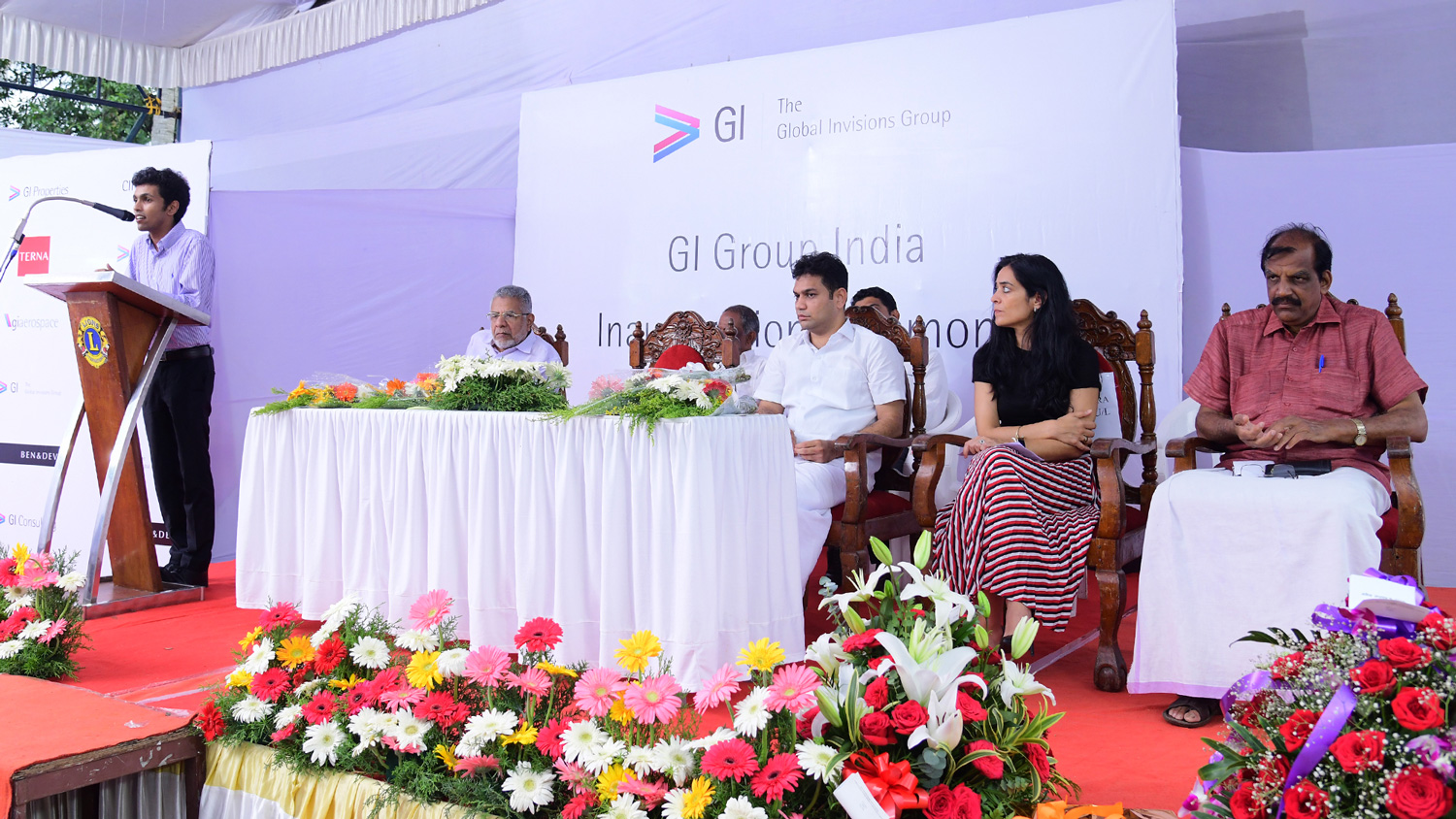
The office had another connection to the portfolio. Ben & Dev, a GI business working in interior design, architecture and furniture, designed and built the space. The announcement described it as an operating base for activities including consulting, engineering, manufacturing, property development and technology. Even an office opening could bring several parts of the group into the same room.
In May 2019, GI announced the acquisition of the 31st floor of Dubai's Executive Towers for its Middle East headquarters. Kochi and Dubai made the geographic expansion tangible. The group was adding places to work as well as companies to own. A holding company may begin as a financial arrangement; sooner or later someone needs to decide where the desks go.
Power joins the portfolio
On September 25, 2020, GI announced that it had completed the acquisition of Ivory Power Group. The acquired business served power transmission and distribution, supplying equipment and engineering expertise to governments, utilities and energy suppliers. Its work involved the infrastructure through which electricity is transmitted, stored and distributed.
That acquisition extended Iqbal's business interests into an industry with a substantial physical footprint. GI's current portfolio description places Ivory Power's engineering services in the United States and Middle East. The company brought a different kind of technical work into a group whose origins lay in software services.
The progression is easier to follow through the actual businesses than through a string of industry labels. Aircraft records require information systems. Power infrastructure requires equipment and engineering services. Both appear in the history of a company that began by developing software. Iqbal's role broadened with the holdings: selecting opportunities became part of the work alongside overseeing operations.
Different jobs, under one owner
GI's present portfolio gives the industrial turn a more detailed shape. GI Aerospace develops aviation and aerospace software and hardware. Pacific Systems provides defense parts, maintenance and logistics support. Wescon makes specialized precision aviation tools. TCI provides precision manufacturing, including prototyping and small to medium production runs.
FOUR PARTS OF THE INDUSTRIAL PORTFOLIO
Business activities, not revenue shares. The diagram does not imply equal size.
GI Consulting remains in the group, providing product development and enterprise technology services while also acting as an internal technology division. It is a useful continuity in the story. The earlier software business has a place inside the larger industrial organization, supporting operations as well as serving clients.
The leadership team includes Shakir as chief technology officer, Pascal Barth as chief executive of manufacturing operations and David Poer as head of product development. These are distinct responsibilities. The founder's remit encompasses the group, while technology, manufacturing and product development have named leaders of their own.
In June 2022, GI Aerospace announced awards of US Department of Defense contracts for services and components. That announcement added government work to the aviation business's public chronology. The company's description spans software, hardware and artificial intelligence applications. The practical assignments sit within a broader portfolio rather than telling the whole story of its owner.
The small tools behind large aircraft
The 2025 chapter concerns objects that fit more comfortably in a workshop than on a conference slide. On September 12, GI announced investments in Texas and California facilities to expand production for Wescon. The listed products included microstops, drill guides and specialized aviation tools.
Those modest nouns bring the industrial strategy into focus. The announced upgrades involved machining systems, production floors and fulfillment capabilities. GI said the expansion would support faster lead times and increased production. Its workforce plans included training in precision machining, calibration and aerospace tooling design.
Iqbal placed the investment within GI's “Bring Manufacturing Home” strategy. The stated ambition connected domestic manufacturing with jobs, skills and a dependable supply of aviation tools. It was a manufacturing announcement with an unusually clear inventory: machines, floors, tools and the people trained to work with them.
There is a pleasing change of scale in his career. The founder who started with software now oversees a business concerned with the tools used in aircraft assembly and maintenance. An aircraft is a large and conspicuous result. The tools required to build and maintain it have a quieter existence, and their production has become part of GI's agenda.
The next address is Rotterdam
On February 3, 2026, GI announced the incorporation of GI Europe B.V. and a new European headquarters in Rotterdam. The Dutch entity was established to support Wescon's precision aerospace manufacturing and GI Aerospace's aviation compliance technology. The two activities would have a shared European operational base.
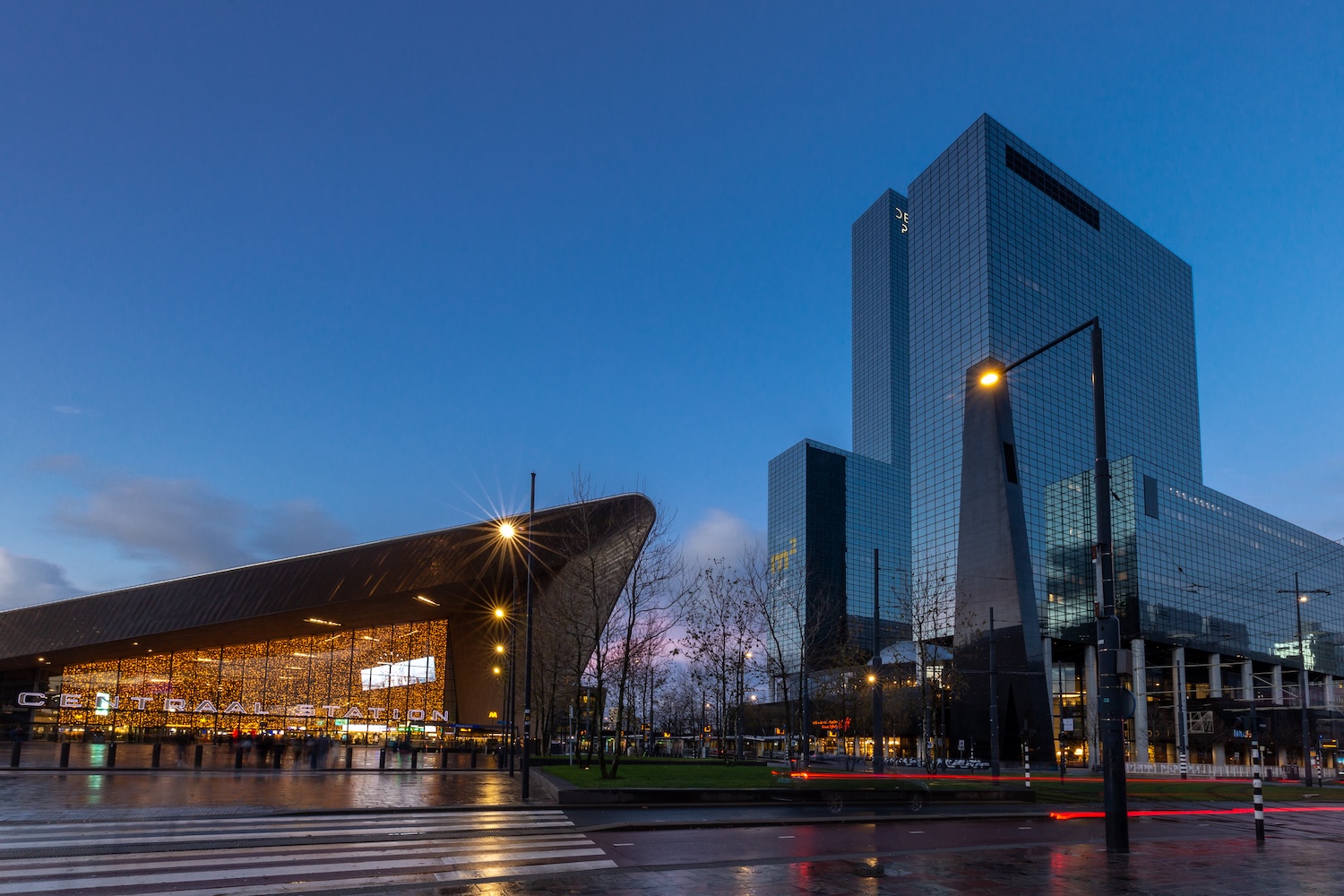
“today’s aerospace landscape demands proximity,” Iqbal said. GI described a roadmap for a Netherlands manufacturing and assembly center, including local engineering talent and European components. It also outlined a sourcing role for specialty steels and alloys destined for its US manufacturing operations. The proposed relationship runs in both directions across the Atlantic.
The office opening and the manufacturing roadmap occupy different points in that account: one was announced as an opening, the other as a plan. Together they show what Iqbal is working toward. His businesses are becoming more physically rooted in the markets they serve. The career that started with software now includes the decidedly material questions of tools, buildings and where to put the next machine.