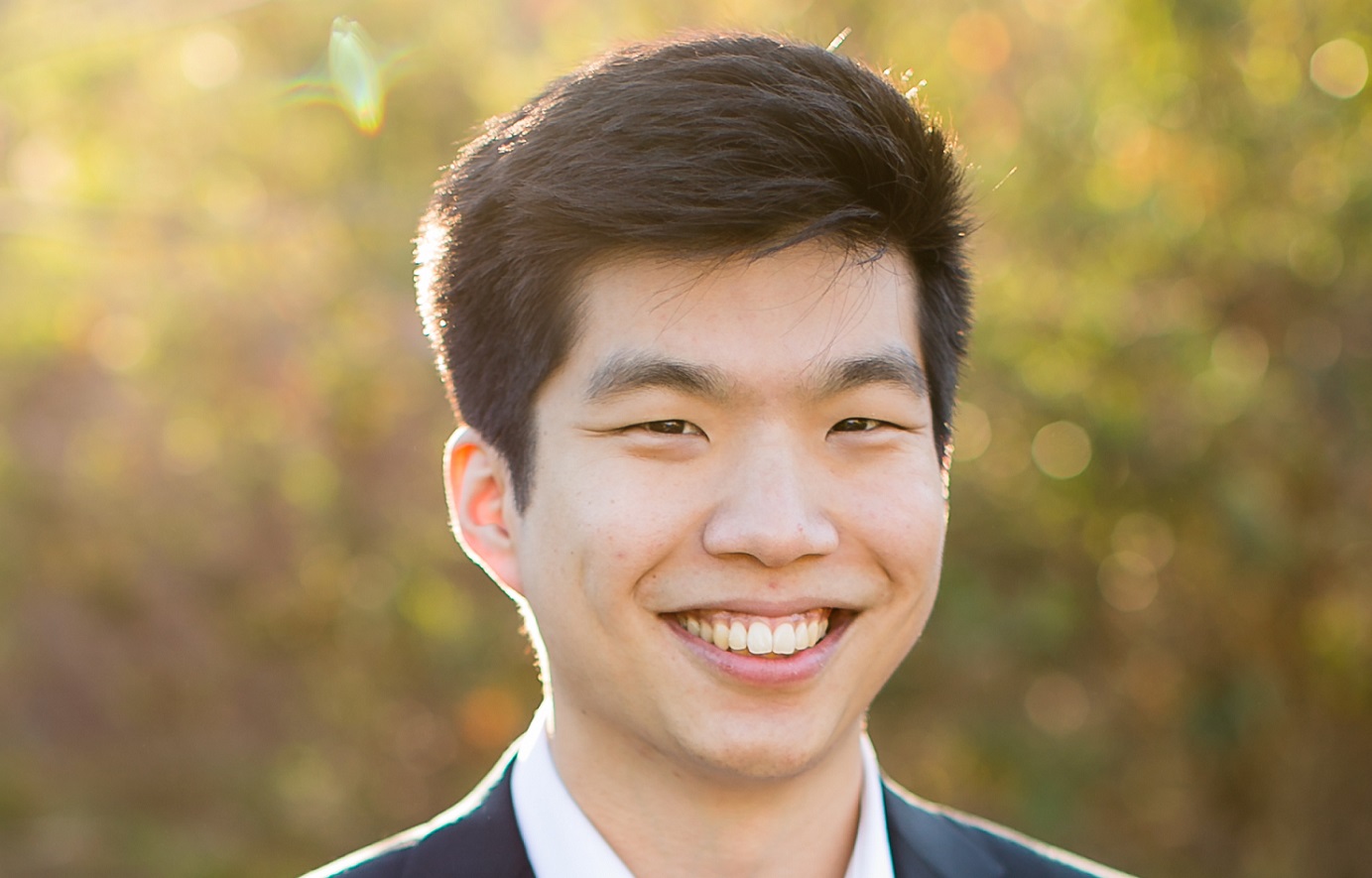
A pharma company that wants to move at the speed of software
There are roughly several thousand known human diseases. We have FDA-approved treatments for about 500 of them. Benjamine Liu can recite that gap from memory, and he has built a company around closing it. Formation Bio, the New York firm he co-founded and runs, calls itself AI-native pharma - it licenses drug candidates from biotech and pharma partners, co-develops them, and pushes them through clinical proof-of-concept faster than the traditional industry thinks is possible.
The bet underneath all of it is a single contrarian sentence: the bottleneck in medicine is not discovery. It is the clinical trial. Liu reached that conclusion not in a boardroom but in a research lab, watching promising science stall on its way to actual patients. Most founders pivot toward the exciting part. He pivoted toward the slow part on purpose.
There are several thousand known human diseases, yet we only have FDA-approved treatments for about 500 of them. Patients are desperately waiting for more.
From TrialSpark to Formation Bio
In December 2023 the company changed its name from TrialSpark to Formation Bio. Liu was careful to frame it as a name change, not a pivot - the founding mission, he said, was steadfast. The renaming captured a journey the company had already made. TrialSpark started in 2016 building software: digital patient recruitment, site management, the unglamorous plumbing of a clinical trial. Then it became a CRO, running entire trials end-to-end for sponsors. Then it did the thing CROs almost never do - it began acquiring and in-licensing its own drugs.
That climb up the value chain is the whole story. Each stage taught the company something the next stage needed. Build the tools, then use the tools, then own the asset the tools were built to serve. By the time it became Formation Bio, it wasn't a vendor to pharma anymore. It was pharma - just assembled differently.
Climbing the stack
How TrialSpark became a drug owner
The $372 million vote of confidence
In June 2024 Formation Bio closed a $372 million Series D led by Andreessen Horowitz, with Sanofi joining as a strategic backer. Sequoia, Thrive Capital, Emerson Collective and Lachy Groom returned; SV Angel Growth and FPV Ventures came in new. The round pushed total funding past $610 million and marked, per the company, a material step up from its prior billion-dollar valuation. The capital had two jobs: buy more drugs to develop, and build more AI to develop them with.
Alongside the money came a headline that mattered more in the long run. Formation Bio announced a three-way collaboration with OpenAI and Sanofi to design custom AI tools for drug development - described as a first of its kind in pharma and life sciences. A 190-person startup sitting at the table with one of the world's largest drugmakers and the most-watched AI lab is not an accident. It is the point.
Chronic hand eczema
The lead program, the furthest along, has reached Phase 3.
Sensory neuropathy
A second clinical candidate in the in-licensed portfolio.
Knee osteoarthritis
A third program advancing through clinical development.
Yale, Cambridge, Oxford - and a detour into the bottleneck
Liu's resume reads like a tour of the world's most storied universities. He graduated from Yale with a degree in biology and the college's highest graduation honor. He earned an MPhil with distinction in Computational Biology from Cambridge's Department of Applied Mathematics and Theoretical Physics, as a Paul Mellon Fellow. Then he went to Oxford as a Rhodes Scholar for his DPhil, working under Sir Simon Lovestone, a leading figure in Alzheimer's research.
His doctoral work fused machine learning with sprawling healthcare datasets - genomics, proteomics, transcriptomics, metabolomics, medical imaging - to develop diagnostics and therapeutics for neurodegenerative diseases like Parkinson's and Alzheimer's. It was during that work that the realization landed. The science was advancing. The trials were not. The smartest thing he could do for patients was not another model. It was a better way to test what the models already suggested.
Every day counts for patients waiting for new treatments. Time is of the essence.
Why AI, and why now
The cliche about drug development is that it costs more than a billion dollars and the better part of a decade to bring one therapy to market. Liu's argument is that a large slice of that cost lives in clinical operations - recruiting participants, starting studies, managing the data that piles up. Those are exactly the tasks that AI handles well. Formation Bio uses it to speed recruitment, compress study startup, and clean and manage trial data. The drug doesn't change. The friction around it does.
It helps that the people writing the checks believe him. The company's backers have included Sam Altman, Michael Moritz, John Doerr, a16z, Sequoia and Thrive. As part of the Series D, a16z's Scott Kupor and Sequoia's Alfred Lin joined the board alongside Moritz. That is a roomful of people who have spent careers spotting the moment a slow industry is about to get a software-shaped jolt.
We are building the pharma company of the future designed to bring new treatments to patients faster than ever before.
The career, in order
Co-founds TrialSpark with Linhao Zhang to make clinical trials radically more efficient.
Builds clinical trial technology - digital patient recruitment and site management software.
Evolves into a CRO, running end-to-end trials for drug sponsors on the in-house platform.
Raises $156M as the company begins its transformation into a drug developer.
TrialSpark rebrands as Formation Bio - same mission, new name.
Closes $372M Series D led by a16z with Sanofi; announces OpenAI + Sanofi AI collaboration.
The co-founder, and the company he keeps
Liu did not build alone. His co-founder, Linhao Zhang, came out of engineering roles at Oscar Health and Salesforce with a computer science degree from the University of Texas at Austin, and focuses on strategy and operational excellence. The pairing is telling - a computational biologist who understands the science, and an engineer who understands how to make systems run. Beyond Formation Bio, Liu serves as an advisor to Harvard Business School's MS/MBA Program in Biotechnology, helping shape the next round of people who will try to sit at the intersection he occupies.
What makes him unusual is not the pedigree, though the pedigree is real. It is the discipline of going after the unsexy problem. Plenty of brilliant people want to discover the molecule. Liu decided the more valuable work was making sure the molecules we already have can prove themselves faster. That is a less romantic ambition and, arguably, a more useful one.
"While our name is changing, our founding mission is steadfast: to bring new treatments to patients faster and more efficiently."
What he's chasing
The aspiration is not modest: build the pharmaceutical company of the future, one where AI is in the foundation rather than bolted on, and where the time between a promising candidate and a treatment patients can actually take is measured in less. Five hundred treatments for thousands of diseases is the gap. Formation Bio is Liu's answer to it, and the answer is still being written - three drugs in the clinic, hundreds of millions in the bank, and a founder who reads that 500-versus-thousands statistic less as trivia and more as a deadline.