A payment can cross a continent before the person receiving it can answer the smallest question: what is this for? Ben Peters has spent a career in that awkward interval. He has watched money race ahead while its explanation arrives late, lands in another system, or disappears into somebody’s inbox. In the bright theatre of financial technology, speed gets the applause. Peters keeps an eye on the paperwork.
His most revealing public line came in 2018, when he was chief operating officer of insurance-payments company VPay. Faster transactions were attracting attention, but he offered a correction from the machinery room. “There is some value in speed of payment,” he said. “But speed of payment doesn’t mean anything if you don’t know what it’s for.” It is the sort of sentence that makes a product demo suddenly feel underdressed.
The point was not resistance to speed. It was a demand for completeness. A business payment has a second cargo: remittance data, the information that lets the recipient identify, post, and reconcile it. Send the dollars without the details and you have delivered a mystery. Deliver the mystery faster and the mystery merely has more time in the working day.
Speed of payment doesn’t mean anything if you don’t know what it’s for.Ben Peters, 2018
A career spent at the awkward handoff
Peters arrived at that observation honestly. His career has moved through utility billing, fleet services, insurance claims, cybersecurity, and vertical software. These are not industries in which money enjoys travelling light. Each transaction carries instructions, controls, exceptions, and a small escort of people who need to know what happened. The glamorous noun is “payment.” The operational reality is a procession.
He began building his executive record in finance and operations. Across nearly a decade, he held CFO roles at ChoicePay, Fleet One, and IOD. ChoicePay handled electronic bill-payment tools. Fleet One built services for managing vehicle fleets and was acquired by WEX in 2012. IOD was a data-platform business acquired in 2015. The sectors differed, but the executive education was consistent: cash flow and software do not occupy separate universes. One is always leaving fingerprints on the other.
At VPay, Peters graduated from reading the ledger to running the operation. He spent more than six years as COO and remained after Optum acquired the company in 2021. VPay’s challenge was not merely to replace checks with electronic rails. It had to get the information and money to cooperate. Peters described the ambition as a “soup to nuts” service, stretching from the creation of remittance data and the payment itself through reconciliation and treasury management.
He was equally clear about why paper survived. A check asked little of its recipient before arrival, while electronic methods often required onboarding. VPay could begin with a client whose payments were entirely check-based and gradually reduce that share. Same Day ACH had a place, Peters said, but it could not by itself solve the separation between a transfer and the information describing it. Adoption depended on the complete experience. A new rail was not enough; the surrounding habits, records, and incentives had to move with it.
There is a useful glimpse of his temperament in that phrase. He speaks like an operator who distrusts a bridge that reaches only three quarters of the river. His public comments return to whole systems, customer outcomes, and the boring connective tissue that turns a technical capability into a dependable service. Before ConnexPay, he also served as interim president of VikingCloud, adding cybersecurity to a résumé already crowded with transaction-heavy businesses.
A succession without a bonfire
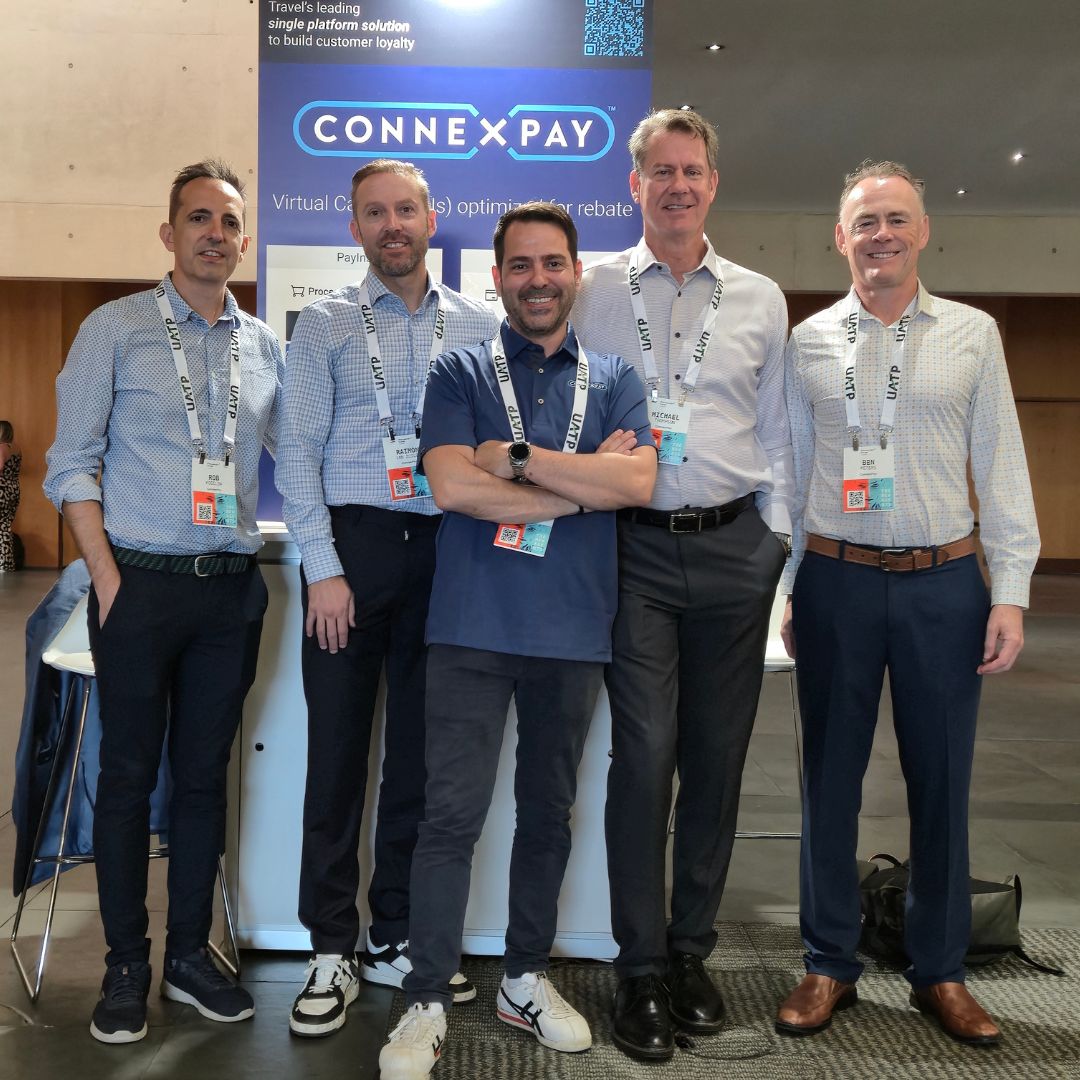
In April 2024, Peters became CEO of ConnexPay. Founder Bob Kaufman moved to chairman after seven years in the top job. The usual mythology of succession prefers a conqueror at the gate or a founder clinging to the furniture. This one was presented as a relay. Kaufman would remain active; Peters would take the daily operating reins. Each man publicly made room for the other.
Peters described Kaufman as someone he had long admired and was fortunate to call a friend. Kaufman, who had known Peters for 18 months before the appointment, pointed to shared views about culture, customer service, and innovation. The language matters because leadership handoffs are acts of product design. Authority must be legible. Continuity needs a purpose. Vanity, ideally, is placed in a drawer.
Peters inherited an unusual machine. ConnexPay links the two sides of a commercial transaction that payment providers have traditionally sold apart. A customer pays a travel agency, marketplace, or other intermediary. That business must then pay an airline, hotel, media supplier, or claims recipient. Conventionally, accepting the first payment and issuing the second means separate providers, contracts, support teams, funding arrangements, and reconciliations. ConnexPay’s proposition is to put the pair in one system.
The benefit is easiest to understand in travel. A company may collect a traveller’s card payment today and owe the airline or hotel immediately. If the incoming money is still settling while the outgoing bill is due, the intermediary has to supply its own working capital. Connect the two sides and the customer’s funds can support the supplier payment. Match their data and reconciliation stops resembling archaeology.
ConnexPay now says it issues more than $10 billion annually. The number is large; the product promise remains almost domestic: keep the money and its meaning in the same room. One contract and one reconciliation sound like administrative details until one imagines the alternative repeated across thousands of payments.
The operator’s second act
His first months as CEO were less about theatrical reinvention than assembling an operating bench. ConnexPay appointed Matt Peterson as CFO and promoted Blair Jeffery to president and COO. Peters said Peterson would help scale analytics, credit, and compliance. Of Jeffery, he praised a customer-centered approach and looked toward making ConnexPay the payments partner of choice. The founder’s platform was becoming the operator’s organisation.
The company also received a United States patent in November 2024 for technology that unifies incoming and outgoing payments. Peters credited Kaufman’s founding vision and the product and technology teams’ work. That choice of emphasis fits the succession. He did not rewrite the origin story around his arrival. He attached his chapter to it.
By 2026, that chapter had a new service called Payment Valet. Its target is the last mile that sleek payment diagrams usually edit out: keeping a payee’s preferences current, routing a payment by virtual card, ACH, or check, handling delivery, and answering the recipient when something needs investigation. Peters introduced it with a concise promise: “We’re the payments experts that you don’t have to become.”
It is a sharper line than the standard invitation to “focus on your core business.” It names expertise as a burden. Vertical software companies and insurance businesses may want to offer excellent payments without turning every employee into a payments specialist. ConnexPay proposes to carry the complexity, right down to printing a check when the supposedly paperless future meets a recipient who still prefers one.
Simplicity, responsibly carried
Peters’ professional biography spans New Zealand, Texas, Europe, and Asia Pacific. He earned a bachelor’s degree from Massey University and an MBA from the University of Texas at Dallas. He lives in the Dallas area with his wife and their four children. Away from work he travels, plays tennis and golf, pursuits that reward judgment about pace, placement, and the occasional bad lie.
Those details do not make a grand theory of leadership, nor should they. What emerges publicly is narrower and more useful: a practical appetite for closing loops. He has moved from the CFO’s concern with what the numbers mean, to the COO’s concern with whether the system works, to the CEO’s concern with where the system goes next. The title changed. The questions remained related.
We’re the payments experts that you don’t have to become.Ben Peters, 2026
Fintech is fond of making hard things look instant. That is a worthy trick when the hidden difficulty has been handled, not merely hidden. Peters’ career offers a modest test. Does the information arrive with the money? Can the recipient understand it? Can the finance team reconcile it? When the odd case fails, does someone own the answer?
If the answers are yes, speed becomes valuable. If not, the future of payments has simply delivered yesterday’s confusion with excellent latency. Ben Peters seems determined to keep the explanation attached.