Ben Lee once helped persuade an entertainment lawyer to abandon an idea for an Uber competitor. An app developer talking somebody out of an app is an unusual sales proposition. There goes the invoice, one imagines. Yet Lee made a business out of the conversation that happens before the expensive mistake. In his telling, the lawyer, Gary Stiffelman, credited that advice with saving $300,000 and six months. Sometimes a software company can deliver a reason to put the cheque book away.
That episode captures the commercial trick behind Rootstrap. Clients arrived wanting something built. Lee and his colleagues sold them a way to examine the request first. A vague ambition could become a prototype, a development plan, or a decision to stop. The developer had made room for doubt, and found a price for it.
Lee has since changed his own plan. The former Neon Roots CEO and Rootstrap cofounder now builds in hospitality, with re:center in Santa Teresa, Costa Rica. There are actual buildings involved. For someone who has spent years translating ideas into things people can use, timber is an interesting new interface.
A busboy with executive ambitions
Long before the workshops, Lee worked in restaurants. He began as a busboy and moved into hospitality management before turning 18. His childhood ambitions were unusually specific: he wanted to be a corporate executive. Other children might have settled for a costume with a cape. Lee preferred the business wardrobe.
He also sold things on eBay and made small websites, blogs and landing pages. Selling and making were already companions. His father taught him to sell and encouraged him to start in business at eight; Lee later credited his family for supporting his decisions. He is the youngest of four children.
Hospitality was more than an early job. It supplied an education in the experience surrounding a purchase. A customer remembers the welcome, the attention and the departure as well as the item on the bill. Years later, those details would turn up in a software workshop with a surprisingly elaborate sense of occasion.
In 2011, Lee and Drew Harding founded Neon Roots. They had worked together in the agency world. The new business began with one customer and $1,000 in its bank account. That is enough money to make a start, provided the start does not include much furniture.
The client ordered an app. Lee sold a question.
The agency business had an awkward incentive built into it. More development hours could mean more revenue, even when the customer would benefit from a smaller product. New features made the invoice grow. Whether they made the application more useful was a separate matter, often discovered after the money had left.
Neon Roots encountered its own expensive lesson when a fixed-scope project nearly bankrupted the business. A promise that looks tidy in a contract can become very untidy in production. Lee and his colleagues reconsidered the assumptions behind their work, including the habit of treating the customer's request as the final verdict on what should exist.
In his 2017 account of the workshop's beginnings, Lee traced it to an eager client in 2012 whose idea the team did not want to build. Turning away revenue was difficult. They offered the roadmapping process instead. It gave the client something useful to buy while allowing the agency to pause before promising a finished product.
The early workshop translated an idea into a testable prototype over four weeks. Discovery had acquired a name, a boundary and a deliverable. It could be sold independently. The client could leave with a clearer proposition rather than an obligation to buy a large development engagement.
- 01DefineWhat is the idea?
- 02TestWho wants it?
- 03PrototypeHow will it work?
- 04MapWhat comes next?
A decision point before a development commitment.
That changed the meaning of a successful meeting. A customer could decide against an app and still have received value. The workshop made a commercial place for the sentence that an hourly development business might otherwise struggle to say: perhaps the idea should go no further.
Even the brainstorm came with a welcome
Lee understood that a workshop needed to feel like a product. In conversation with agency adviser Jake Jorgovan, he described the influence of hospitality on Rootstrap's customer experience. There was even a swag box. Strategy had packaging, and the packaging helped people tell the story of what they had bought.
It sounds like a small flourish beside the serious work of market testing. But selling a process presents a practical problem: the customer cannot hold the reasoning in their hands. A box gives an abstract purchase a physical arrival. It makes the beginning visible.
Former participants also helped sell the workshop by describing their experiences. Lee talked about giving advice to entrepreneurs who were not yet suitable customers, with relationships sometimes yielding referrals years later. His approach allowed for a longer memory than the immediate sales target.
The client roster brought its own theatre. Snoop Dogg and Tony Robbins went through Rootstrap engagements. Robbins's team subsequently worked with Neon Roots on the Breakthrough University app. The shared procedure is the interesting part: even a famous name still had to confront what the product would do for its audience. Celebrity could open the meeting; it could not answer every question in it.
A workshop acquires a wardrobe, then a company
By the end of 2016, Lee was describing a business with several creative appetites. Neon Roots had launched internal products, acquired developer Franky Aguilar's 99centbrains and opened its West Hollywood creative headquarters. Rootstrap had merchandise. The workshop was beginning to behave like a brand one might actually wear.
Lee also worked with Brennan Dunn on Mastering Project Roadmaps, an educational product for freelancers. The proposition travelled well: take discovery and estimate work commonly supplied for free and make it a paid service. A technique developed inside an agency could become something other agencies learned to sell.
The appetite for experiments included Sitcomd, which let people turn their photos and videos into montages resembling 1990s sitcom introductions. It is a pleasingly unserious counterweight to product backlogs. A firm can care about commercial discipline and still want to put somebody's holiday into an opening-credit sequence.
Consolidation followed. In his January 2018 letter looking back at 2017, Lee announced that Neon Roots and Rootstrap were merging under the Rootstrap name. The workshop that had helped keep the business going now supplied the identity for the combined operation. A preparatory step had become the name on the door.
“never underestimate the power of combining simplicity with hustle.”
Ben Lee, 2017
A large audience, an awkward receipt
Lee applied the same experimental appetite to his own visibility. In 2017, he wrote about generating five million LinkedIn views in 60 days. Instagram had already brought him a large following, but he found LinkedIn more commercially useful. The professional network's supposedly dull surroundings turned out to contain people who might actually buy his services.
Rootstrap later used his experience as a marketing case study. His Instagram account had reached 120,000 followers in about five months, yet the audience did not align with the company's customers. Attention was abundant; relevant demand was scarcer. The numbers looked handsome, but handsome numbers have never been obliged to pay an invoice.
There is a useful symmetry here. Rootstrap asked whether an app served the people it was intended for. Lee's own audience supplied another version of that test. Reach becomes a business asset when it reaches the right people. A crowded room is only the beginning of the calculation.
The founder edits his own job
His doubts about the agency model persisted. Writing in 2018, Lee argued that selling hours limited what a services business could earn. Paid discovery helped, but it still consumed time. He was examining the ceiling above the business he had helped create, and considering models that might loosen the connection between revenue and hours worked.
In September 2020, he announced his departure from Rootstrap. His account was candid about his preference for creative work, coaching and smaller teams. “I like my creative space, and I like working in small teams,” he wrote. He also acknowledged that managing a larger organisation demanded habits different from his own.
That distinction gives the exit some texture. Founding a business can require a person to perform many jobs. Growth can make those jobs less compatible. The skill that wins the client, the impulse that starts a new product and the discipline that allocates a team's time do not automatically arrive in one convenient human package.
This time, the prototype has walls
By April 2024, Lee was describing construction of re:center in Costa Rica while also identifying himself as chief marketing officer of Formula.Monks. His career had returned to hospitality, with the experience of software sales, product workshops and audience building packed into the return journey.
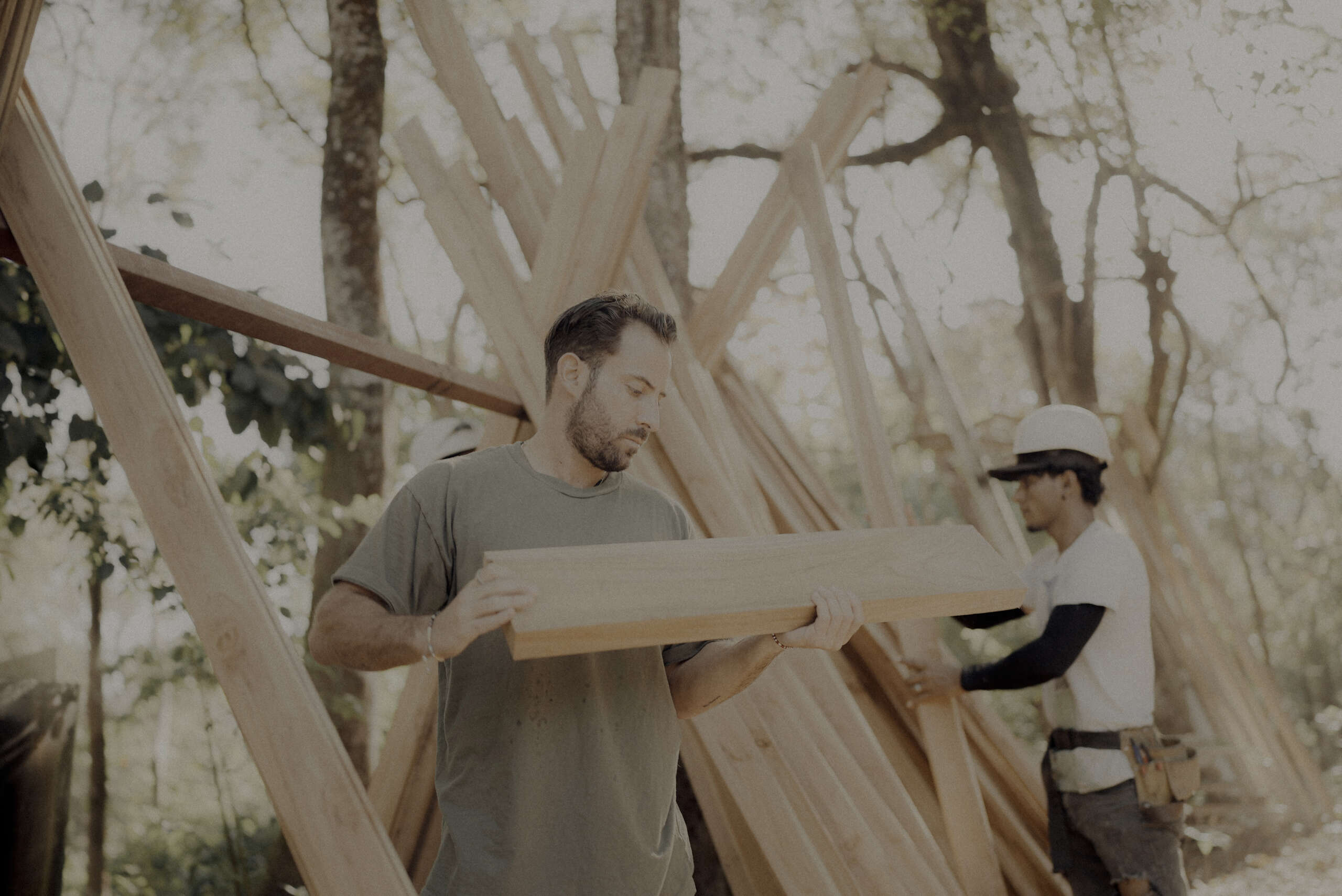
Today, his business website places him in Santa Teresa and pairs re:center with consulting for hotel and retreat owners. He offers help getting reservations booked eight to twelve months ahead. The promise is his commercial offer, and it points to familiar territory: turning operating experience into a service another owner can buy.
The setting has changed considerably since the first client arrived wanting an app. Yet the continuity is easy to recognise. Lee keeps finding a piece of work around the main purchase, giving it a shape and asking whether somebody will pay for it. First came the restaurant floor, then the workshop, the course and the audience. Now there is a lodge. The question has acquired a view.
Read, listen, follow
More of the conversations, projects and ideas along the way.
- Ben Lee Ventures Current work and hospitality consulting
- re:center The lodge in Santa Teresa
- LinkedIn Posts and professional profile
- Instagram Photos and updates
- YouTube Lee’s video channel
- Twitter / X Public profile linked in interviews
- Facebook Public profile linked in his 2020 interview
- TikTok Short videos
- The first workshop Lee’s 2017 entrepreneur AMA
- The early company Inc.’s 2016 Neon Roots profile
- The customer experience A conversation with Jake Jorgovan
- The early ambitions Lee’s 2016 interview
- The family connection Lee’s 2020 conversation
- The internal experiments Lee’s 2016 year in review
- The merger Lee’s January 2018 company letter
- The audience experiment Rootstrap’s account of Lee’s social strategy
- The five million views Lee’s October 2017 essay
- The hourly ceiling Lee’s 2018 agency argument
- The departure Lee’s September 2020 essay
- The next build Lee’s April 2024 interview and photographs