The first client said it did not like publicists. This is a promising way for a public-relations story to begin. In 2004, Becca Parrish walked into The Odeon, the red-neon Tribeca bistro that had fed downtown New York since 1980, to pitch its 25th-anniversary celebration. She had not over-rehearsed. She told them what she thought. The owners hired her because, as Parrish later remembered it, they disliked the profession but liked her.
The assignment was theatrical: a party for roughly 1,500 people, with Lorne Michaels, Fran Lebowitz and Julian Schnabel in the crowd. Parrish tried to persuade Philippe Petit to walk a wire between two poles. He declined. The failed stunt is instructive. The party did not need it. The room already carried the message.

The product is the room
Becca is usually described as a communications agency. That is accurate in the way that describing a restaurant as a food seller is accurate. The firm handles media and influencer relations, social strategy, content, events, audience mapping, partnerships and crises. Its commercial side adds business analysis, capital introductions and real-estate advice. Parrish Co, launched in 2024, pushes further upstream - helping institutions, developers and brands shape concepts, recruit partners and connect hospitality to capital.
Communications
Media, influencers, networks and counsel when the situation gets delicate.
Commercial
Business strategy, capital introductions and real-estate advice.
Creative
Content, social execution and collaborations that give a brand a public life.
Community
Audience insight, social listening and events that turn spectators into regulars.
The customers are the people who make places and experiences: restaurants, chefs, hotels, developers, consumer brands and cultural institutions. The public roster runs from Le Bernardin and The Odeon to Rockefeller Center, A24, Netflix, American Express and The Metropolitan Museum of Art. The common problem is not merely “get press.” It is: explain why this place belongs in culture, put the right people around it, and keep the answer interesting after opening week.
Those figures came from the 2026 Observer profile of Becca's campaign for the first North America edition of The World's 50 Best Restaurants. Observer also counted more than 100 broadcast segments and 8,000 social mentions reaching 65 million people. The numbers are enormous; the mechanism was familiar - turn a ranking announcement into an occasion the dining world wanted to discuss.
A velvet hammer in a noisy trade
Parrish's phrase for the method is the “velvet hammer” - soft in manner, forceful in effect. She has said the firm believes less is more and pitches selectively enough that journalists sometimes complain they do not hear from it often. That is a meaningful distinction in an industry tempted to treat every inbox as a slot machine.
“She'd rather lose a story and give you good advice than plug you everywhere.”Eric Ripert, on Becca Parrish
The advantage is accumulated context. A general agency can distribute a restaurant announcement. A specialist knows why the chef's previous dining room mattered, which critic dislikes a rehearsed tasting, which brand makes a credible collaborator, and which opening-night guest will still care six months later. Becca's difference is not a secret channel to awards - no publicist controls Michelin - but a dense network and an experienced eye for cultural fit.
There is a cost to this work. Becca does not publish rates. In 2020, Eater reported that restaurant PR retainers across the market commonly ran from $5,000 to $10,000 a month, often with a six-month minimum. That range is industry context, not a Becca quote. It also explains the central argument against outside PR: an owner can spend the same money on food, staff or direct social media and still earn attention.
Industry-wide · 2020
Six-month minimums were common. Becca's own pricing is not public.
The service makes the most sense when the agency's network is hard to reproduce: a consequential launch, a reputation problem, an expansion into a new market, a partnership search, or a founder who has neither the time nor the temperament to maintain hundreds of media relationships. It makes less sense when the product is weak, the budget is fragile, or the founder already speaks directly to an engaged audience. Publicity can accelerate a story. It cannot repair dinner.
The day the dining rooms went dark
Hospitality was Becca's moat, and in 2020 it became the first thing to fail. Restaurants closed their dining rooms. Clients lost revenue. The agency increased pro-bono work, highlighted relief efforts such as Eleven Madison Park's community kitchen, supported the Independent Restaurant Coalition's advocacy and helped Pass the Mic elevate Black women in hospitality. It also widened its client base into design, real estate and consumer products.
This was not a random pivot. Years earlier, Parrish had already changed her mind about what clients needed. They expected more than traditional publicity; visual storytelling, photography, design, analytics and direct-to-consumer channels had become part of the job. The pandemic sped up an expansion already in motion.
The Odeon opens the door. The anniversary party becomes the first Becca assignment.
Los Angeles. A second office brings the specialist model to another hospitality capital.
The dining room disappears. Advocacy and diversification reshape the brief.
Finance meets hospitality. Prosek invests, London opens and Parrish Co launches.
A top-ten ranking. Becca lands at No. 9 on Observer's PR Power List.
The next structural change arrived in January 2024. Prosek Partners, known for financial and corporate communications, made an undisclosed minority investment. Parrish summarized the fit neatly: Prosek understood business; Becca understood consumers. The deal supported a London office and gave Becca a path into finance, while Prosek gained hospitality and experience-marketing knowledge. It was not a merger of look-alikes. Each side supplied the access the other lacked.
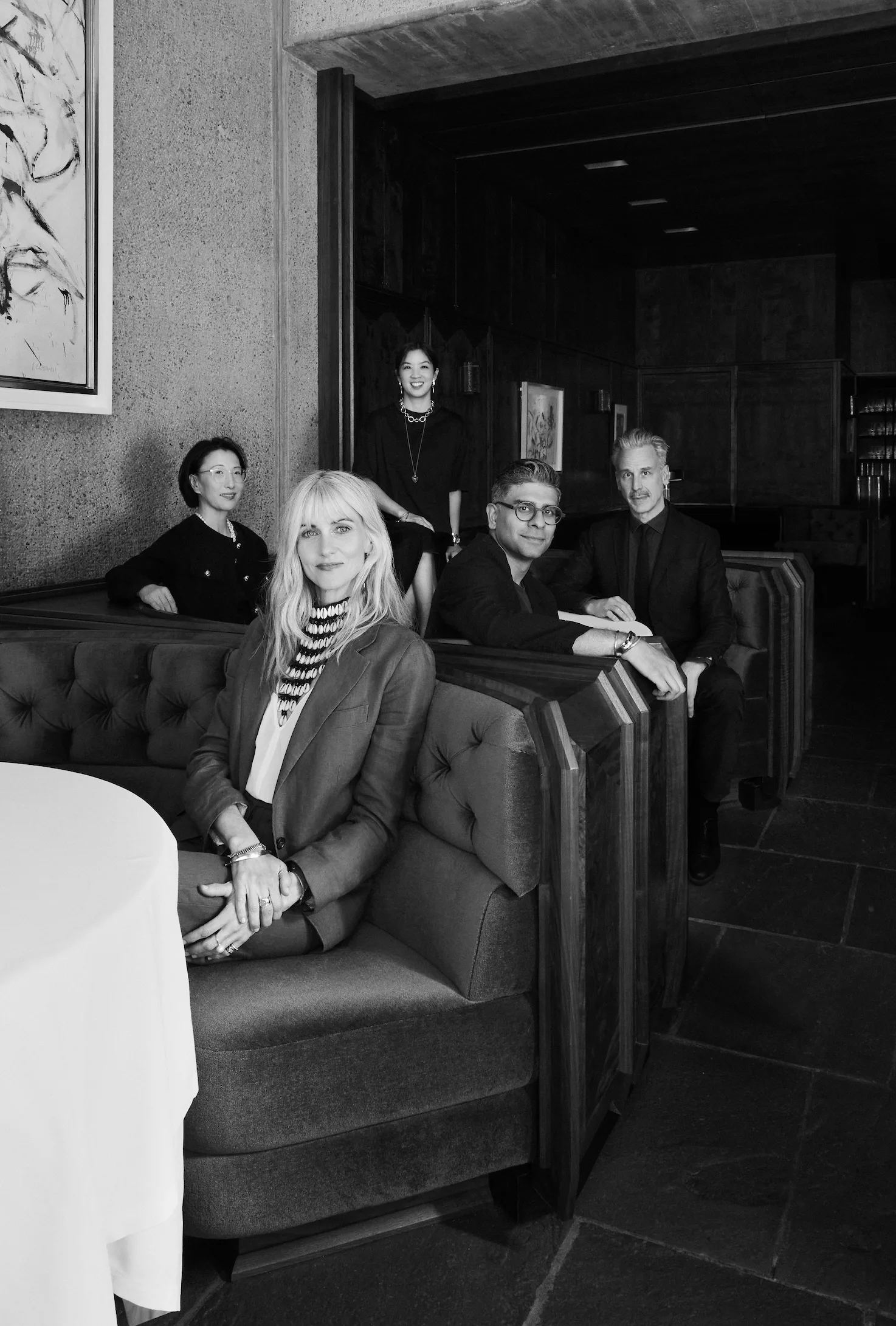
What a small brand can borrow
Most companies cannot copy Becca's contact list. They can copy its order of operations. Begin with a point of view clear enough to reject bad opportunities. Learn the audience before choosing a channel. Build relationships when nothing is being launched. Make an event useful to the people in the room. Measure attention by what it changes - reservations, reputation, partners or repeat customers - rather than by the size of a clipping report.
The five-part velvet-hammer checklist
- Name the one thing the brand does that others cannot credibly claim.
- Choose a few audiences whose behavior would actually change the business.
- Create a real experience before manufacturing a media moment.
- Maintain relationships between launches, not only when asking for coverage.
- Say no to attention that muddies the point of view.
Parrish once wondered whether she was “too nice” to succeed in New York. The company she built suggests a more useful distinction. Nice is a manner. Discernment is a strategy. Becca's particular skill has been to combine the two - and to know, before the invitations go out, why anyone should want to enter the room.