The first cans of Bawi had a small problem: some of them burst. Victor Guardiola had mailed samples of his new sparkling agua fresca to potential investors. Then photographs came back of stained pantries. In his Austin living room, a stack of roughly 300 cans made the particular creak of metal under pressure. A drink inspired by his mother's pineapple recipe had passed its first test, the farmers market. It had failed a rather more important one: remaining a drink inside the can.
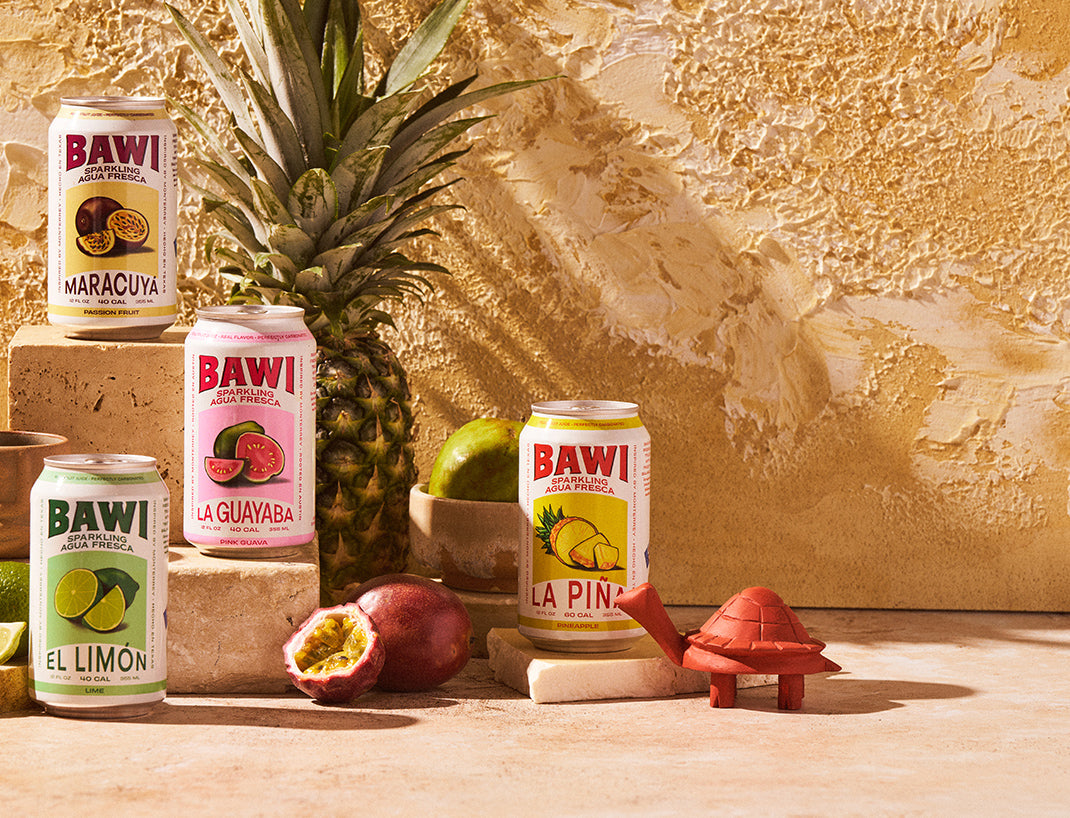
- Bawi makes lightly sparkling Mexican agua fresca in pineapple, lime, passionfruit and pink guava.
- The brand began with late-night fruit prep and Saturday sales at an Austin farmers market; its canned line launched in April 2022.
- Guardiola says a strong market day brought in $600-$700. Commercial production required an initial equity raise of a little over six figures.
- Restaurants and cafes became a growth channel after one Austin account sold more than 200 passionfruit cans a week.
The exploding-can episode is a useful place to begin because it strips the romance off a food brand. A recipe can be beloved, a label can be beautiful, and a stranger can hand over money at a market stall. None of those things prove that fruit juice will behave itself in sealed aluminum, travel through a distributor and wait patiently on a shelf. Bawi had to learn the difference.
Forty pineapples, one Saturday
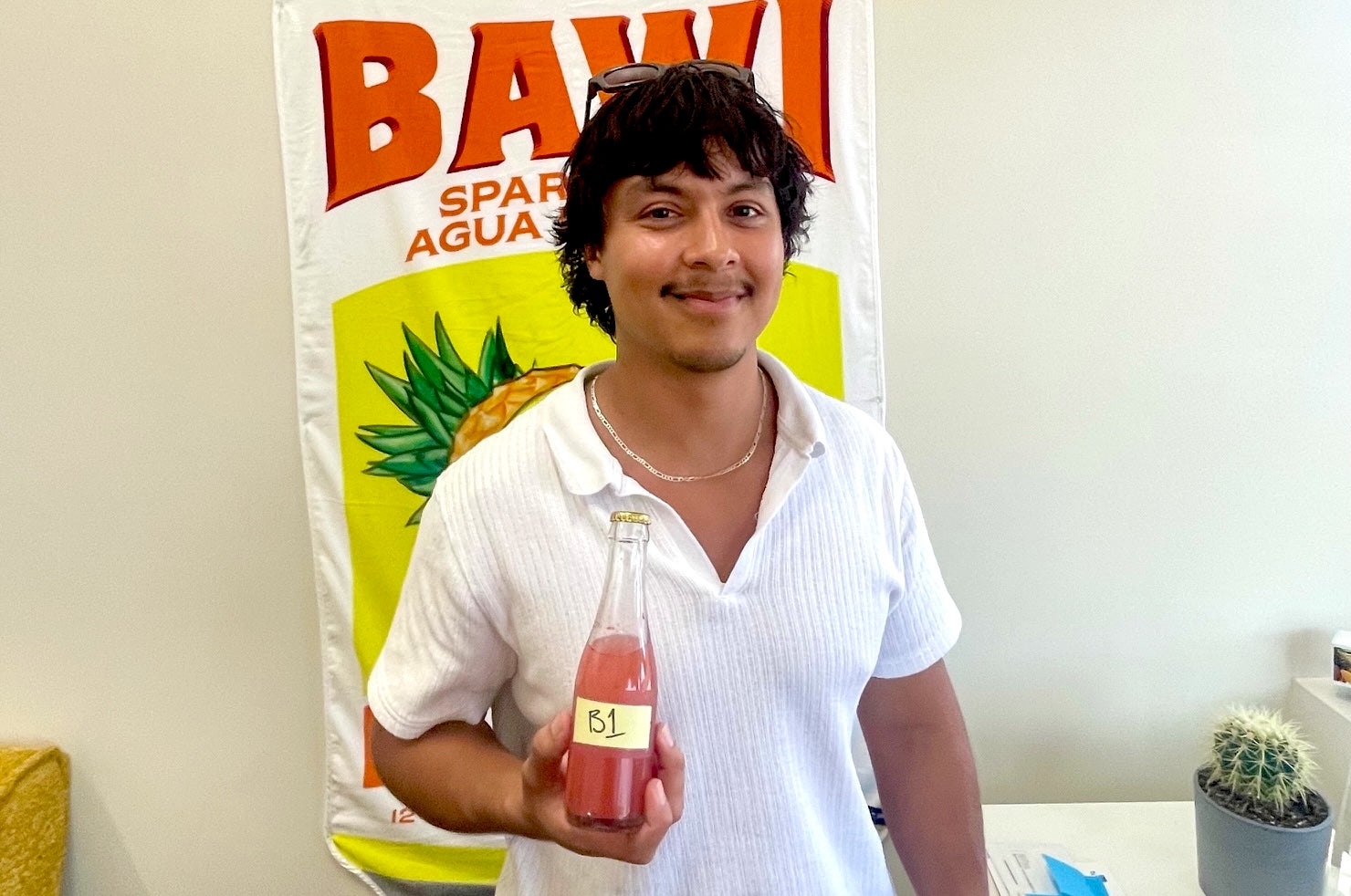
Guardiola was born in Monterrey, Mexico, and grew up in Texas. While studying in Austin, he and Jordan Hicks, a friend from community college, imagined a modern version of the Mexican drinks that carried so much familiarity and so much sugar. They worked up early batches from Guardiola's mother's pineapple agua fresca recipe. On Fridays, Guardiola went to a commercial kitchen after class, taking the cheaper off-hours slot. He has recalled working until 3 a.m., then arriving at Barton Creek Farmers Market at 7.
The arithmetic was absurdly physical. There were about 40 pineapples to juice for a market day, equipment to borrow and carbonation to learn. On a good Saturday, selling out might bring in $600 or $700. That gave the founders something a pitch deck could not: evidence that people would actually buy the thing. It did not give them enough cash to pay for cans, ingredients and a manufacturer with the right production line.
COVID-19 ended the market run after several months. Guardiola took a job at Austin coffee startup Golden Ratio and kept working on Bawi. The first equity money eventually came from three investors, including P. Terry's founder Patrick Terry and Torchy's Tacos founder Mike Rypka. Guardiola has described the sum only as a little over six figures. The first meeting with Terry followed repeated personal outreach; the founders' account is a reminder that an early investor often buys conviction before a young brand has much else to sell.
A better label needs better science
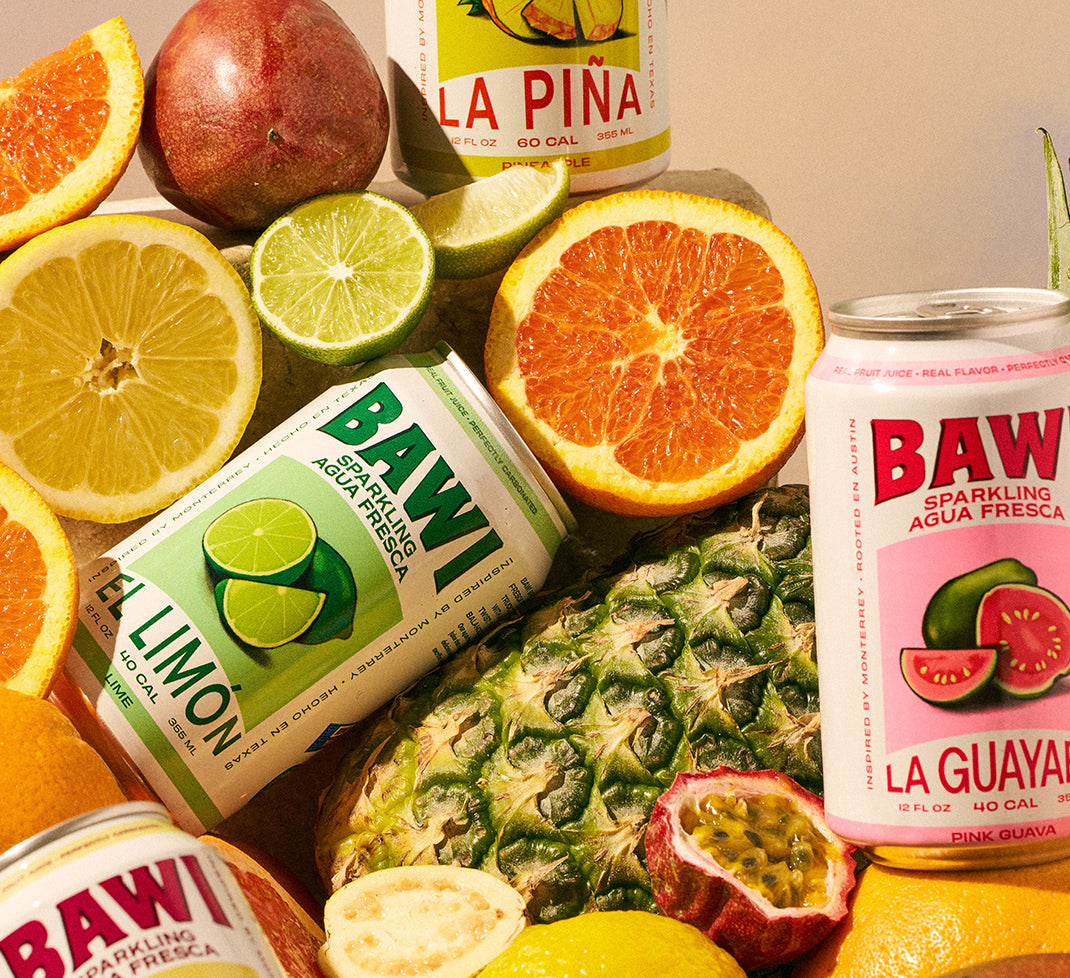
Bawi occupies a rather precise space between sweet Mexican soda and almost-flavorless sparkling water. The current line offers La Piña, El Limón, La Maracuyá and La Guayaba. The company describes its 12-ounce cans as lightly bubbly, made with real fruit and containing 40 to 60 calories. Its online shop sells four-packs and 12-packs, with a variety option for the curious. The pink guava flavor, with orange and hibiscus notes, was named one of Bon Appétit's 2026 Pantry Award beverage picks.
Guardiola's point is cultural as much as nutritional. He has argued that beverage buyers often ask what novel functional ingredient a new drink contains, while overlooking the missing cultural range already in their coolers. Bawi's flavors speak plainly in Spanish. The trick is that the familiar taste comes in a format that can survive modern grocery distribution and appeal to shoppers who want less sugar.
“I remember getting pictures of their pantries with exploded cans.”Victor Guardiola, recalling an early production run
That practical trick needed a specialist. Jill Talcott, formerly a beverage development leader at Starbucks, helped Bawi work through formulation and production. The early contaminated batch had come from a local brewery, an accessible first manufacturer but a poor guarantee of the quality controls needed for fruit juice. The team had to solve shelf stability without losing the taste and short ingredient list it wanted. Guardiola has put the cost of a suitable manufacturer's line time in the tens of thousands of dollars before raw materials. The affordable market-stall experiment had reached the expensive part of the business.
The cafe was a better billboard
The canned launch arrived in April 2022. Bawi first stacked up independent retailers and natural-food stores, then used those sales to reach Central Market in Texas. The company later entered Sprouts and select Whole Foods regions. Its website also sells direct to customers, giving it a second route to someone who has tried a can and wants a case at home. By August 2026, Guardiola said Bawi was available in 44 states, though its deepest business remained in Texas and California.
Store count is an easy number to celebrate and a dangerous one to manage. A shelf can be a lonely place for an unfamiliar can. Under president Dylan Houston, Bawi studied which accounts sold fastest. One Austin customer, Cosmic Coffee, was moving more than 200 cans of passionfruit a week. Guests drank it with food and bartenders used it as a mixer. That changed the sales map: Bawi began to press into cafes, bars and restaurants, especially in the markets where it also wanted grocery reorders.
Guardiola says that after a year of saturating Austin food-service accounts, Bawi saw a 370% increase in sales velocity in Central Market and some other local accounts. That is the company's own comparison, not a controlled study. Still, the mechanism is plausible: a restaurant gives a new drink a setting, a cold serving and a little borrowed trust. A supermarket offers hundreds of neighboring labels and roughly a second to choose.
The customer is wider than one demographic. A person who grew up with agua fresca may recognize the flavor and the language; another may simply want something fruitier than seltzer and lighter than soda. Bawi sells to both through retailers, food-service buyers and its own store. That mix also explains its competitive position. It is a culturally specific drink, but it plays in the much larger contest for a nonalcoholic can at lunch, dinner or a gathering.
The expensive part of being small
The company's finances trace the distance from that first market stall. Guardiola reported revenue of $370,000 in 2024 and $1.2 million in 2025, with a 2026 goal of roughly $3.5 million when he spoke in August. A reported $3.5 million seed raise in 2024 helped expand retail; BevNET reported a further $6 million round closing in June 2026 for West Coast retail and food-service growth. The sums are large next to a $700 Saturday, yet cans, line time, inventory, distribution and people all require cash before a customer takes a sip.
There is an unusually portable lesson here for anyone building a physical product. Test the proposition with the cheapest honest sale you can make. Find someone who understands the science between prototype and shelf. Then study reorders at a manageable number of accounts before treating every new door as a victory. Guardiola now warns young brands that a wide retail rollout can demand more cash and field support than they can provide.
Bawi's story remains unfinished. A Pantry Award is recognition, not proof of permanent shelf space; a 2026 revenue target is a target. What is clear is the sequence. A Mexican family drink met a new audience at a market, failed in a can, survived better engineering and found an unexpected sales pitch across cafe counters. Those creaking cans were embarrassing. They were also precise feedback.