The Houston Warehouse That Sells You a Computer Twice
For 35 years, a family-run distributor on Bissonnet Street has made money on both ends of a computer's life - selling the hardware, then hauling it back to shred, wipe, and resell. Here's how the loop actually works.
Most computer companies want to be at the start of a machine's life - the shiny box, the launch event, the unboxing video. Bass Computers, Inc. figured out something quieter and more durable: the money is also at the end. Since 1991, this Houston wholesale distributor has sold new and refurbished hardware to resellers across the country. Since 2007, it has also been hauling that hardware back - to wipe it, shred it, refurbish it, and sell the good parts again. It is, in the plainest terms, a business that gets paid on both ends of the same computer.
The company sits at 10558 Bissonnet Street in southwest Houston, in the kind of low warehouse building that never makes a magazine cover. It was founded in January 1991 by Mel Hall and Jim Campbell as a wholesale computer parts distributor. Thirty-five years later it is still independently owned, still on Bissonnet, and now running one of the more complete hardware-lifecycle operations you will find at its size - roughly 58 employees doing the work that far larger firms outsource to three separate vendors.
Longevity is its own kind of achievement in this corner of the market. The PC distribution business of the 1990s was crowded with regional players, and most of them either got swallowed in consolidation or folded when margins on new hardware thinned to almost nothing. Bass is still here, marking its 35th anniversary in 2026 under the same independent ownership - a survivor in a category that ate most of its peers. Part of the reason is that it never bet the company on the thinning margin of a new box; it kept finding the next adjacent thing its customers needed.
What it actually doesTwo businesses wearing one roof
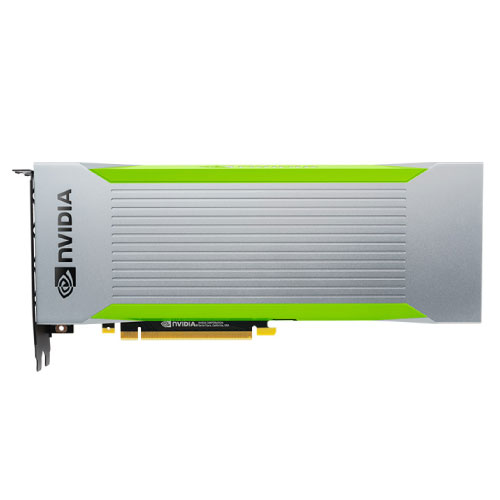
Strip away the keyword soup and Bass Computers does two things. First, it distributes: it stocks and sells hundreds of hardware and software options - desktops, laptops, servers, components, networking gear, power protection, racks, memory, storage, and video surveillance - primarily to resellers and dealers who mark them up and pass them along. Brands in the mix include Dell, HP, Lenovo, NVIDIA, and Seagate. Second, it recycles: through its Bass Computer Recycling arm, it takes end-of-life electronics off companies' hands, destroys the data, and reclaims whatever still has value.
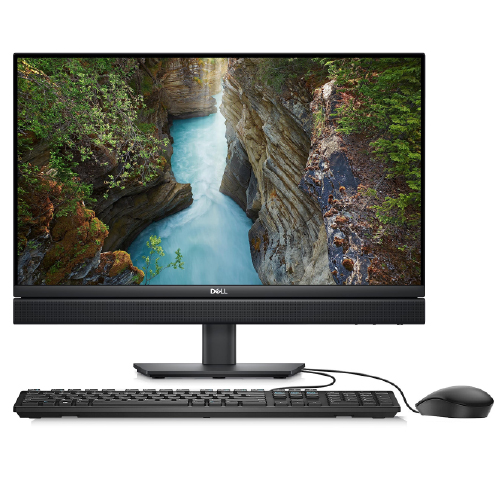
The two halves feed each other. A machine that comes in through the recycling door - a three-year-old workstation a hospital retired, say - can be wiped, tested, refurbished, and sold back out through the distribution door. What can't be reused gets responsibly broken down. That circularity is the whole trick, and Bass was doing it before "circular economy" became a slide in every sustainability deck.
The recycling arm nobody planned
The recycling business wasn't a boardroom strategy. It started, by the company's own account, because customers kept asking the same question: what do we do with the old machines? Bass had the facility, the staff, and the technical know-how to answer it. So in 2007 it built the Bass Computer Recycling department around the demand that was already knocking on the door.
"Bass Computers has been in the technology industry since 1991 and has the tools, equipment, facility, and knowledgeable staff to refurbish electronics for a second life." - Bass Computers, on its refurbishment operation
Today the recycling arm designs and runs full electronics-disposal plans for organizations: free pickup, secure transport, data destruction, hard-drive shredding, resale-value return, and detailed reporting. That last item - the paper trail - is what separates a favor from a service. Regulated industries can't just toss a drive in a dumpster; they need documented, certified proof that data is gone. Bass built its offering around that need.
The timing helped. By the late 2000s, data-breach headlines and tightening privacy rules had turned a retired hard drive from junk into a liability. A discarded machine wasn't just clutter - it was a potential leak with a company's name attached. Bass took a problem its customers were nervous about and turned it into a line item they could put on a purchase order, complete with a report to hand to auditors. What had been an awkward question at the end of a sales call became its own product.
Who pays for itThe customers with rooms full of dead machines
On the distribution side, the customer is the reseller - the dealer buying wholesale to sell retail, who cares about price, availability, and warranty. On the recycling side, the customer looks different: oil and gas companies, K-12 school districts, medical and healthcare organizations, and other institutions sitting on aging fleets of computers loaded with sensitive data. These are exactly the buyers who value certification and reporting over a rock-bottom quote.
Four certifications doing quiet work
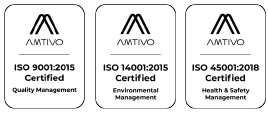
Bass operates as an R2v3 (Responsible Recycling), ISO 9001:2015, ISO 14001:2015, and ISO 45001:2018 certified facility. In plain terms: a recognized standard for responsible electronics recycling, plus quality management, environmental management, and occupational health and safety. It is more compliance machinery than many far larger firms carry, and for a company selling trust in data destruction, it is the product as much as the shredder is.
From server racks to graphics cards
The product range is broad by design. Refurbished desktops and laptops arrive with pre-installed genuine Microsoft Windows and warranties running one to three years. Beyond whole systems, Bass stocks the parts that keep machines alive - memory, storage drives, video cards, power supplies, cooling, cases - plus networking equipment, racks, power protection, and a security line that includes video surveillance cameras and video management software.
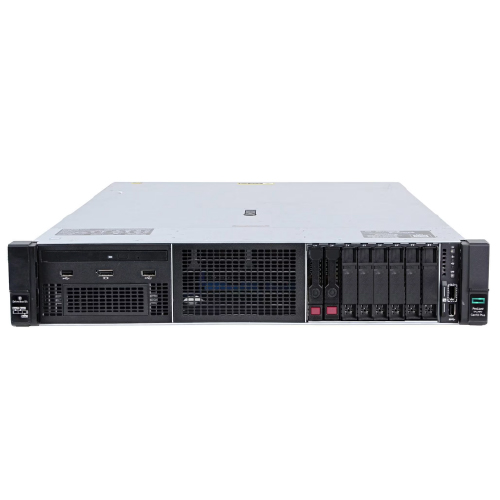
For a reseller, the pitch is straightforward margin math: a refurbished OptiPlex or ProLiant priced well below new, warrantied, and available in volume, competes hard on the line items where a buyer is watching the budget. That is the everyday utility here - not a moonshot, just a cheaper, warrantied box that works.
The security line is the newer wing of the catalog. Alongside the computing gear, Bass stocks video surveillance cameras, video management software, and related security products - a natural adjacency for a distributor that already sells networking equipment and racks to the same install-focused resellers. A dealer wiring up an office can source the switches, the storage, and the cameras from one account rather than three. It is the same instinct that built the recycling arm: watch what the customer buys next, and stock it.
Revenue on both ends
The elegant part of Bass Computers is structural. Most hardware businesses pick a side of the transaction - you either sell equipment or you dispose of it. Bass sits on both. Money comes in when a reseller buys a system; money comes in again when an organization pays to have its old fleet responsibly retired; and the retired fleet becomes fresh refurbished inventory that gets sold a third time. Each machine can touch the business more than once.
"Customer satisfaction is our top priority." - Bass Computers
Where it fitsSmall player, full stack
In the market, Bass overlaps with two different sets of competitors. On distribution it sits alongside national wholesale IT distributors and the flood of refurbished-hardware sellers on marketplaces. On IT asset disposition it competes with national ITAD names like Iron Mountain and Sims Lifecycle Services. What Bass offers that the giants often can't is a single, local, certified shop that does distribution, refurbishment, and disposal together - handy for a regional buyer who would rather not manage three vendors and three contracts.
The reader's takeaway is less about copying a slogan and more about copying a shape: find a transaction you already touch, then figure out what happens to the object after the sale. Bass didn't invent recycling; it noticed its own customers had a problem at the end of the lifecycle and had the facility to solve it. That instinct - build the back half of the loop you're already standing in - is the reusable part.
It would not work everywhere. The model leans on physical facility, certification investment, and a reseller network built over decades - none of which appear overnight, and all of which cost real money and years of relationships to assemble. For a business without the space, the certifications, or the customer trust, the second half of the loop is a wall, not a door. Bass had 16 years of runway before it opened the recycling side, and 35 years of relationships underneath the whole thing.