Barry Ritholtz has spent much of his career studying an expensive paradox: intelligent people are remarkably inventive at losing money. They chase what has already risen, flee after it falls, confuse a large number with an important one, and invite politics to rearrange portfolios built for decades. Wall Street usually treats these errors as bugs to be corrected with another forecast or product. Ritholtz treats them as the main event. The market is uncertain; the human appetite for certainty is dependable.
That distinction explains the unusual shape of his working life. He is co-founder, chairman and chief investment officer of Ritholtz Wealth Management. He created The Big Picture, the markets-and-economics blog he has published under that name since 2003. He created and hosts Bloomberg Radio's long-form Masters in Business, and also hosts the shorter investor-literacy series At the Money. He has written columns, two books and tens of thousands of posts. Each outlet returns to the same stubborn question: how can people make sound decisions when the future refuses to identify itself?
The brief, the trade and the rebuttal
Ritholtz did not begin with a finance degree or a tidy apprenticeship at a bank. At Stony Brook University, his studies ranged from political science to mathematics and physics. He wrote a national-affairs column for the campus weekly, served as student-body vice president and rode with the equestrian team, competing at the 1981 national championships. The combination looks eccentric on paper. It also previews the adult: argument, numbers, public writing and a taste for speed.
He went on to the Benjamin N. Cardozo School of Law, joined the Law Review and graduated cum laude in 1989 after focusing on economics, antitrust and corporate law. He passed the bar examinations in New York and New Jersey, practiced for several years, and became disenchanted. Technology and markets pulled harder.
The legal training survived the career change. A lawyer learns to separate testimony from evidence, examine incentives and notice the fact artfully missing from a persuasive case. Markets offer an endless supply of persuasive cases. A bullish strategist has a chart; a bearish one has a scarier chart; a television producer has seven minutes to make both sound urgent. Ritholtz's instinct is adversarial in the useful sense. Ask what would disprove the claim. Ask whether the number has context. Ask who is selling.
“I'm just so very aware of all the things I don't know.”Barry Ritholtz, in conversation with Paul Krugman
Trading supplied harsher instruction. A courtroom argument may persuade; a market position eventually receives a price. Ritholtz became an early adopter of behavioral economics because it described what he could see: analysis does not arrive in a sterile laboratory. It passes through fear, ego, recency, tribal loyalty and the intoxicating conviction that this time one's insight is unique.
A public notebook becomes an institution
In 1998, he started posting market observations on GeoCities. There was no mature creator economy waiting with a playbook. Finance blogs were barely a category. He moved the site to Typepad in 2003 and named it The Big Picture. The title promised scale; the daily practice delivered granularity: morning reading lists, charts, market arguments, strange digital finds and the occasional Knicks lament.
The blog became a public notebook with a ruthless advantage over television: memory. Predictions could be revisited. Charts could be compared. A thesis had an address and a date. Readers ranged from individual investors to money managers, journalists and public institutions. The routine also made Ritholtz unusually legible. He was direct, sometimes prickly, interested in data and willing to say when fashionable certainty smelled wrong.
The Big Picture takes its name and begins its long Typepad-era run.
Bailout Nation turns a market post-mortem into an argument about policy, incentives and responsibility.
Ritholtz co-founds an independent, fiduciary wealth-management firm with Josh Brown and their team.
Masters in Business gives financial careers the long interview they rarely received on radio.
How Not to Invest organizes three decades of mistakes into a field guide for avoiding them.
The wider public noticed when Ritholtz warned about the housing implosion, mortgage derivatives and recession before the global financial crisis. His downside target of Dow 6,800 was reached in March 2009. The more revealing moment came at the low, when he turned bullish. A contrarian who cannot reverse course is merely a loyalist for the opposite team. Changing one's mind when the evidence changes is the whole trick, and perhaps the hardest one.
His 2009 book, Bailout Nation, examined how easy money, poor incentives and policy choices fed the crisis. It earned awards and beach-reading praise, an uncommon combination for a book about institutional failure. By then Ritholtz had become a familiar financial commentator. Columns followed at The Washington Post and Bloomberg Opinion, along with the inevitable labels: influential, dangerous, “blogfather.” The last is affectionate but slightly misleading. He did not preside over a finished medium. He kept posting.
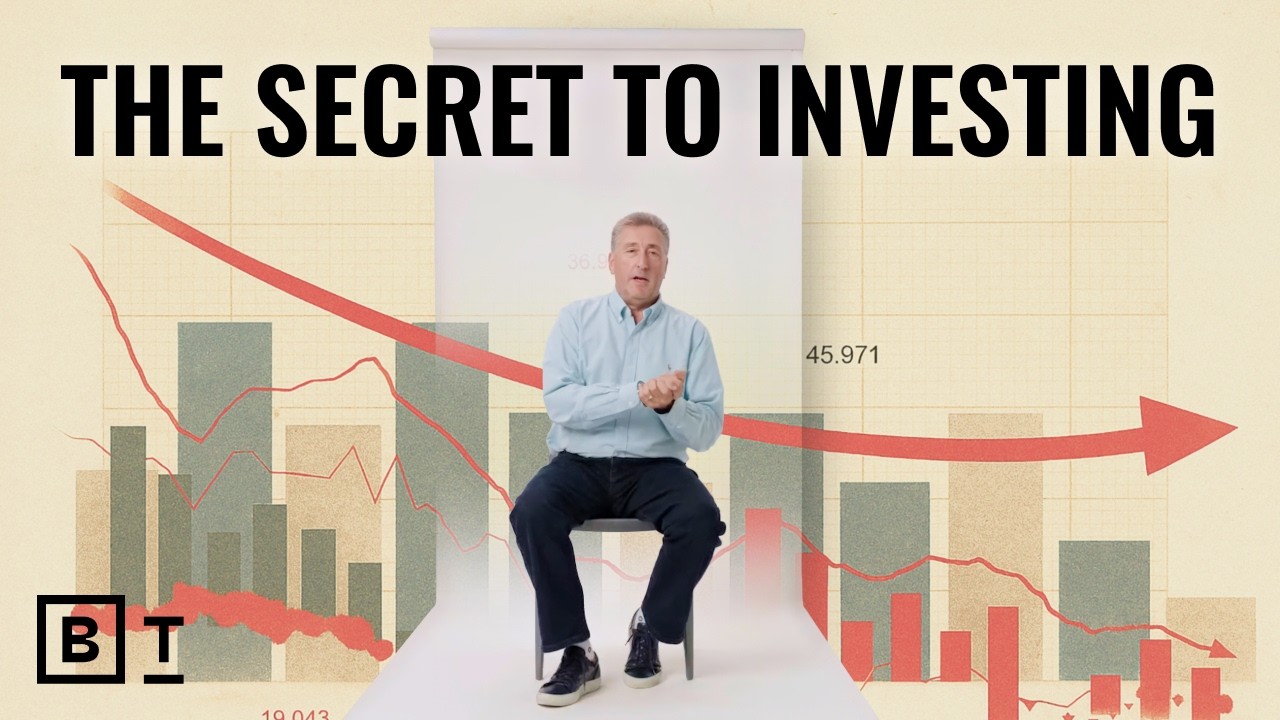
The long answer beats the hot take
Masters in Business began in 2014 with a wager against compression. Give an accomplished investor, economist or executive an hour or more. Start before the triumph. Ask about childhood, education, wrong turns, mentors and the ideas that changed the guest's mind. Then listen closely enough to abandon the next prepared question when the answer opens a better door.
Ritholtz has described research and follow-up as the heart of his interviewing method. Technical guests need analogies, not dilution. Familiar names need questions that move beyond the résumé. Over the years, his guests have included Jack Bogle, Howard Marks, Ray Dalio, Robert Shiller, Michael Lewis and many others. The show became one of Bloomberg's most listened-to podcasts and won Adweek's 2023 business-to-business audio award.
There is a useful connection between interviewer and investor. Both must hold a view lightly enough to hear an inconvenient answer. Both work with incomplete information. Both get into trouble when a prepared narrative becomes more important than what is actually happening.
“The most important thing is not to interfere with the market's genius ability to compound returns over time.”Barry Ritholtz
The lucrative art of being less wrong
Ritholtz Wealth Management launched in 2013 as an independent registered investment adviser built around fiduciary advice, planning and investor education. The firm grew to more than $7.7 billion in assets under management and entered Barron's 2025 ranking of top independent advisers. Its public voice is not an ornamental marketing layer. Blogging, podcasts, videos and books form part of how the firm explains its worldview: rational decisions, evidence, broad diversification and awareness of behavior.
The subtraction portfolio
His second book, How Not to Invest, published in 2025, gives this philosophy its cleanest structure. The obstacles fall into three bins: bad ideas, bad numbers and bad behavior. Gurus forecast what cannot be known. Dramatic statistics arrive without denominators. Investors mistake activity for control, politics for analysis and a compelling story for evidence. The remedies are pleasantly uncinematic: make a plan, use broad low-cost indexes as a core, own appropriate bonds, mind taxes, diversify concentrated positions and be cautious around expensive complexity.
The approach borrows from the tennis idea of a loser's game. Amateurs tend not to win points with dazzling shots; they lose them with unforced errors. Investing offers similar temptations. Market timing must be right twice. Stock selection competes against armies of professionals. Panic selling interrupts compounding exactly when fear is loudest. One does not have to become brilliant. One can begin by becoming less interruptive.
Ritholtz is not advocating intellectual hibernation. His own publishing schedule would make that argument difficult. He is drawing a border between curiosity and compulsion. Read widely. Test claims. Consider scenarios. Then refuse to convert every stimulus into a trade.
Machines worth keeping
Away from markets, Ritholtz restores vintage sports cars. He has discussed converting a 1987 Porsche 911 to electric power, an act that will sound inspired or sacrilegious depending on the garage. The hobby suits him. Find an undervalued object. Inspect the machinery. Preserve what deserves preserving. Replace what no longer serves. Accept that taste matters, too.
His official biography also makes room for his artist-and-teacher wife Wendy, their dogs and the New York Knicks' offensive lapses. These details rescue a useful philosophy from becoming a joyless optimization regime. In his own list of good advice, Ritholtz includes spending money intelligently on time, experiences and joy. A portfolio is a tool for a life, not a substitute for one.
As of August 2026, the daily practice continues. He is still publishing reading lists and market notes, still interviewing, still discussing the paperback edition of How Not to Invest, still examining new technologies and old errors. The subjects change: AI, bond yields, tariffs, private markets, platform decay. The method remains recognizable. Put the claim in context. Examine incentives. Think in probabilities. Leave room to be surprised.
There is no promise here that humility makes an investor omniscient. Humility's value is more practical. It makes room for diversification before certainty becomes expensive. It permits a change of mind. It turns “I don't know” from an admission of weakness into the beginning of a process. In a business crowded with people paid to sound sure, Barry Ritholtz has made a long career out of a better question.