The bottle of water is easy to overlook. Beside a tube of blood, it seems like the less interesting specimen. But in a dialysis clinic, the water belongs in the same conversation as the patient. Ascend Clinical has built a business around that connection. Its laboratory examines what is happening inside people and what is circulating through the systems used to care for them.
- The core: kidney-care and dialysis laboratory testing.
- The connective tissue: LabCheck ordering, reporting, and mobile alerts.
- The wider remit: dialysis water, hospital water, Legionella, and device-reprocessing water testing.
That combination makes Ascend worth studying beyond nephrology. The company sells laboratory services to organizations with recurring, exacting needs. Around those services, it has assembled tools that help customers collect specimens, request tests, receive results, and train staff. The useful business lesson is quite concrete: examine every handoff your customer must manage before your work becomes useful.
A small room, then a browser
Ascend dates its founding to 2000. Its own history begins with desktop analyzers in a space smaller than a one-car garage. A year later came LabCheck, its web-based ordering and reporting platform. By 2003, the laboratory had moved into 35,000 square feet in Redwood City. Physical capacity and digital access were developing together almost from the beginning.
The sequence matters. A laboratory can produce a technically sound result that still creates work for the clinic receiving it. Someone must associate it with an order, get it into the right record, and make it available to the people responsible for follow-up. LabCheck addresses that surrounding work through electronic ordering, automated calculations, and standard or customized reports.
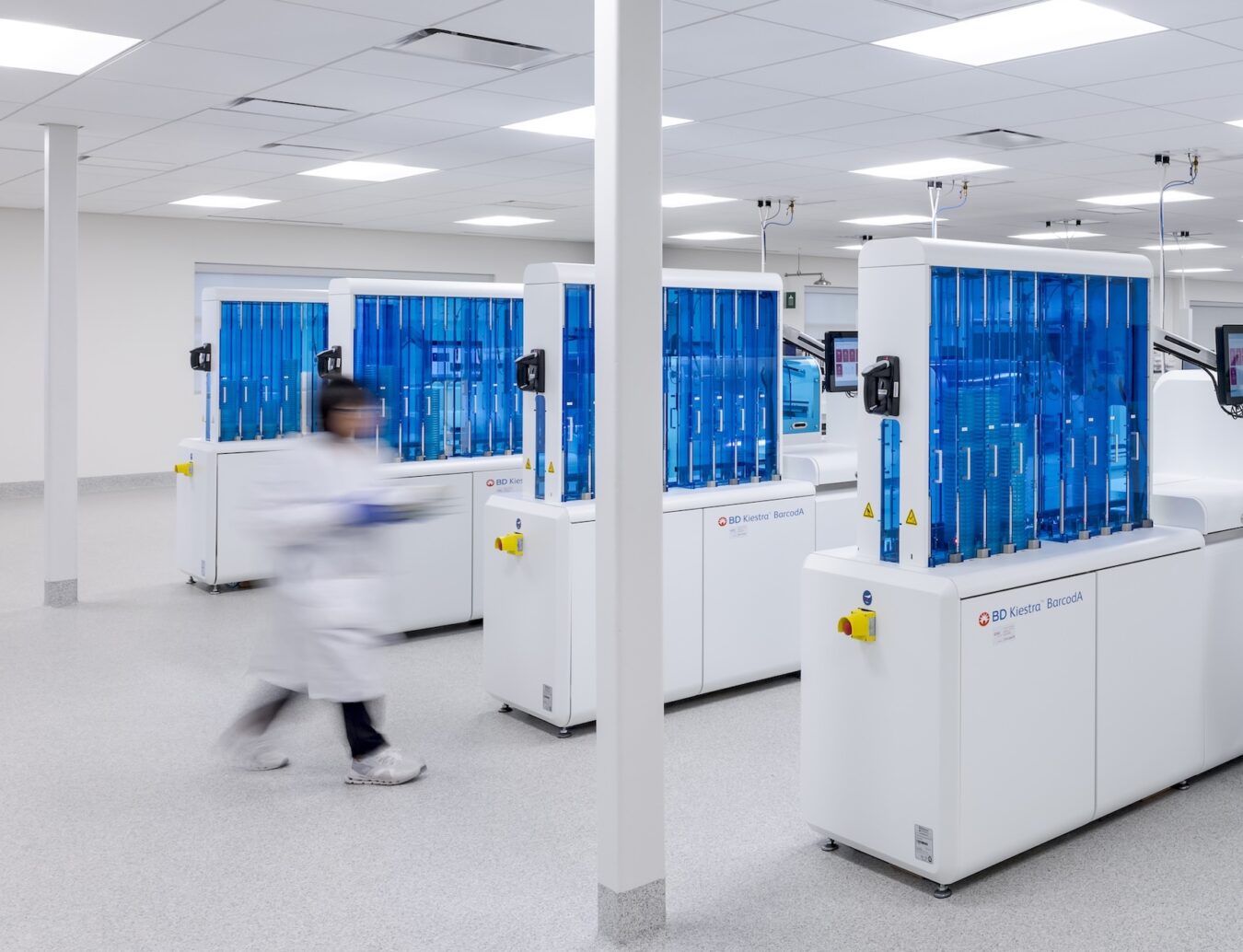
The result has somewhere to go
Today, LabCheck’s product page reports more than 2,000 customers, over 20 electronic medical record integrations, and approximately three million results reported monthly. Those are company-reported software figures, rather than a count of patients. They describe an interface that sits inside an ongoing clinical relationship.
The platform uses standard HL7 protocols to exchange data with third-party applications. Its features include supply ordering, role-based access, report distribution, and regulatory documentation. LabCheckGo, the mobile-friendly companion, lets customers review results and acknowledge critical action-level alerts across one or several facilities. For an operator overseeing multiple clinics, that is a practical reason to care about the software behind the laboratory.
Ascend’s clinical menu covers chemistry, hematology, immunochemistry, and microbiology. Kidney-care offerings include creatinine, cystatin C, renal function panels, and urine testing. Other services include infectious disease testing and QuantiFERON testing. Dialysis providers are the central audience, alongside hospitals, kidney-care organizations, and research teams. These are services purchased to support professional care and operating routines.
The other specimen
Water testing broadens the relationship. Ascend analyzes dialysis water and dialysate, while its hospital offering extends into critical water used in medical device reprocessing. Its AAMI ST108 service supports facilities monitoring water quality for that work. Legionella culture testing covers water samples and surface swabs. Each service gives a different team a reason to deal with the same laboratory.
LabCheck connects ordering and reporting across the work.
The distinction between bacterial culture and endotoxin testing is especially revealing. Culture looks for living organisms capable of growing. Endotoxin testing measures bacterial cell-wall material that can remain after organisms die. One answer cannot simply stand in for the other. Ascend’s water business depends on understanding which question a facility needs answered, then matching the specimen and method to it.
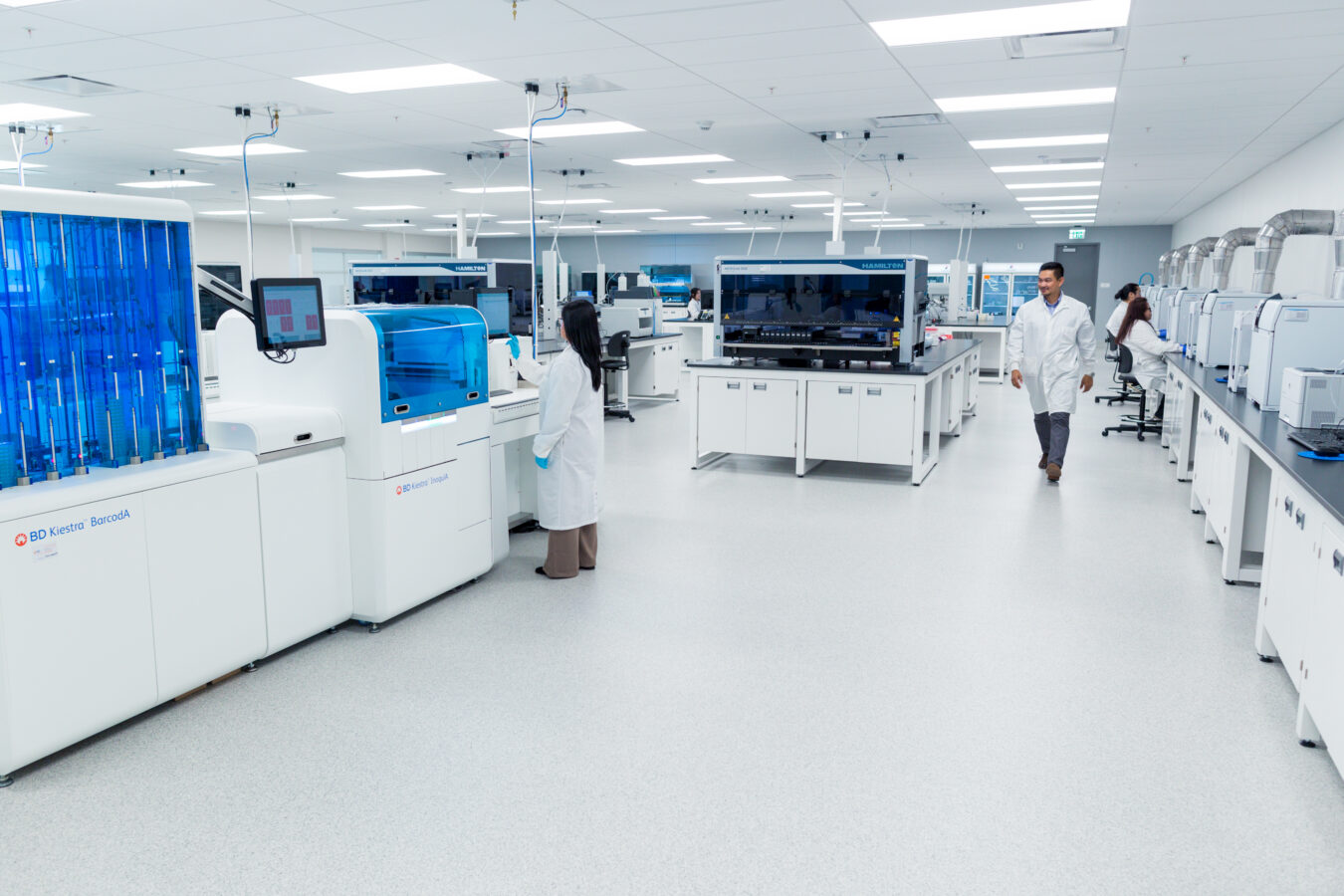
Machines do not collect the sample
Ascend’s expansion has required substantial physical infrastructure. A January 2022 announcement described plans for more than 40 Siemens Healthineers Atellica Solution analyzers at the Sunnyvale facility. Ascend’s corporate timeline records the opening of its 100,000-square-foot laboratory that year. The Siemens relationship brought chemistry, immunoassay, and sample-management technology into a larger operation.
Yet the company’s training catalog is full of wonderfully unglamorous subjects: specimen labeling, packaging and shipping, centrifuge inspection, and water collection. AscendU, launched in 2014, offers English and Spanish audio and video content. These subjects reveal the dependencies of automation. A fast analyzer still relies on someone choosing the right container and handling it correctly.
“We’re in the business of improving people’s lives.”Ascend Clinical’s stated mission
Ascend advertises a 24-hour turnaround for most specimens, with timing dependent on the test, shipping, specimen requirements, and additional analysis. Its microbiology guidance identifies labeling errors, leaking containers, expired supplies, and unsuitable transport conditions as reasons samples can be rejected. A clinic copying the approach should start with collection discipline and clear responsibility for reviewing results. Buying speed downstream cannot erase every mistake upstream.
There is also a human checkpoint inside the machinery. Ascend describes robotic plating and digital reading in its water-testing process, followed by a microbiologist manually reviewing each positive plate. The division of work is instructive: repetitive handling can be automated while an identified finding receives professional attention. The presence of robots does not mean every stage runs without judgment.
A specialist joins a bigger network
Specialization alone does not make Ascend unique. Spectra Laboratories also offers renal testing, water and dialysate analysis, education, and web-based data management. Ascend’s proposition rests on how its laboratory, proprietary software, support, and training fit together for customers. Comparing providers therefore requires looking at actual test menus, interfaces, logistics, and service arrangements.
For customers, the commercial appeal is continuity: a familiar reporting system, recurring testing, and help with the details that accompany both. Ascend names dialysis operators including Renalliance Group and Novo Dialysis in its customer testimonials. Its current website lists service across the United States and its territories, plus Mexico and Bermuda. Geography makes the handling and shipping arrangements part of the offering, rather than an afterthought.
Eurofins announced its acquisition of Ascend in April 2024, connecting the company with a broader renal and transplant-testing portfolio. Its subsequent annual results described software improvements that reduced rescheduling and relabeling work. That is a fitting detail to end on. Even inside a larger laboratory network, useful progress can be measured in the ordinary tasks a clinic no longer has to repeat.