Arip Tirta went looking for an investment property in Indonesia and found a business problem instead. From California, he could browse listings. Deciding which property deserved his money was harder. The information needed to judge the purchase was missing or difficult to assemble. For someone whose working life involved assessing investments, this was an especially irritating kind of window shopping.
He returned to Indonesia in 2011 and co-founded UrbanIndo. Its proposition was concrete: put property listings beside information that would help people make a decision. Prices in the surrounding area, access to transport, schools, and other local details could turn an advertisement into something a buyer could evaluate. A photograph of a house has its uses. It rarely explains whether the asking price makes sense.
Today, Tirta is President and Co-Founder of Evermos, the Bandung-based platform connecting local brands, resellers, and customers. The goods have changed. The recurring interest is access: to information, to a market, and to the skills that make participation possible. His career offers a view of Indonesian technology through the things that stand between an ordinary person and a useful opportunity.
A return ticket with a business plan
Before the property listings came the mathematics. Tirta completed his undergraduate degree at UCLA in 2002, then a master’s in Scientific Computing and Computational Mathematics at Stanford in 2004. His education sat at the intersection of mathematical reasoning and computation. His later work would place those skills inside businesses, where an elegant answer still has to survive a customer’s decision.
He spent seven years at Hercules Technology Growth Capital in Palo Alto, becoming Director of Investment Analysis and Strategy. That meant working with business strategy, valuation, financial models, investment opportunities, and negotiations. He had a seat close to the machinery that turns an idea into a funded company. By 2011, he wanted to try operating the machinery himself.
The move met resistance. Family, friends, and colleagues questioned leaving an established American career to start again in Indonesia. Tirta saw a country entering a period of technological change and wanted to participate directly. That ambition makes the return more interesting than a tidy success-story itinerary. Staying would have been understandable. Leaving meant giving up a familiar way of being competent.
Bandung was also the city where he had been born and raised. In his account of coming home, a visit to café S28 near his office reminded him of Palo Alto: people were discussing businesses and pitching ideas around tables. Coffee had crossed the ocean rather better than most business manuals. He recognized the activity, even though the setting had changed.
Learning what a market will pay for
UrbanIndo began with self-funding. An interested investor’s email arrived after the site had been running for two months, and the team chose to seek outside capital. Tirta’s explanation was practical: a technology startup contains unknowns and needs to move quickly. Funding could give the business more room to respond. The former investment analyst was now on the other side of the conversation.
In January 2018, 99.co announced its acquisition of UrbanIndo. At the time, UrbanIndo’s 1.2 million active property listings gave the Singapore-based company a larger presence in Indonesia. Listings represented years of participation by agents and sellers. A property marketplace needs people repeatedly bringing properties to it; the software has little to offer if the cupboards are bare.
The acquisition marked a change of ownership for a business Tirta had helped start. It also offers a useful perspective on the quieter work in his career. A database acquires value because people use it, contribute to it, and return to it. That process takes longer than the announcement celebrating its result. The eventual transaction was a milestone in work begun with an unsatisfactory search.
His subsequent ventures included Bobobox, where he was involved in the early business and served as managing director. He also became an angel investor. Moving between building and backing companies gave him several ways to participate in Indonesia’s startup economy. Each role comes with a different responsibility: the investor assesses a plan; the operator has to arrange for Monday morning to happen.
A customer at the end of the chain
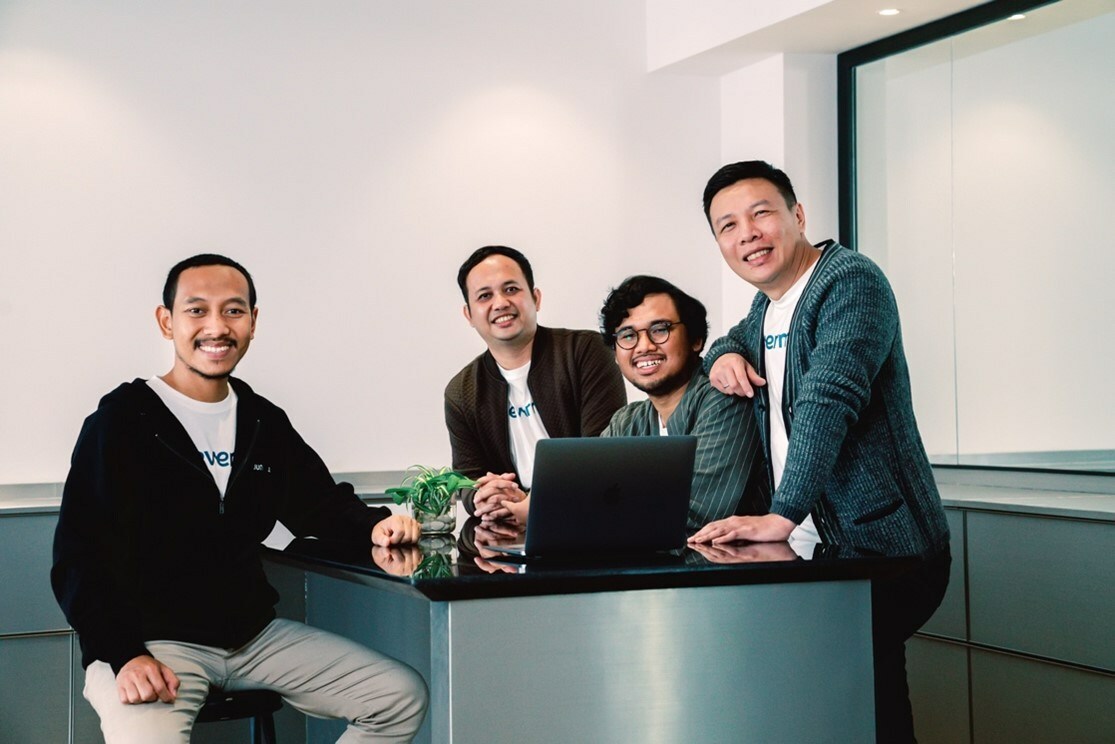
Evermos was founded in November 2018 by Tirta, Ghufron Mustaqim, Iqbal Muslimin, and Ilham Taufiq. Its model links brand owners with resellers who sell to end customers. Tirta’s interest in the sector included the number of intermediaries between producer and buyer. The commercial challenge was to help local products reach people through a system that more small businesses could use.
The platform’s own description puts training and community beside commerce. It offers online and offline business education, a network of communities across Indonesia, and a curated range of local halal products. Those details explain the work involved. A seller needs products to offer, but also some understanding of how to offer them, fulfill an order, and keep a customer interested.
This gives Tirta’s work a human scale even when the company talks about national distribution. The unit of activity is still a person deciding what to sell and another person deciding whether to buy. A platform can organize the exchange. It also has to earn its place in the routines of the people making that exchange happen.
The Civic develops ambitions
Tirta has supplied an unusually serviceable metaphor for Evermos’s early growth. He described a business imagined as a car for driving around town, suddenly offered a place in a Formula One race. Accepting the opportunity meant asking an ordinary vehicle to perform a rather extraordinary job. The automotive engineers were, mercifully, absent from this arrangement.
“In the first year, we essentially put a jet engine to a Civic.”Arip Tirta, reflecting on early Evermos growth
The rest of his account concerns repairs and upgrades: the team, the app, sourcing, onboarding, training, and the reseller experience. After the Series A in late 2019, the company committed to strengthening its people. After the September 2021 Series B, branding became another priority. He described the first three years as deliberately low profile, with attention directed toward execution.
In May 2023, Evermos announced a $39 million Series C led by the International Finance Corporation. The company reported 160,000 monthly transacting resellers as of January that year. It also reported that gross merchandise value had increased seventeenfold between financial years 2020 and 2022. These are dated measures of activity, useful for understanding the scale reached at that stage.
May 2023
January 2023
FY2020 to FY2022
The funding plans included training resellers to find customers beyond their personal networks through digital advertising. For Tirta’s story, that is the telling detail. A business built around social connections was investing in ways for sellers to reach further. Knowing people gets an enterprise started; acquiring additional customers gives it a chance to become more durable.
A founder also needs a classroom
In May 2022, Tirta was selected as an Endeavor Entrepreneur. The network put him among founders with access to international mentoring and support. His response emphasized the ability to rethink and unlearn. Experience, in that formulation, comes with an obligation to revise it. A successful earlier decision does not automatically qualify to make every later one.
He had already contributed to the learning of other founders. Startup Studio Indonesia documented one-on-one coaching sessions with him for its second batch of startups. The material focused on understanding and defining a target market. That is a fitting subject for someone whose ventures depend on knowing where a market’s existing arrangements leave people poorly served.
Coaching also gives his career a different rhythm. The investor evaluates entrepreneurs; the operator works alongside them; the coach helps them examine their own decisions. These roles can reinforce one another, though each asks for a different kind of attention. A founder describing a customer problem needs room to explain it before somebody arrives with a polished answer.
His connections extend to institutions concerned with small businesses. COSMOS, the Center for SME, lists Tirta on its supervisory board and identifies his Evermos and BRI Ventures roles. The center brings together academic and business participants around SME development. It is another place where the practical problems of small enterprises can be studied and discussed beyond a single company’s product.
What comes after access?
In a 2022 conversation with Gundy Cahyadi, Tirta discussed the challenges facing micro-enterprises and Evermos’s interest in supporting brand owners from early in their entrepreneurial journeys. The longer-term question is how a producer develops after entering a sales channel. Reaching buyers creates an opening. Making good use of it calls for decisions about the business itself.
His message in Evermos’s 2024 sustainability report moves into that territory. It discusses financing, training, and integrated services, alongside the ability of Indonesian SMEs to compete. Better packaging, design, processes, and technology sit beside the preservation of cultural character. A local producer can improve the way a product is made and presented while keeping the qualities that make it local.
The company’s more recent activities provide concrete examples of the educational work continuing. Evermos and the ILO held digital-marketing and entrepreneurship training in Banda Aceh in April 2026. In July, Evermos supported a TikTok commerce education event with IWAPI West Java and held an SME business-practices workshop in Bandung. The calendar still includes classrooms as well as commerce.
For Tirta, the route home has become a succession of businesses, investments, and conversations about who gets to participate. The property buyer needed better information. The local brand needs customers. The prospective seller needs a way to begin. His career keeps returning to those ordinary requirements. They are modest enough to explain over coffee, and demanding enough to occupy years.