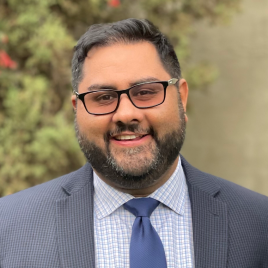
Ask most founders what they do and they reach for a familiar noun. Anuj Bhalla reached for one that did not exist yet. He calls it Ontolytics, and he is not being clever for the sake of it.
Right now, inside serviceMob's offices on Spectrum Center Drive in Irvine, California, Bhalla is running at a problem that everyone in customer service feels and almost nobody has named. Every support organization on earth is sitting on a mountain of records - tickets, transcripts, surveys, call logs, chat threads, escalations - and almost none of it talks to the rest. The mountain is real. The map is missing.
serviceMob is the map. The company gathers information from the disconnected systems strung across a customer service operation and reorganizes it into a single coherent data ontology - a structured model of how the pieces actually relate. On top of that ontology, it runs analytics. Hence the word. Ontology plus analytics. Ontolytics.
Dark data is the phrase to hold onto. It is the stuff a company collects and then never uses - because it is unstructured, scattered, or simply invisible to the next team down the hall. Bhalla's bet is that the most misunderstood data source in the modern enterprise is also the one closest to the customer: the contact center. Treat it as a cost to be minimized and you get exactly that. Treat it as a signal to be decoded and you get something else entirely.
How Ontolytics works
The idea sounds abstract until you watch what it does to a pile of support logs. Three moves, in order.
Dark data, in three moves
Pull records from every disconnected system - CRM, chat, voice, surveys - into one place.
Map it all onto a shared ontology so the pieces relate to each other, not just sit beside each other.
Run analytics that reveal cause and effect across the journey - what actually drives churn, effort, and cost.
The result is what serviceMob describes as “observable” analytics - the operation becomes legible. You can see why the operation ticks the way it does instead of guessing. USA Today covered the approach under the headline of customer service made observable through analytics and AI. That word, observable, is doing a lot of work. Most dashboards show you what happened. The harder trick is showing you why.
The road to the word
Bhalla did not arrive at customer service by accident, and he did not arrive at it young. He studied applied mathematics and computer science at UC Berkeley - the kind of training that teaches you to distrust a number until you know how it was made. Then he spent more than a decade at Accenture, where the abstract math met the messy enterprise.
At Accenture he led the Service Analytics Strategy group and served as the Innovation Lead for Internet and Social Media clients in Silicon Valley. The job was to walk into some of the largest companies on the planet and help them become more customer-centric in ways you could actually measure. Along the way he filed three U.S. patents in the customer service field. You do not file three patents in a domain unless you have stared at its unsolved corners for a very long time.
Then came MIT. Bhalla went back to school as a Sloan Fellow, an MBA program built for mid-career people who already know how the world works and want to bend it. He concentrated on innovation and analytics. Most students leave a Sloan Fellowship with a degree. Bhalla left with a company. serviceMob was founded during the program - the coursework and the startup growing up together.
That detail matters. A founder who builds a company inside a degree program is a founder who could not wait for graduation. The problem was too loud.
Augmented, not replaced
Bhalla works in a corner of software where the AI conversation tends to get apocalyptic fast. Will the bots take the agents' jobs? When Shep Hyken sat him down for the Amazing Business Radio podcast in April 2024, the questions were exactly the ones the industry is nervous about: what AI does to service-industry roles, how it reshapes the workforce, how to reskill for it.
His framing is “augmented intelligence” - AI as support for the human in the seat, not a replacement for them. It is a more interesting position than either the doomers or the hype merchants hold, because it puts the burden back on measurement. If you cannot measure what good service looks like, you cannot augment it. You can only automate your ignorance faster.
The recognition
In 2024 the Los Angeles Times named Bhalla a CEO Visionary, citing the entrepreneurial vision behind transforming customer service with AI and machine learning. The same year, serviceMob landed on MIT's STEX25 - a curated list of startups the institute considers ready for industry. Both nods arrived during a stretch the press politely calls “economic headwinds,” and Bhalla still closed new Fortune 500 enterprise customers.
He has not pulled the ladder up behind him, either. He mentors early-stage founders through the Start MIT accelerator - the same orbit that produced his own company. People who teach what they build tend to understand it better than people who only sell it.
Why it sticks
There is a particular kind of founder who is allergic to the gap between what a thing claims to be and what it actually is. Bhalla is that kind. A mathematician distrusts the number. A patent-filer distrusts the obvious solution. A Sloan Fellow who builds the company before the diploma distrusts waiting. Put those three instincts in one person and point them at the contact center - the most data-rich, least-understood room in the enterprise - and you get serviceMob.
The company is small by headcount and young by funding, a seed-stage operation reported around a quarter-million dollars in early backing. But the idea is not small. The claim underneath Ontolytics is that customer service has been mismeasured for decades, that the data to fix it already exists, and that the only thing missing was a structure to make it speak. Bhalla built the structure and gave it a name.
Most people see a support ticket and think: a problem to close. Bhalla sees the same ticket and thinks: a sentence in a story the company has not learned to read yet. The whole enterprise rests on the difference between those two readings.
He coined a word because the work needed one. Whether Ontolytics ends up in the dictionary is beside the point. The bet is that the dark data was always trying to tell you something. Someone just had to turn on the light.
The consultant who stopped consulting
There is a well-worn path from consulting to founding, and most people who walk it do so for the obvious reason: they got tired of handing the playbook to someone else and watching them run it badly. Bhalla spent over a decade at Accenture helping the largest companies on the planet become measurably more customer-centric. The keyword in that sentence is measurably. Strategy decks are easy. Proof is hard.
After enough engagements, a pattern tends to reveal itself. The companies were not short on intent. They wanted to serve customers better. They were short on instrumentation. The data that would have told them whether they were succeeding sat in a dozen systems that did not speak the same language, and no amount of slide-ware fixed that. serviceMob is, in a sense, the product Bhalla kept wishing existed while he was on the other side of the table.
That origin shows up in the company's vocabulary. serviceMob does not talk about deflecting tickets or shaving handle time first. It talks about service-based churn, customer effort, the experience resolution rate, the dark data that nobody mines. These are the metrics a strategist reaches for when the goal is to understand the customer, not just to process them faster.
A small company with a long lever
By the numbers, serviceMob is early. A lean team, a seed round, an office in Irvine's Spectrum Center. None of that is the headline. The lever is the idea, and the idea has a useful property: it gets more valuable as data volumes grow. Every year, customer service generates more transcripts, more channels, more signal and more noise in equal measure. The dark data problem does not shrink. It compounds.
Which means a tool that turns that mess into a structured, observable model is not betting against the trend - it is betting on it. The more disconnected the systems get, the more a unifying ontology is worth. Bhalla picked a problem that the rest of the industry is busy making worse, and pointed his entire career at it.
He has the rare combination to attempt it. The Berkeley math gives him the formal grounding. The Accenture decade gives him the scar tissue of real enterprises. The MIT fellowship gives him the network and the framing. And the three patents suggest he was already inventing inside this domain long before there was a company to wrap around the inventions. serviceMob is less a pivot than a culmination.
It is worth lingering on how unfashionable his chosen ground is. Customer service rarely gets the founder glamour that lands on consumer apps or developer tools. It is the department companies apologize for, the line item finance wants to cut, the room nobody photographs for the recruiting page. Bhalla looked at that unglamorous room and saw the richest, most honest record a company keeps of how it actually treats people. The contradiction is the whole opportunity. The thing everyone undervalues is precisely the thing he decided to spend his career on.
If serviceMob works the way Bhalla intends, the win is not a prettier dashboard. It is a change in how an entire function gets understood - from a cost to be contained into a signal to be read. That is a bigger swing than a startup its size usually takes. But the founder filing patents in a field while still inside a consulting firm, then building a company while still inside a degree program, has never been much for waiting until permission arrives. He builds first and names it after.