Chairman & CEO · Pascal Metrics
Drew Ladner
He spent four years guarding the Treasury's data. Now he counts the harm hospitals never knew they had.
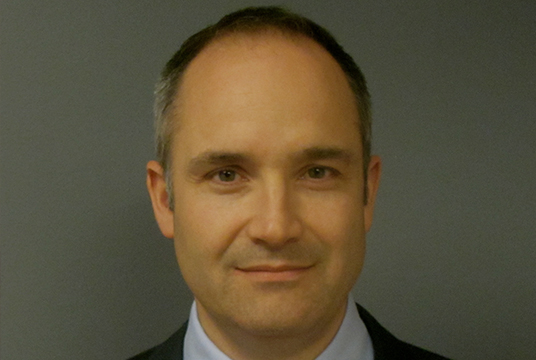 The accidental healthcare lifer.
He spent four years guarding the Treasury's data. Now he counts the harm hospitals never knew they had.
The accidental healthcare lifer.
Every hospital keeps two stories. The one in the incident reports, and the one in the records. Drew Ladner built a company on the gap between them.
Since 2007 he has been founding Chairman and CEO of Pascal Metrics, a patient safety company that reads real-time electronic health record data, matches it against clinically validated adverse-event outcomes, and tells a hospital where a patient is being harmed - often before anyone files a report. The company is a U.S.-certified Patient Safety Organization, and its clients identify roughly ten times more serious harm than the industry standard, then reduce more than a quarter of it.
That is the headline. The stranger detail is where Ladner came from. He was Chief Information Officer of the U.S. Department of the Treasury, running a $2.6 billion IT organization and testifying to Congress on cybersecurity. He helped run the government division of JBoss, the open-source middleware company later bought by Red Hat. He was an operator at Netscape and AOL Time Warner when the internet was still being invented. And somewhere in there he launched a micro-enterprise bank in East Africa.
Patient safety was not the obvious next move. It became the only one that held his attention. The thread running through all of it is the same: get the measurement right, and trust follows. Get it wrong, and people get hurt - in a balance sheet, in a network, or in a hospital bed.
"A health system can only manage what it measures."- Drew Ladner
Figures reported by Pascal Metrics for its Virtual Patient Safety solution.
An always-on system that ingests live EHR and health IT data and flags clinically validated adverse-event outcomes as they emerge - not weeks later in a chart review.
The cloud SaaS layer hospitals use to see harm, risk, and quality in one place. Built so a safety officer can act on a signal instead of drowning in dashboards.
A consulting model co-developed with the Mayo Clinic, pairing the data with the human work of changing how care teams actually behave.
Pascal was the first to put real-time EHR data inside a U.S.-certified Patient Safety Organization, and among the first to train predictive models on adverse-event outcomes using machine learning. Long before "healthcare AI" became a pitch deck staple, the training data was already being collected, one validated event at a time.
A Harvard MBA pairs neatly with a tech-and-policy career. The Oxford theology degree is the one that makes people pause. It is also, arguably, good training for a job that comes down to one question: how do you keep people from being harmed by the systems meant to help them?
Member of the Council on Foreign Relations and a Fellow of the inaugural class of the Aspen Institute Health Innovators Fellowship.
Before healthcare, he launched a micro-enterprise bank in East Africa and led mobile telecom initiatives for AOL Time Warner across Europe.
His stated aim: make AI-assisted, real-time patient safety the standard of care - catching preventable harm before it cascades.
Profile compiled from public sources including Pascal Metrics, the Aspen Institute, Markle Foundation, Crunchbase, and SparkLabs.