Anton Bernstein and Jimmy Xu built a farming game in which people could meet other people. A sociable idea, with one small agricultural complication: sometimes a person tending a farm would rather be left to tend the farm. A stranger arriving in the vegetable patch was not necessarily the improvement its creators had imagined.
Harvest Crossing failed. An earlier experiment, Pocketz, suddenly looked more promising by comparison. Bernstein remembers that reversal with a useful lack of ceremony. Failure had supplied a measuring stick. He and Xu returned to the more open-ended business of giving people somewhere to spend time together.
That business became Highrise, the virtual world at the center of Pocket Worlds, where Bernstein is co-founder and CEO. Its inhabitants make avatars, assemble outfits, create rooms and build experiences for one another. His career has taken him through venture capital, Australian commerce and Paris. The question underneath it has become remarkably domestic: what makes somewhere feel like a place you want to return to?
The computer came before the business plan
Bernstein was born in Moscow and moved to the United States with his family at five. He grew up in New Jersey with computers close at hand. His father worked at a hydroelectric power plant in the Soviet Union and, Bernstein has recalled, received computers as rewards for good work. The family’s early computing habit had an unusually literal connection to the electricity supply.
Games gave those machines a social purpose. Bernstein played with friends, used map editors in StarCraft and Warcraft, hosted Counter-Strike servers and made websites for extra money. Building and playing belonged to the same afternoon. You could change a game, invite people in and see whether the change was any good.
He also admired Tolkien’s commitment to constructing a world, down to its languages. There is something revealing about that preference. A memorable world has detail beyond whatever a visitor immediately needs. It gives the imagination spare rooms. For someone who would eventually sell digital clothes and furnish virtual gathering places, Middle-earth was a rather expansive early floor plan.
A detour with paying customers
At the University of Pennsylvania’s Wharton School, Bernstein studied business and took a computer science minor, graduating in 2008. He joined Insight Venture Partners and later worked at Redpoint. His own founder biography describes those roles as analyst and associate. He had learned how investors examined companies before having to make one work himself.
At Insight he met Joshua Davis, who became a business partner. Their Australian daily-deals venture, Ouffer, applied the Groupon model to a market they largely served from the United States. A friend went to Australia to manage operations as it grew. By February 2011, Bernstein had already sold a business and was dividing his time between San Francisco and Paris.
In Paris he was building Lookingo, an upscale variation on daily deals. Its office then had 30 employees. The young entrepreneur was already dealing with the practicalities of operating across borders, finding customers and assembling a team. This was commerce conducted with actual customers and actual offers, an education with fewer opportunities to hide behind a presentation.
Luxury Escapes became another part of that career. Bernstein describes founding the travel business and running product and marketing. In later accounts, he credits the experience with teaching him about consumer behavior and direct selling. He spent three years living in Paris, then moved to San Francisco after the French business was sold. The proceeds gave him room to try something closer to his old interests.
Graduates from Wharton
Starts Pocket Worlds with Jimmy Xu
Highrise launches
Y Combinator’s summer batch
Five years to find the room
Bernstein and Xu started Pocket Worlds in 2013. Xu had been a hardware architect at Apple; Bernstein came from consumer technology and commerce. Neither arrived with a professional career in making games. What they shared was the memory of multiplayer games as places where friendships happened.
The phone suggested a new setting for that experience. It was personal, portable and increasingly capable of running games. Their early work asked what might happen when a social network acquired the shared activity of a multiplayer world. It took several products and roughly five years of bootstrapping to find a workable direction.
Highrise launched in 2016 with a relatively spare proposition: make an avatar, enter a virtual space, meet people. The small team kept releasing changes, often weekly or fortnightly. The apparent simplicity concealed a long series of decisions about how people would talk, what they would do and what might persuade them to come back.
Pocket Worlds joined Y Combinator’s summer 2018 batch. A $7 million Series A, announced in 2021 and led by BITKRAFT Ventures, supplied another milestone. That announcement described a business organized around social play, avatar customization and a growing international team. The vocabulary of funding had arrived. The underlying product still depended on people enjoying one another’s company.
The audience gets a set of keys
Bernstein’s account of Highrise repeatedly returns to a concession: the community understands its own preferences. In 2024 he described players changing outfits more than five times a day. A studio trying to personally anticipate every taste would have quite a laundry problem.
The company built ways for players to propose items, including sketches that its artists could turn into finished goods. Highrise Ideas and Concepts offered routes into creation before someone had mastered professional production tools. On the experience side, Highrise Studio gave developers a fuller environment for making games and publishing them into an existing world.
That distinction matters to his story. The teenager who altered maps was already playing and creating in the same place. Highrise’s tools make a business out of keeping that distance short. Someone can arrive to see friends, become curious about how a room works and eventually make something those friends can use.
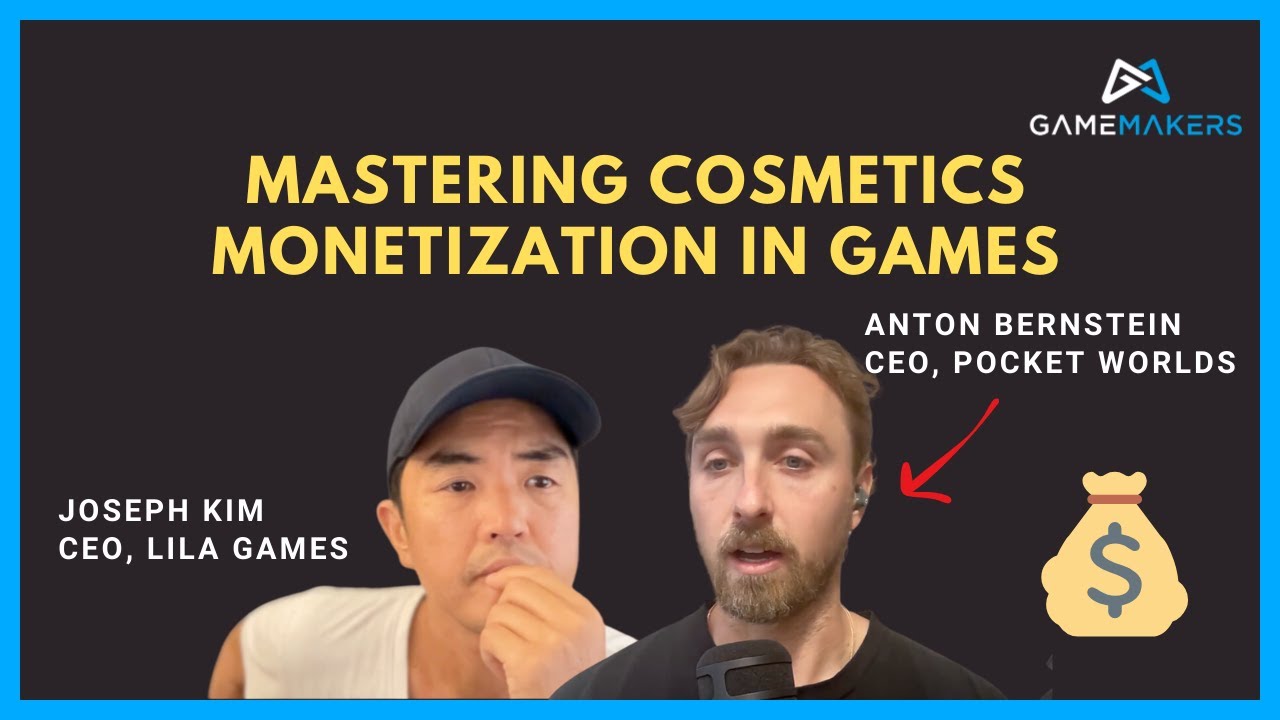
Digital clothes also need somewhere worth wearing them. Discussing cosmetics with Joseph Kim, Bernstein put the dependency plainly: “People buy cosmetics because they care about their status in that universe.”
The wardrobe follows the social life. A collectible has an audience; an outfit has a setting; a room has guests. That is why the details of a virtual economy cannot be separated from the details of the place around it. A hat has a different meaning when your friends recognize it.
A dollhouse with an economy
Highrise’s community gave Bernstein a particular audience to understand. In a 2024 interview he described users averaging about 20 years old, with women forming a larger share. He talked about party games, exploration, festivals and life simulations as suitable experiences. The invitation was broad, but the product had acquired a recognizable social character.
By November 2024, Highrise had reported more than $250 million in marketplace transactions. That figure concerns activity in its marketplaces. It is a useful measure of an economy in motion, with players buying and trading things that matter within the world.
Bernstein’s interests extend beyond operating that economy. He has described seed investments in Sky Mavis and Immutable and an early interest in Bitcoin. Earlier plans for Highrise included blockchain-based ownership. By June 2026, he was openly saying that decentralized ownership had not proved meaningful in gaming. His account allows an experiment to lose its appeal.
Pocket Worlds had acquired Everskies in 2021, adding a community organized around pixel dolls, fashion and conversation. Across the two platforms, he described an audience around 70 percent female in 2026. His compact comparison was a dollhouse rather than a sandbox: a place whose social and aesthetic choices shape what people want to make.
A visitor can become a builder
- ArriveChoose an avatar. Find people.
- MakePropose an item or build a world.
- InviteGive friends something to do together.
An editorial diagram of the connection between Highrise’s social spaces and creator tools.
Rosie moves into the workshop
In 2026, Pocket Worlds introduced Pocket Labs as a home for applied AI work. Its projects include creator tools, moderation agents and internal development tools. For Bernstein, the appeal follows the same old question: how much technical work stands between an idea and something another person can enjoy?
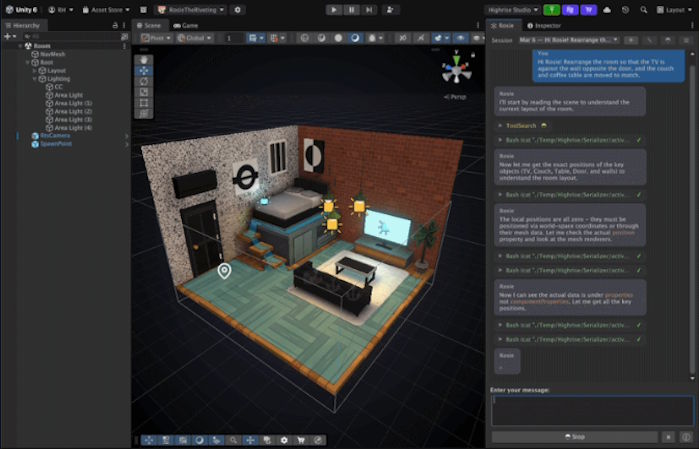
Rosie, the AI agent for Highrise Studio, is one answer. The team’s March announcement described an assistant that works inside the editor, with access to the documentation and scripting conventions specific to Highrise. Creators can work with it while building their worlds. The company also described using it for its own weekly event development.
“More than anything right now, what’s valuable from a human is judgment and taste,” Bernstein said in June 2026. The claim places responsibility back on the person choosing what to make. Faster production still leaves someone deciding whether the result belongs in the world.
There is continuity here with the map editor, the clothing sketch and the small team shipping another experiment. Each gives someone a way to try an idea without first assembling an entire studio. Whether the result delights its visitors remains a wonderfully inconvenient human question.
A familiar hotel, a different responsibility
In September 2026, Pocket Worlds acquired Hotel Hideaway, the mobile social world created by Sulake, the Finnish studio behind Habbo Hotel. Bernstein had grown up playing Habbo. Welcoming a related world into his company gave an acquisition an unusually personal connection to his own apprenticeship as a player.
The deal brought Pocket Worlds’ portfolio above 80 million registered users across its social worlds. Hotel Hideaway arrived with more than 32 million registrations and roughly 300,000 monthly active players. Those numbers describe different things: years of arrivals, and a community still turning up.
“Great online communities take years to build, and Hotel Hideaway is one of them.”
Anton Bernstein · September 2026
His stated plan was to invest in the world’s identity, including fashion, and bring Pocket Worlds’ operating experience to it. The challenge is easy to recognize after the farming experiment. People have preferences about the places they inhabit. Arriving with improvements requires some understanding of why they were happy there already.
Bernstein began by making changes to other people’s games. He now runs a company that gives other people tools to change its worlds. Somewhere between the first map and the latest virtual hotel, the visitor became responsible for keeping the place open. The best invitation he can offer is still a fairly ordinary one: come over; there are people here you might like.
Keep the conversation going
- Pocket Worlds
- Anton on LinkedIn
- Anton on X
- The early ventures: Penn’s 2011 profile
- The Highrise creator economy: a 2024 conversation
- Judgment and taste: the June 2026 interview
- Pocket Labs: Rosie and the world-building tools
- Hotel Hideaway joins Pocket Worlds: September 2026