Before Court 16 was a company, it was a place to sit down. At the Royal Leopold Club in Brussels, Anthony Evrard’s grandfather watched him and his sister play from a bench near the baseline. A tree supplied the shade. Between sets, the family could rest and talk. Of the club’s 25 courts, this was the one they kept reserving. Its number would eventually travel rather farther than anyone’s backhand.
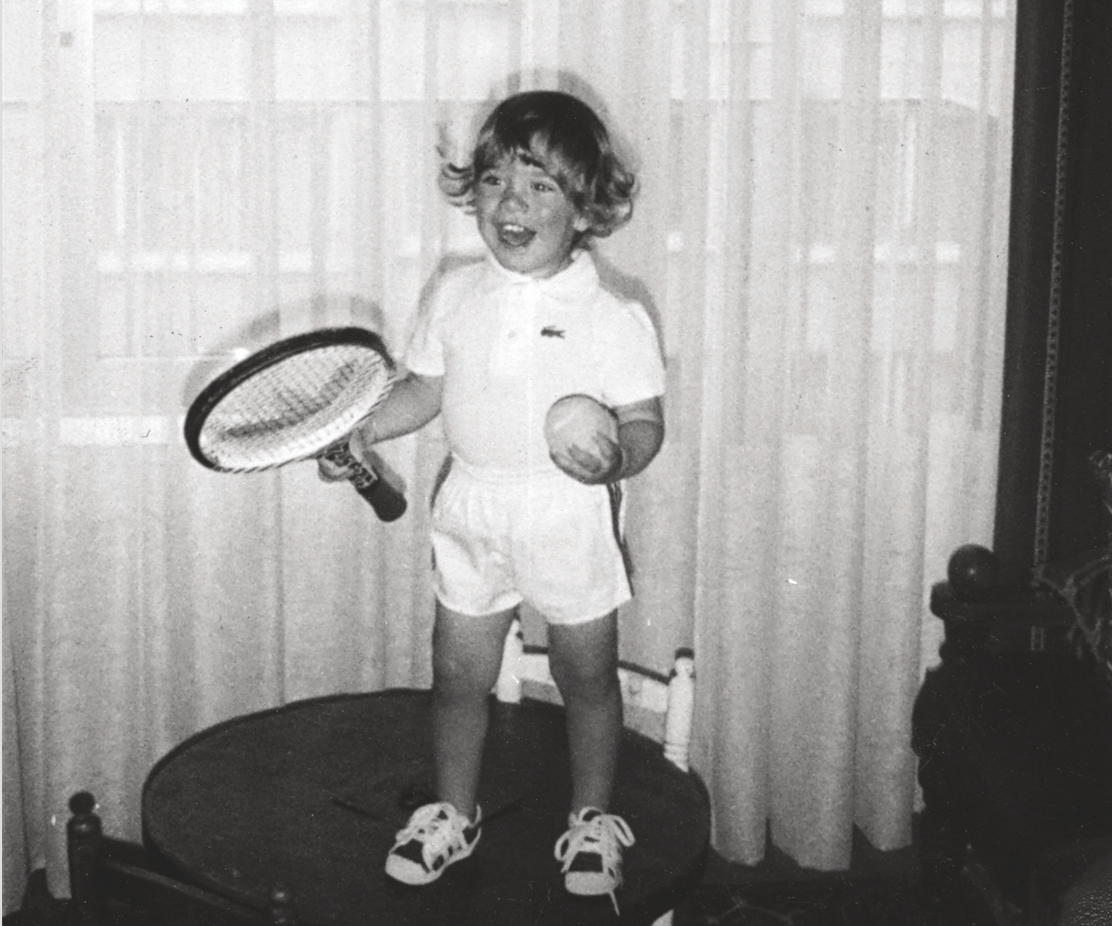
Evrard began playing at three. Tennis was threaded through the family: his parents sold equipment, his sister Vanessa played competitively, and weekends meant returning to that familiar rectangle. The memory he carried away included the people beside the court as much as the game inside it. Decades later, building indoor clubs in American cities, he would try to give other families a reason to develop their own rituals.
That ambition sounds pleasantly modest until you consider the practicalities. A small child must learn a technical game on a large expanse of ground. A parent must get the child there. A coach must persuade both that next week is worth the trouble. Evrard’s career has become an extended investigation into those ordinary obstacles. His answer begins with changing the dimensions.
A good record, then a different kind of match
There was a competitive route available to him. Evrard played on Belgium’s youth national team, then came to the United States for college tennis. He attended Florida Southern before Loyola Marymount in Los Angeles. The move fulfilled an ambition he had formed while training in America as a teenager: to study and play in the same place.
His college record offers a compact reminder that the future club founder could play. At Loyola Marymount in 2002, he went 23-7 in singles, a .767 winning percentage that the university recorded as a school record. In doubles, he and Johannes Asuja posted a 20-7 record, also listed as a school record. His Florida Southern biography credits him with All-American recognition in doubles.
He studied business administration, and his working life moved into the business of attention. Publishing and brand work led to a marketing career that included PUMA and Rémy Cointreau. At PUMA, he worked in international lifestyle marketing, with a schedule that took him around the world and into the orbit of events including the Olympics and World Cup. The scale was considerable; the future tennis club would begin considerably smaller.
Even his business card reached back to the family archive. It featured a photograph of him at three in a Lacoste polo, holding a racket. An early Court 16 membership kit included co-branded Lacoste clothing and a yellow backpack. Evrard took pleasure in seeing those backpacks around Brooklyn. The connection was personal, but the result was visible on the street: children carrying a piece of their tennis club into the rest of the neighborhood. He had found a way to put a childhood memory on both a business card and a school-age shoulder.
That detour helps explain the specificity of Court 16. Evrard had spent years thinking about how people encounter a brand, how an event feels and what makes someone return. Put those questions beside a tennis lesson and the lobby, lighting, welcome and departure start to matter. The player’s experience begins well before the first ball crosses the net.
Before the business plan, there was a college scorecard.
Fifty-two places that weren’t quite right
The company took shape through conversations and drawings. Evrard and his business partner Romain Aubanel agreed to begin the venture over tapas in Boston. Architect Matias Honorato-Torrealba entered the picture through a mutual friend; a late conversation at Pianos on the Lower East Side helped turn an idea for a children’s club into a design project. Writer Stephen Greco helped shape the narrative, while Matthieu Bullion worked on the business model.
Aubanel became the partner Evrard would later compare to a doubles teammate. His public appreciation of Aubanel dwells on values, family and the work of navigating difficulties together. It is a revealing choice of emphasis for someone with a marketing background: the relationship behind the business gets as much attention as the business itself.
Finding a building was another matter. Evrard looked at 52 other locations before settling on the first Gowanus site. The club opened in 2014 in a former warehouse on Baltic Street, with courts scaled for children. Tennis had entered a neighborhood where other leisure businesses were already making use of the industrial surroundings. The country-club approach had acquired a Brooklyn address.
The details were deliberate. There were smaller rackets, softer balls, shorter nets and clear court markings. Maple walls and yellow-and-gray geometric panels gave the space a recognizable character. Water fountains and bathroom fixtures accommodated different heights. A child could enter a building and find evidence, even away from the court, that someone had considered how tall they actually were.
“It’s also much easier to teach the right fundamentals on a smaller court.”
Anthony Evrard
The format itself had precedents. Evrard knew the smaller-court approach from Belgium, and the USTA had been adapting introductory tennis for children. His contribution involved assembling instruction, architecture and a family experience around it. A beautifully finished room still had to produce useful lessons. A technically sound lesson still had to make a child willing to return.
The floor learns to change its mind
When Court 16 expanded to Long Island City in 2018, the design problem became more interesting. A club serving different ages and activities needs different boundaries. Paint enough lines on one floor and the beginner inherits a small cartographic crisis. The team explored ways to make the markings change with the lesson.
The solution was glass flooring with LED lines underneath, developed with ASB GlassFloor. Courts could be reconfigured without asking players to mentally erase the markings for another activity. The technology gave a physical form to Evrard’s recurring idea: adapt the setting to the person learning. In Long Island City, even the floor could cooperate.
The progression matters more than the novelty. Beginners can work with a manageable court and ball before advancing. Court 16 now describes its approach through a simple promise: “Learn Here, Play Anywhere.” The aim leaves room for a student eventually to outgrow a particular class or club. For a business built on repeat visits, accepting that departure is a useful expression of confidence in the teaching.
Selected formats used across Court 16’s history. Relative lengths shown; these are not floor plans.
A family has more than one player
There is another boundary a children’s business eventually encounters: the parent waiting nearby. A member suggested that adults should be able to take classes while their children were playing. Evrard’s team acted on the suggestion. It is a pleasingly practical piece of product development. The customer had already arrived, already made time and already found the door.
Adult tennis and pickleball became part of the broader offering. By 2025, the Brooklyn club could accommodate a grandmother playing weekly with her grandson. That pairing brings the enterprise remarkably close to its point of origin. A game learned with one generation can become a habit shared with another, provided the venue makes room for both.
Evrard’s own family has accompanied the work. His wife Gabriella has been a sounding board from the beginning. Their older son joined an early tour of the space that would become the Financial District club. The family business of his childhood has become a different kind of family undertaking, with property visits taking their place alongside tennis memories.
Expansion has also required leaving places behind. The original Gowanus club closed as Court 16 moved into larger premises in Downtown Brooklyn and added its Financial District location. The new Brooklyn home at City Point offered access to a full-size court as well as smaller formats. For players who had grown with the business, there was more room to keep going.
Tennis above the shopping
The City Point move made the business model visible in another way. The 28,000-square-foot club occupied space previously used by Century 21, on the fourth floor of a mixed-use commercial complex. Nearby shops, food and entertainment made tennis one part of a family’s outing. A department store’s departure had created room for people to learn a serve.
When assessing locations, Evrard considers public transportation, population density and the number of families nearby. “We’re looking for convenience,” he says. It is an unglamorous sentence with substantial consequences. A lesson may be enjoyable in principle and impossible on a Tuesday afternoon. Putting courts where daily life already happens gives the principle a chance.
In December 2024, USTA Ventures invested in Court 16. The relationship with the national governing body dated to the first club’s opening; the investment added a strategic partner for expansion and programming. Philadelphia’s Fishtown and Westchester’s Ridge Hill figured in the next stage of growth, extending a concept developed in New York into different neighborhood settings.
Court 16 also welcomed 8,000 visitors that year. Figures reported by the USTA in April 2026; scheduled classes are not a count of unique players.
By April 2026, the USTA reported that Court 16 had added three locations since its investment. The numbers offer one way to measure an idea that began on a bench in Brussels. The harder part of expansion is preserving what made a smaller place worth visiting: being remembered, feeling comfortable enough to make mistakes and leaving with something learned.
Evrard continues to talk about the experience of walking through the door. After the Newton opening, he singled out the small interactions and care that make people want to come back. His grandfather’s court has become a network of clubs, but the underlying test remains disarmingly domestic. Can a family find a place in its week for this? Can the children, and perhaps the adults, look forward to going again?
Keep the rally going
- Court 16 - clubs and programs
- Anthony Evrard on LinkedIn
- Court 16 on Instagram
- Court 16 on Facebook
- Court 16 on LinkedIn
- Racquet Fuel - the 2026 conversation
- A conversation about starting Court 16
- The first Brooklyn club, in 2014
- Inside Court 16’s architecture
- Evrard’s college tennis record
- The USTA investment
- Court 16’s 2025 figures
- The childhood photograph and early club story