Anthony Capuano had seven reasons to feel pleased with himself. In 1987, as he prepared to leave Cornell, eight job interviews produced seven offers. The holdout was Marriott. He kept its rejection letter for 35 years. There are cheaper souvenirs of a university education, and rather more flattering ones. This one proved unusually durable.
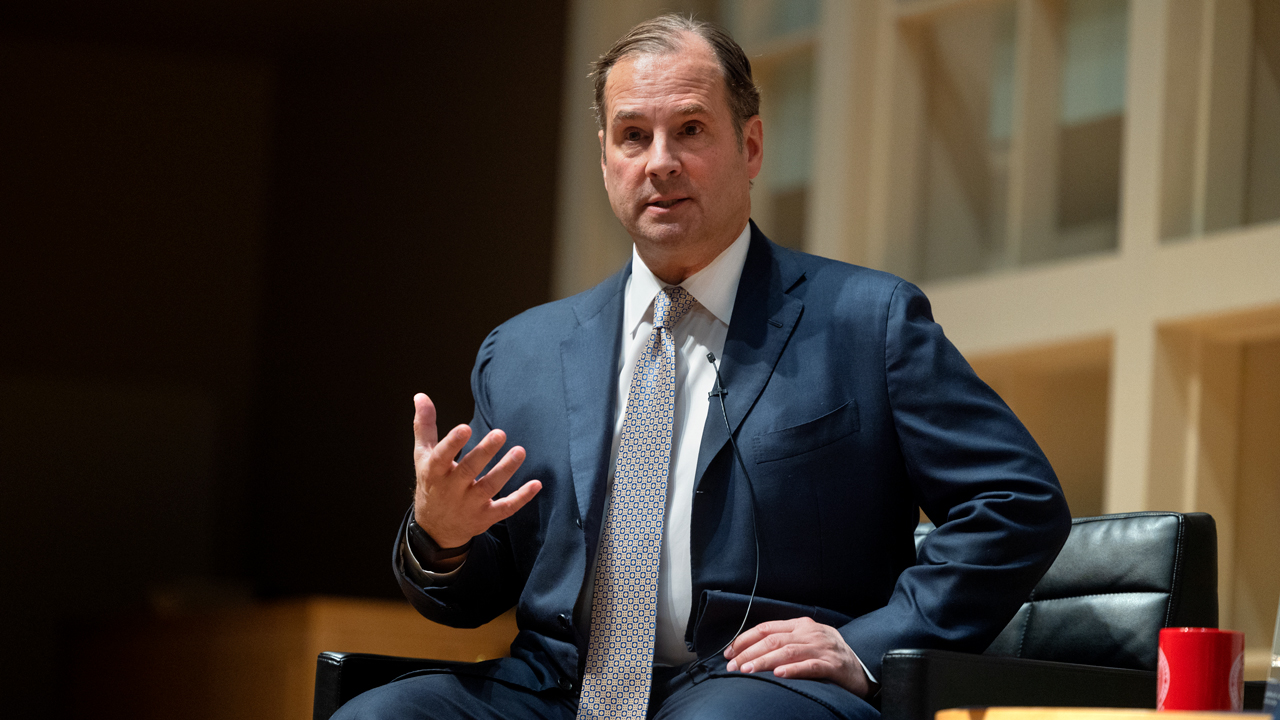
When he returned to Cornell in 2023 as Marriott’s president and chief executive, he gave the episode an uncomfortable explanation: his interviewer had questioned his fit with the company’s culture. Looking back, Capuano thought his younger self had lacked humility. “Humility is critical,” he told the audience. A chief executive acknowledging that the interviewer had a point gives the familiar rejection story a welcome complication.
It would be easy to arrange the rest of his life as a victory over that letter. His career offers a more interesting reading. Capuano spent years learning to evaluate hotels, negotiate their development and understand the people who make them work. The job he ultimately received required considerably more than the confidence he had brought to the interview.
The paper hat came first
His first hospitality ladder was short enough to see from the bottom. At Toby’s Dinner Theatre, his high-school lacrosse coach was one of the owners, and teammates found part-time jobs there. Everyone began washing pots. With effort came dishwashing, salad preparation and carrying hot food. At the summit stood a paper chef’s hat and the privilege of carving beef at the buffet.
Capuano has recalled loving that work, including its culinary side. The progression carried a useful rule: athletic status bought no exemption from the sink. An impressive performance on the field did not move anyone straight to the carving station. For a teenager, the relationship between effort and responsibility was unusually visible.
He also learned self-sufficiency at home. An only child, he lived with his father after his parents separated when he was about 12. Cooking and laundry became practical necessities. His father once put his suits through the washing machine, an expensive contribution to their shared education. Capuano remembers work ethic as a family lesson, learned while the household was figuring things out.
These episodes give his later talk about service a physical setting. A pot has to be washed before somebody can cook in it. A buffet has to be ready when the audience arrives. The applause usually belongs to people in another part of the building.
A hotel is also a set of numbers
Cornell awarded him a bachelor’s degree in hotel administration in 1987. Before joining Marriott, he worked in the Boston-based Leisure Time Advisory Group at Laventhol and Horwath, then in Kenneth Leventhal and Company’s hospitality consulting practice in Los Angeles. His route into corporate leadership passed through the business of deciding whether a hotel made economic sense.
In 1995, Marriott hired him into market planning and feasibility. Development responsibilities followed: the Western United States and Canada from 1997 to 2005, then a broader North American remit. In 2009, he became executive vice president and global chief development officer. By January 2020, his responsibilities encompassed development, design and operations services.
Each enlargement changed the questions on his desk. A promising location still needed an owner, a viable financial plan and a brand that suited the market. Adding operations meant considering what would happen after the contracts were signed and the doors opened. The ribbon-cutting is a brief ceremony; operating a hotel is an extended examination.
He became CEO in February 2021 and added the president’s title in February 2023. His earlier responsibilities included oversight of EDITION, the luxury lifestyle concept developed by Marriott and Ian Schrager. The career combined spreadsheets with rooms whose atmosphere guests were expected to notice.
The light-bulb test
The executive who had spent years assessing developments retained some very ordinary hotel habits. In a 2021 interview, Capuano described entering a room, plugging in his devices, checking its corners for cleanliness and maintenance, and turning on every light. Somewhere between the iPad charger and the final switch, the guest becomes an inspector.
He had encountered hotel work at a less comfortable hour as a student. During a summer night-audit job at the Hyatt Regency Baltimore, his shift began at 11 p.m. and ended when the books balanced. Telephone charges emerged from a dot-matrix printer and had to be posted manually. A guest making hundreds of calls could create a substantial little mountain of administration.
There was practical improvisation too: a broken sink in the night might require the auditor’s attention. The recollection puts an appealing dent in the polished image of hotel management. Sometimes the business consists of reconciling accounts. Sometimes it consists of trying to work out what has happened to the plumbing.
What the dishwasher told the boss
One lesson Capuano recounts from traveling with Bill Marriott took place in a Hawaiian hotel kitchen. Marriott asked a dishwasher how things were going. The answer was unfavorable. The problem was the water pressure in the sink sprayer. Marriott promised to have it addressed.
Before leaving the next day, he went back to the kitchen and found the employee again to follow up. Capuano has held onto the episode as an example of attention and humility. It is a modest incident to preserve from a career of large transactions, which is part of its force.
The dishwasher had offered information that a tour of the lobby would never have supplied. Following up gave the conversation a consequence. In a business with layers of management between a boardroom and a kitchen sink, that second visit matters: it tells employees whether speaking plainly is worth the effort.
The teacher remains available. In early 2026, Capuano said he still tried to speak to Marriott at least weekly. He valued the older executive’s ability to focus attention when the range of responsibilities became distracting. Even after reaching the chief executive’s office, he continued to make room for instruction.
“The next day on our way out, Mr. Marriott made a point to stop by the kitchen.”
Anthony Capuano, recalling a visit to Hawai‘i
A bigger map, and a bill to match
Capuano’s commercial ambition is refreshingly easy to translate. He wants Marriott to earn more of a traveler’s spending by having suitable accommodation for different destinations and reasons to travel. In 2024, he described guest requests as a spur to expanding the offering: larger homes for family groups, voyages at sea and more convention options in Las Vegas.
Breadth creates obligations. Higher room rates bring higher expectations, and Capuano has spoken about the need to keep renovations and service in step. Owners and franchisees supply the capital behind much of Marriott’s expansion. Their economics determine what can be built and improved. A guest, meanwhile, experiences the result one stay at a time.
The development specialist must keep both perspectives in view. A brand can help an owner attract demand; the owner must deliver a property that deserves it. The promise made in an app eventually becomes a room, a meal, a queue or a conversation at reception.
The scale remains substantial. Marriott’s August 3, 2026 results reported a development pipeline of approximately 629,000 rooms across nearly 4,200 properties. About 44 percent of those rooms were under construction, including hotels pending conversion. A pipeline describes prospective supply; it is no guarantee that every planned room will open.
For the same quarter, worldwide revenue per available room rose 3.4 percent. The regional picture was uneven: the United States and Canada grew 5 percent, while international markets declined 0.5 percent. Those figures keep the growth story honest. A global company can be expanding while individual markets move in different directions.
More doors into the business
His experience also travels beyond Marriott. McDonald’s elected him to its board effective October 1, 2022, citing his work with real estate, franchising and digital customer engagement. The connection is practical. Both businesses depend on making a recognizable brand work through a large network of local operations.
Hotel ownership is another part of that network. Marriott’s Bridging the Gap initiative began with a $50 million commitment aimed at reducing entry barriers for historically underrepresented hotel owners and developers in the United States and Canada. It brought the language of opportunity into the financial mechanics of development, where access to a deal matters as much as an invitation to a meeting.
Capuano also serves on the board of Save Venice, which works to preserve the city’s artistic heritage. It is a different kind of responsibility from adding hotel rooms. Places have value beyond the capacity to accommodate another visitor; their history is part of what makes people want to go there.
In March 2026, Cornell announced his selection as its Hospitality Icon of the Industry. The school emphasized his engagement with students and mentoring, alongside his career at Marriott. He has remained connected through the Cornell Hotel Society and the hotel school’s advisory board. The institution that prepared him for those first interviews is still part of his working life.
Leaving room for a person
The next set of decisions includes how much work machines should do. Capuano has described Marriott automating tasks such as drafting initial contracts and preparing room assignments. His stated interest is the time this can release for employees to engage with guests. The operational question is concrete: what happens to the minutes saved?
He also said he wanted to encourage more considered risk-taking in 2026. A long-established culture needs attention, but it must leave people room to try things whose outcomes are uncertain. That is a demanding balance for someone responsible for preserving a familiar promise while finding new ways to deliver it.
There is a pleasing continuity between the paper hat, the night audit and that ambition. Each puts responsibility into someone’s hands and asks what they will do with it. Capuano’s career has widened the scope of the question. The useful details remain stubbornly small: a working lamp, a kitchen conversation, a task completed, a person given time to answer.