There is a particular kind of corporate decision that looks obvious only after someone else makes it. In 2010, the public-relations firm Beckerman acquired a San Francisco shop called Antenna Group. Antenna was smaller and narrower. It knew cleantech - the graceless but important machinery of batteries, buildings, solar panels, grids and water systems. Beckerman had the broader agency. Antenna had the sharper noun.
Nine years later, the noun won. After adding Eco Branding and Chicago Digital, the parent consolidated the pieces under the Antenna name. The purchase price for the original Antenna was never made public; neither were the terms of the later acquisitions. Yet the strategic exchange is easy to see. The generalist acquired a specialty, then discovered the specialty described the future better than the generalist did.
The name that ate the parent
The original Antenna was founded by Melody Haller in 1996. When Beckerman bought it, the announcement described clients working on energy efficiency, smart grids, storage, biofuels, water and green building. These were not simple consumer objects. Each lived inside a technical system, a regulatory system and, often, a thicket of public suspicion.
That is the problem Antenna still sells against. A climate company may know precisely how its reactor, heat pump or recycling process works and still be unable to explain why a mayor, investor, reporter or nervous neighbor should care. The agency's answer is an integrated stack: media relations, messaging, brand identity, websites, content, paid media, social, public affairs and events. The client is buying communications work, but also rented fluency in the subject.
Melody Haller founds the original Antenna in San Francisco.
Antenna keeps its name and management; the price remains private.
Eco Branding and Chicago Digital add creative, web and performance muscles.
Four brands collapse into one integrated agency.
London opens, then the Rubikon PR acquisition creates a Prague foothold.
A very useful glass of beer
The cleanest demonstration of what Antenna does involves water that was not clean to begin with. Client Epic Cleantec recycles as much as 95 percent of a building's wastewater into usable outputs. Technically, this is a story about distributed infrastructure. Emotionally, it is a story about disgust. People hear “recycled wastewater” and stop listening before the filtration diagram appears.
Epic and a Bay Area brewery made OneWater Brew, a limited Kölsch-style ale using purified water from a San Francisco high-rise's greywater reuse system. Antenna turned the can into a media device. It arranged tastings with journalists, carried the beer to the World Economic Forum and the U.N. Water Conference, and helped put it in the hands of public figures. The object performed the argument: if you will drink the water, perhaps you will reconsider what “waste” means.
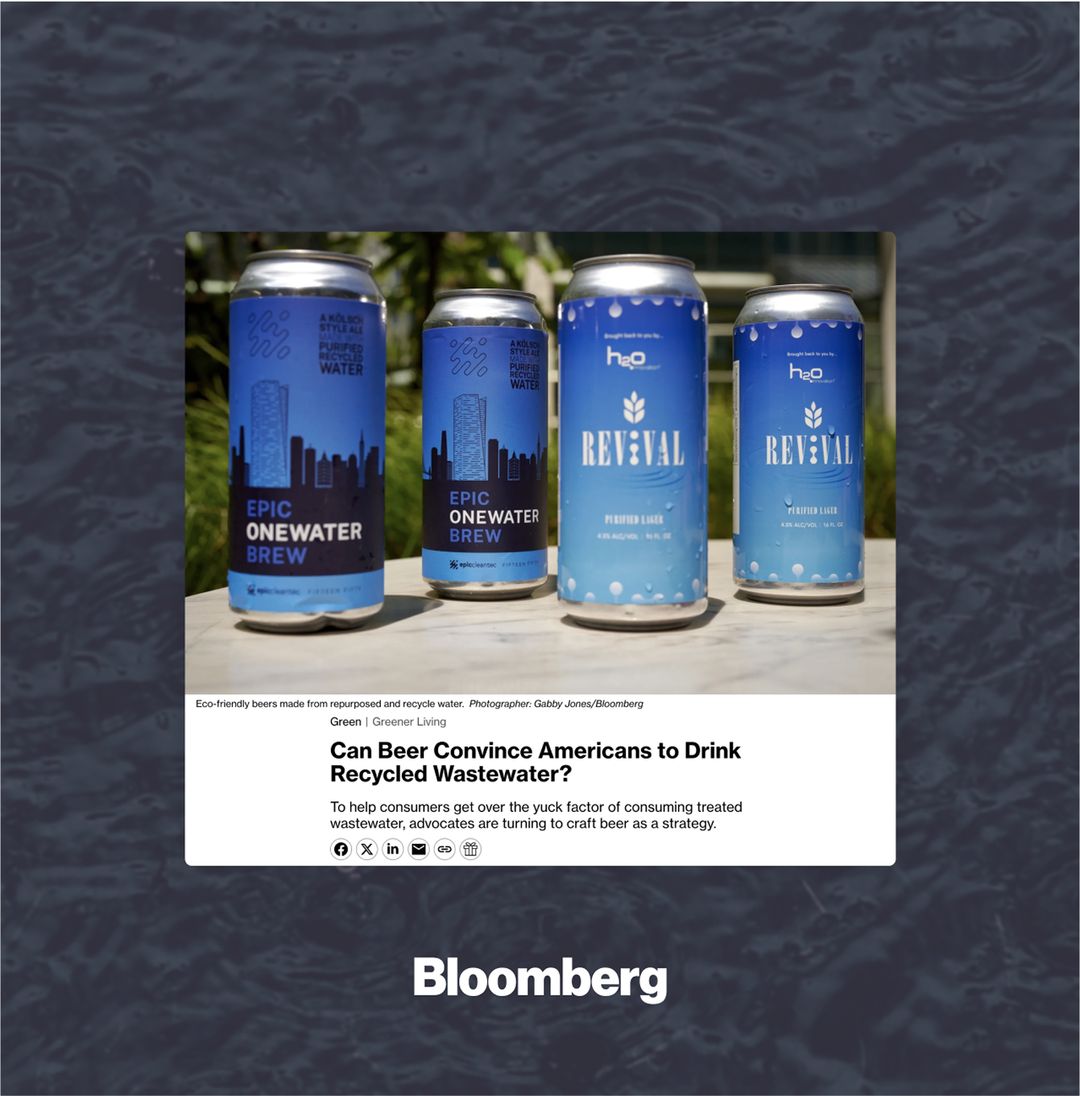
Antenna reports 3.5 billion media impressions for the beer campaign and more than 4 billion over its work with Epic. Coverage included Bloomberg, The New York Times, CNBC, BBC and CNN. Time and Fast Company recognized the underlying invention. Impressions are not the same as pipes installed or gallons reused, and Antenna does not pretend they are. Their value here is that a specialist industrial process crossed into ordinary conversation.
The first thing to fail was the spreadsheet
The glamorous version of agency life is the clever pitch. The unglamorous version is fifteen people unknowingly pitching the same reporter. In a case study published by its software provider Propel, Antenna described media lists turning into siloed campaigns. Once a list went out the door, the rest of the firm had little shared visibility into who had contacted whom or what happened next.
The team initially looked at conventional customer-relationship systems, including Salesforce, but those products were built for sales rather than journalist outreach. The change of mind was categorical: Antenna did not need another CRM. It needed a public-relations management system. Centralized contacts, response data and live dashboards reportedly removed three to four hours of manual work from every campaign. The important failure was not bad prose. It was memory trapped in individual spreadsheets.
This sequence is copyable, but not universal. It depends on a product with defensible technical proof, a genuine human tension and an experience safe enough to stage. A gimmick without evidence invites ridicule. A demonstration with no surprise is merely a demo. And a regulated technology cannot trade accuracy for applause; the people who understand the system must remain close to the story.
Where the agency sits
Antenna occupies the gap between two familiar options. A giant network can offer every discipline but may staff a technical account with people learning the category on the client's clock. A boutique may know the category intimately but lack designers, paid-media operators, public-affairs counsel or international reach. Antenna's acquisitions were an attempt to keep the expertise and remove the service ceiling.
Its customers range from startups and investors to companies such as ABB, Enphase, Prologis, Sunrun, TerraPower and Wärtsilä. They pay for projects or continuing agency relationships; Antenna publishes no rate card, and the budgets behind its showcased campaigns are private. That makes the buying decision less like choosing software and more like hiring a temporary extension of the leadership team.
The service model is also starting to acquire products. Conscious Compass, launched in 2025, is an AI-powered assessment of eight brand attributes, from awareness and authenticity to strategic rigor and leadership credibility. No Logo adds creator relationships and influencer intelligence. The newer offer in search combines traditional SEO with “generative engine optimization” - an effort to make client expertise legible not only to Google but to answer engines.
There is a tidy irony here. Antenna argues that purpose alone is insufficient; a brand has to prove itself at every contact point. The agency's own proof is not a slogan about the future. It is a history of reorganizing around the work that became more consequential: first clean technology, then the surrounding systems, then the tools required to explain them. The little specialist's name survived because the specialist's question survived: what signal, exactly, is worth transmitting?