In a laboratory, strategy can begin with something as prosaic as viscosity. Years ago, Anne Jensen described a Cytovale experiment in which a cellular suspension had to behave like the buffer carrying it. The team tested dilution after dilution and measured tiny samples repeatedly. Around a tenfold dilution, the two liquids began to match. The point was not a pretty chart. It was a dependable assay - the kind that keeps working after the clever people who invented it have left the room.
That small account contains the blueprint of Jensen's career. She notices the variable that can quietly disturb the whole system. She measures it. She makes it repeatable. Then she moves one level up and asks what the larger system needs. Over nearly twelve years at Cytovale, that method has taken her from senior research engineer to engineering group lead, director of technology and strategic planning, and now Executive Director of Strategy and Chief of Staff to the CEO.
The titles have widened. The habit has remained strikingly consistent: extract a useful signal from an unruly environment, then help other people act on it.
The engineer before the executive
Jensen arrived at Harvey Mudd College in 2008, a place built around the cheerful proposition that engineers should know more than engineering. Her public academic record reads like an interdisciplinary sampler: fluid mechanics, continuum mechanics, biomedical engineering, experimental engineering, computer architecture, electromagnetic circuits, and chemical and thermal processes. She made the Dean's List repeatedly and served as senior class president in 2012.
Even before graduation, the laboratory was familiar territory. She conducted undergraduate research in the University of Kentucky's Department of Biochemistry from 2007 to 2010 and later held a Lewis Fellowship in Engineering at Harvey Mudd. After college, she joined Massachusetts General Hospital as a research engineer. There, the problems were microscopic and exacting: how to find rare cells in the noisy abundance of a blood sample, how to capture them, and how to release them intact enough to study.
Two papers from that period appeared in 2017. One, in the Journal of the American Chemical Society, described a microfluidic chip coated with gold nanoparticles. The surface could capture rare circulating tumor cells and then release them through a ligand-exchange reaction. Another, in Lab on a Chip, focused on tumor cells cloaked by platelets, cells that conventional approaches could miss because the familiar surface markers were obscured. Jensen appears on both papers as Anne E. Jensen.
The recurring question was simple to ask and hard to solve: how do you find the signal everyone else misses?
This was not strategy in the corporate sense. Yet it required the same intellectual machinery. Define the system. Understand what the usual method overlooks. Design around that blind spot. Preserve what matters as the sample moves through the process.
The startup kept changing jobs on her
Jensen joined Cytovale in May 2014. Calling that a single tenure is technically correct and practically misleading. A young medical-device company changes its questions as it matures. First comes possibility: can this physical phenomenon be measured? Then reliability: can a team reproduce it? Then integration: can the instrument, assay, software, and workflow coexist? Eventually the questions become organizational. Which work belongs now? What must wait? What evidence changes a decision?
Her promotions follow those expanding circles. She spent nearly three years as a senior research engineer, then three as an engineering group lead. In 2020 she became director of technology and strategic planning. In October 2023 she moved into her current strategy and chief-of-staff role. It is a career ladder drawn less like a ladder than a widening lens.
One company, four operating altitudes
In 2021, Jensen was a co-author of a PLOS ONE paper describing the development and internal validation of a cellular host-response test. The author-contribution statement credits her with conceptualization, investigation, methodology, and supervision. Those four nouns chart the bridge she was already crossing. Conceptualization determines the question. Investigation handles the evidence. Methodology makes the answer reproducible. Supervision helps a group carry it through.
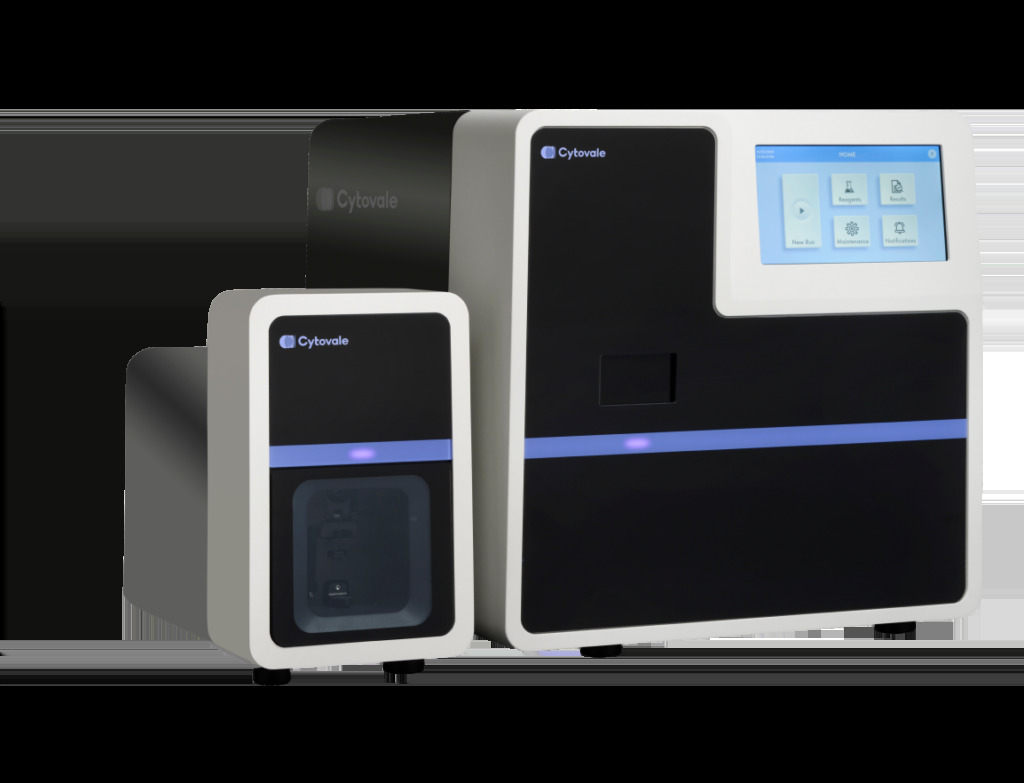
The paper joined an engineering principle to a clinical workflow. White blood cells change their mechanical properties when activated. Cytovale's approach sends cells through a microfluidic channel, stretches them, records high-speed images, and turns their behavior into measurements. The elegant part is physical; the difficult part is systemic. Hardware, fluidics, image analysis, software, quality processes, and the realities of a busy laboratory all have to agree.
The value of unglamorous variables
Return to the viscosity experiment. Jensen explained that the team used very small aliquots because biological material was limited. The low volume allowed many replicates, which made it possible to examine variability within and across samples. That is an engineer's version of thrift: spend less material to buy more certainty.
It is also an operator's lesson. Companies have their own invisible viscosities. Information flows too slowly. A planning process resists movement. One team's assumptions do not match another's. The chief of staff sits where these mismatches arrive, often disguised as calendar problems or meeting problems. An engineering background does not magically solve them. It does encourage useful questions: Where is the friction? What is being measured? Is the method robust? Can the result survive contact with a different team?
A sound result depends on the system around it, not merely the component under study.
Good process removes noise without damaging the thing people need to understand.
Replicates turn an attractive observation into evidence a team can use.
The same disciplined question can travel from an experiment to a roadmap to an executive decision.
Public glimpses of Jensen are spare, which suits the nature of her work. In a company milestone post after FDA clearance of IntelliSep in January 2023, she emphasized what the tool lets clinicians do and how quickly it returns a result. Her words stayed close to function. In another public record, researchers thanked “Annie Jensen” and several Cytovale colleagues for helping set up and operate a study during the opening stage of the COVID-19 pandemic. It is a brief acknowledgment, but the verbs matter: set up and operate. Science depends on both.
A technical career does not have to abandon the bench. Sometimes it learns to see the whole company as a system.
A longer view of staying
Startup mythology adores the dramatic leap. Jensen's record offers a quieter counterpoint: staying long enough for the problem to change. The Cytovale of 2014 needed research engineering. The company of 2017 needed group leadership. By 2020, technology required planning across a broader horizon. By 2023, the CEO's office needed an operator who could connect technical work, priorities, and execution.
Continuity has a peculiar advantage in a complex company. The person who remembers why an early constraint existed can tell the difference between a sacred principle and an obsolete workaround. She has seen assumptions graduate into systems and systems collide with reality. That memory is useful only if it remains curious. Otherwise tenure becomes sediment. Jensen's movement across functions suggests a more active kind of institutional knowledge: history that keeps taking on new assignments.
Her progression also complicates the usual advice to “follow your passion,” a phrase so broad it can excuse almost any itinerary. Jensen's public record points to something more practical: follow the adjacent problem. The undergraduate biochemistry researcher learned engineering. The hospital research engineer moved into a medical-device startup. The senior engineer took responsibility for a group. The group lead moved toward technology planning. The planner entered the CEO's office. Each step preserved enough of the previous work to make the next one legible.
That sequence matters for engineers who worry that leadership will make their technical education irrelevant. Technical knowledge is not valuable only when one is personally running an experiment. It can sharpen judgment about timelines, dependencies, evidence, and risk. It can help a leader distinguish a difficult problem from a poorly defined one. Jensen's career does not supply a universal formula, but it does offer a credible pattern: depth first, translation second, range over time.
Cytovale announced a $100 million Series D financing in October 2024 to support commercial expansion. Jensen was among the colleagues CEO Ajay Shah tagged when he shared the news. A financing round is a company event, not a personal achievement, but it changes the operating terrain. Expansion brings more people, more dependencies, and more opportunities for a promising signal to get lost between functions. The work of translation becomes more important precisely when it becomes less visible.
Jensen's career is useful because it resists a false choice between technical depth and organizational breadth. Her record does not show an engineer escaping science for management. It shows someone applying an experimental temperament to successively larger systems. Rare cells became assays. Assays became technology plans. Plans became company decisions.
There is wit in the progression. After years spent watching cells deform under pressure, Jensen took a job close to the CEO, where priorities do much the same. The serious point is that both settings reward an eye for what changes, what holds, and what the movement reveals. The instrument is different. The craft is recognizable.