Anish Khadiya had a job that required him to go places. First, however, he had to get through his inbox. Booking a straightforward flight could take three to five emails and several hours of correspondence, even with a travel management company handling the arrangements. The airplane was fast. The conversation required to board it had developed a rather different relationship with time.
He remembers traveling five days a week as a McKinsey consultant, spending roughly 250 nights a year away from home. At first, the travel was fun. Eventually, it became an errand. His response was familiar to anyone who has negotiated an office process that nobody seems to own: he accepted it, got annoyed, and carried on.
The idea for a company arrived later, after he moved into fashion ecommerce. Watching technology make buying clothes easier gave him a useful comparison. A T-shirt could be purchased with little ceremony. A work trip still needed a small epistolary novel. He began to wonder why the same approach to software could not make booking travel easier.
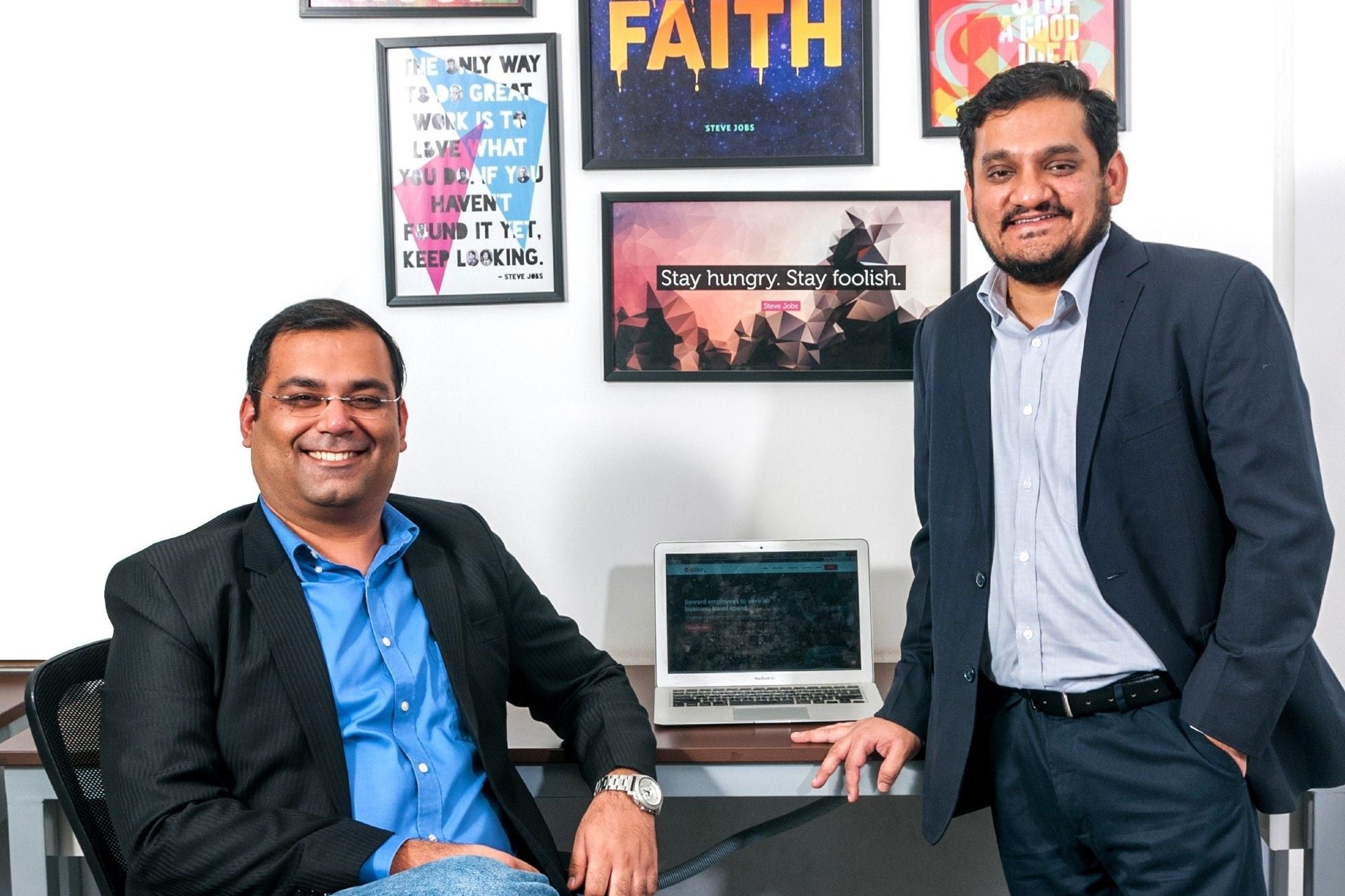
In 2017, Khadiya and Mayank Kukreja founded ITILITE. Kukreja became chief executive; Khadiya became chief business officer. Their subject was the journey people take for work, including the unlovely administrative journey that accompanies it. The second journey has no window seat.
To book a simple flight, in Khadiya’s account of his consulting years.
What the consultant brought in his suitcase
Khadiya studied electrical engineering at IIT Kharagpur, completing his B.Tech between 2002 and 2006, then earned a postgraduate management diploma at IIM Lucknow between 2009 and 2011. His career included ITC, McKinsey, and Myntra. At McKinsey he became an engagement manager; at Myntra he served as director of strategy and planning.
Those jobs offered two views of a company trip. As a traveler, he experienced the booking process. As a consultant, he worked with organizations examining operational costs. The person waiting for a ticket and the person inspecting the travel budget might disagree about comfort, but both had reason to dislike an arrangement built around repeated calls and emails.
Myntra supplied a different kind of education: a consumer business using technology to simplify a purchase. Khadiya's move through these organizations matters because the problem he eventually chose crossed their boundaries. It involved customer experience, spending discipline, and the practical business of making a service work repeatedly. At ITILITE, his responsibilities would span revenue, partnerships, and customer success.
The first customer had to go first
Capillary Technologies became ITILITE's first customer. The relationship began with a pilot involving one product in one department. By the company's fourth anniversary in 2021, Khadiya said Capillary had used the wider product range and grown alongside the business. An early customer had supplied something a new company cannot put together internally: a record of being trusted by somebody else.
The founders' original idea included rewarding employees for saving their employer money on travel. It was an appealing alignment of interests, with a benefit for the traveler as well as the company. But selling that idea exposed a larger job. The underlying booking process itself needed attention. An incentive layer would sit awkwardly on top of a system that remained cumbersome.
That expansion of the problem helped shape ITILITE's direction. A booking, an approval, a payment, and an expense record belong to the same work trip. For the people administering them, separate systems can turn that single trip into several assignments. Khadiya's business has kept returning to the connections between those assignments.
“We literally lived out of our suitcases.”
Anish Khadiya, recalling the consulting years, 2021
A hotel room is also a payment problem
By August 2024, Khadiya was writing about hotel credit card authorizations with the patience of someone who had run out of patience. The process allows an employer to pay for a traveler's stay using a central company card. It can involve contacting the hotel, filling in a form, sending the details, and following up. An employee may arrive to discover that the paperwork has failed to arrive in quite the same sense.
His proposed approach combined virtual cards, automatic updates to hotel systems, and human backup. He reported that early adopters of ITILITE's authorization solution had seen payment issues fall from 20 percent to 3 percent. Those were his reported results for early adopters, rather than a guarantee for every hotel or customer. Still, they show the kind of result he chooses to discuss: fewer problems at the desk where a traveler wants a key.
In another customer account, he described a finance team that spent two days each month reconciling card transactions and still matched only about 90 percent of them. After adopting ITILITE's card and automatic reconciliation, he said, the monthly task took 30 minutes. The remaining work was to review a file the system had prepared.
The detail he picked out was wonderfully ordinary: being able to identify which statement line belonged to an airline booking and which belonged to a hotel. Reconciliation has never been accused of excessive glamour. Yet a finance team needs those connections, and someone otherwise has to establish them by hand. Khadiya tells the story from the perspective of the people doing that work, measuring the improvement in time returned.
Less trouble at check-in
The marketing education came after business school
In June 2024, Khadiya opened an account of his marketing experiments with an admission: consulting had taught him business fundamentals, but marketing had required further learning. He carried over a preference for decisions supported by logic and data. He also described an early mistake: reaching out to too many kinds of companies, producing too few useful meetings.
His advice became narrower and more practical. Understand which customers are likely to buy. Read a prospect's profile before making contact. At trade shows, exhibit, arrange meetings, and follow up within seven days. A promising conversation has a shelf life, which makes the follow-up something more consequential than a tidy administrative habit.
A later essay on brand building treated the subject as unfinished work. He advocated showing up consistently at trade shows, investing in discoverable content, and explaining the brand's purpose inside the company. Podcasts interested him, though he said their effectiveness would take time to assess. Word of mouth was valuable; producing it reliably remained difficult. The writing leaves room for uncertainty, an attractive quality in advice from somebody responsible for sales.
Someone still has to pick up
Khadiya calls himself a history buff. In May 2024, he applied that interest to customer support, tracing changes in how people ask companies for help. His question was whether digital self-service would remove the need for human agents. His answer allowed technology a substantial role while keeping people firmly in the picture.
Travel makes that position easy to understand. A disruption creates a problem with a deadline. Khadiya described hiring support staff for empathy and problem-solving, then using technology to prioritize tasks and help agents find information. He expected AI to improve their efficiency. His argument centered on giving a capable person better tools to resolve the traveler's problem.
ITILITE's current product range includes Iris, a travel analyst launched in October 2025 that accepts questions in plain English. In October 2026, the company continued to list human support alongside its AI and automation products. That combination reflects a recurring concern in Khadiya's work: the interface should make getting an answer easier, whether the answer comes from software or from someone who can help change the trip.
- 01Book the journey
- 02Approve the spending
- 03Pay the hotel
- 04Match the expense
An editorial schematic of the work described in this story.
The office stretches across the clock
The organization serving those travelers brings its own coordination problem. Khadiya has described remote, in-person, and hybrid teams working across geographies, with the United States as a priority market. He tries to maintain overlapping hours so that he can help resolve decisions in real time. Where schedules diverge, he emphasizes clear priorities and a written understanding of the task.
He also discusses cultural training and in-person meetings. Colleagues can share working hours while interpreting a problem differently. Getting acquainted with how another team thinks is part of making the operation function. It is a fairly concrete version of collaboration, involving calendars, documentation, and the effort of understanding someone else's assumptions.
His 2024 essay on demanding founders adds another piece. He argues for high standards alongside transparency, accountability, and freedom to experiment. Founders should admit their own mistakes. Talented employees need access to information about performance, as well as clarity about goals and careers. The essay is an argument for how he believes leadership should work, with obligations placed on the founder as well as the team.
A little help from the people on the court
When he feels unsure about the next step, Khadiya says he turns to sports. He points to Stephen Curry when discussing small, consistent improvements. Michael Jordan and Novak Djokovic appear in his account of the teams behind individual achievement. Watching sport gives him confidence and a set of principles to bring back to work.
It is an appropriate interest for someone whose company began with an everyday irritation and kept finding adjacent jobs to do. Better prospecting, a clearer handover, a payment that reaches the hotel, a transaction that matches its booking: each improvement concerns an identifiable person doing an identifiable task. None needs an extravagant origin myth.
Khadiya says he never planned to start his own company. The route took him through engineering, management education, consulting, and fashion ecommerce before he returned to the tedious process he had once accepted. Now he works on the other side of that process. Somewhere, a traveler is waiting for a flight confirmation. He has had plenty of practice understanding the feeling.