A retailer can sell you a shirt and still know almost nothing about you. You walk in, pay, leave. The receipt remembers the transaction. The business may never recognise the customer. For Aneesh Reddy Boddu, that small failure of memory became a career.
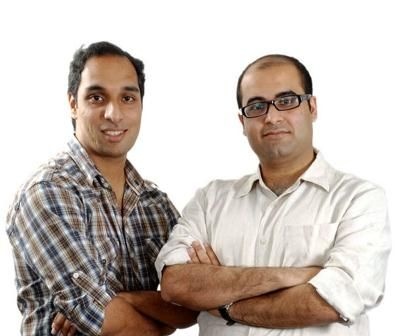
In 2008, Reddy and his fellow IIT Kharagpur graduates Krishna Mehra and Ajay Modani started Capillary. They had an interest in retail and mobile phones, rather than a finished business plan. Then the financial crisis gave their prospective customers a much more urgent question: how could they persuade existing shoppers to come back?
The answer would eventually take Reddy from Indian billing counters into enterprise software, international acquisitions and the public markets. Along the way, he would discover that keeping a company going involves its own rather demanding loyalty programme. Customers have to stay. Colleagues have to believe. The founder has to return to the problem after the first answer stops working.
A factory before the shop floor
Reddy graduated from IIT Kharagpur in 2006 with a degree in manufacturing science and engineering. During his student years, he helped establish the Entrepreneurship Cell. Before he had built a business, he had helped build a place where students could consider doing so. The institute later recognised him with its Distinguished Alumnus Award in 2017.
His first employer was ITC. His responsibilities included factory maintenance and work on a new manufacturing facility. In his account of those years, a young engineer found himself managing people with far more experience than he possessed. A degree could get him through the factory gate; it could hardly make the maintenance crew impressed on arrival.
That experience mattered to the kind of employer he wanted Capillary to become. He credits ITC with influencing its attention to people and long tenures. It is an unusually practical apprenticeship for a software founder: machinery, facilities, older colleagues, decisions that have to work outside a presentation.
Entrepreneurship offered a different scale of responsibility. At a large company, he had wondered where he fitted into the machinery. At Capillary, the answer would be difficult to miss. If something needed doing, there were few people available to whom he could elegantly delegate it.
The customers wrote the brief
The early founders went from store to store, asking managers about their problems and seeking introductions to senior executives. More than 30 people described needs worth addressing. Five became early customers. The order of events was useful: a willingness to pay arrived before the software was fully written.
“We went store-hopping,” Reddy recalled. It sounds agreeably casual for the beginning of an enterprise software company. In practice, it meant allowing shopkeepers and retail managers to edit the founders’ ambitions. A clever idea still had to survive the rather unfashionable question of whether anybody would buy it.
Traditional loyalty schemes asked shoppers to fill in forms and carry membership cards. Capillary used the mobile number as the identifier, gathering customer information at the billing counter. The phone was already in the shopper’s life. Another plastic card would have had to audition for a place in it.
The resulting proposition was straightforward: help a retailer recognise a shopper, understand purchases and make a relevant offer later. A business could start with a small trial instead of committing its entire estate. The recession also shaped the commercial terms: stores reluctant to buy servers or pay upfront could pay a recurring fee per store.
There is an appealing lack of ceremony to this origin. The founders did not need shoppers to learn a new habit involving an unfamiliar object. They needed a cashier, a number and a reason for the customer to visit again.
A prize, filed just in time
In 2009, Capillary won the India edition of Qualcomm Ventures’ QPrize, receiving $100,000 in seed funding. Reddy had heard about the competition at an Open Coffee Club session where Qualcomm’s Karthee Madasamy spoke. The presentation came together at the last minute. Apparently, even a company devoted to repeat behaviour can begin with a deadline narrowly observed.
For Reddy, the award changed how potential customers, recruits and investors responded. It also brought a relationship with Madasamy and the Qualcomm team, whose help extended to introductions and advice on running the company. Cash mattered; so did having somebody willing to take the call.
The early customer list gave that recognition substance. Indus League was among the retailers already using and paying for the product. Outside endorsement could open a door, but the company still needed something useful to show on the other side.
Capillary attracted venture backing from investors including Sequoia Capital and Norwest Venture Partners. Fortune India included Reddy in its 40 Under 40 rankings in 2014 and 2015; the Economic Times recognised him in 2017. Those honours marked progress. They did not spare him the next round of mistakes.
America required a second visit
An early attempt to expand into the US failed to find the necessary product-market fit, and Capillary closed the operation. Reddy has spoken openly about raising more money than the company knew how to use and learning to balance expansion with profitability. More resources had made more decisions possible, including the expensive ones.
The later return to America followed a different route. In 2021, Capillary acquired Persuade, bringing local customer relationships and loyalty expertise into the company. Brierley and Tenerity’s Digital Connect assets followed in 2023. The strategy joined Capillary’s software to businesses that already understood the buyers it wanted to reach.
This was a question of trust as well as features. An enterprise buying a loyalty system is entrusting a supplier with something woven through its customer relationships. A newcomer can have an impressive demonstration and still struggle to displace a familiar name. Local references and experienced teams gave the second attempt a different starting position.
Reddy’s task expanded with the acquisitions. Buying companies meant integrating people, customers and products, while keeping a coherent platform. A deal announcement is a brief event. Making the combined organisation useful occupies rather more of the calendar.
By his April 2026 conversation on The Neon Show, the US accounted for more than half of revenue. The geographical reversal is striking, but the personal one is more revealing: the same founder who had withdrawn from a market returned with a revised explanation of how to enter it.
Cofounder is a verb, too
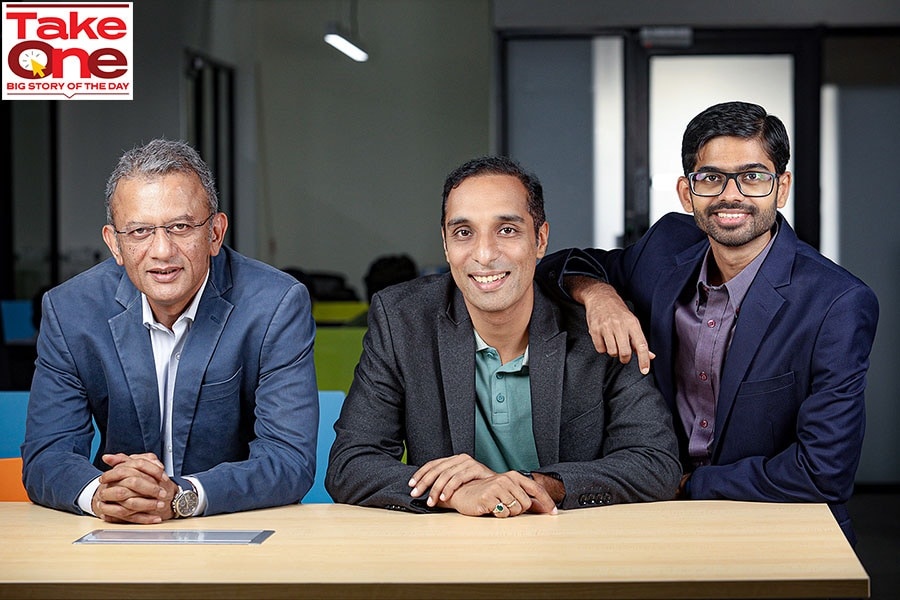
Capillary’s leadership story also took a turn away from the conventional founding photograph. In 2023, long-serving executives Anant Choubey and Sridhar Bollam were elevated to cofounders. Reddy described people who had already been acting with a founder’s sense of responsibility, putting the organisation first and thinking over a longer horizon.
The designation recognised work done over years. It also made public a view of ownership that could accommodate people beyond the original starting line. A company founded in 2008 was still deciding, fifteen years later, who deserved to be called a founder.
Reddy wrote that he had rarely experienced the loneliness often associated with the role, crediting Choubey, Bollam and the wider leadership team. That is a useful correction to the solitary entrepreneur portrait. Even a profile with one name above it can contain a crowded room.
He also experimented with his own position. Sameer Garde took over as CEO as Reddy remained managing director, and Reddy returned as CEO in March 2024. His career contains both handing over the operating role and taking it up again. Leadership, in this telling, has involved changing the arrangement rather than treating the founder’s first job description as permanent.
“Life has been very kind!”Aneesh Reddy, on Capillary’s public listing
The bell and the obligations after it
Capillary Technologies India listed on the BSE and National Stock Exchange on 21 November 2025. Seventeen years separated the original venture from its arrival on the public markets. For a business built around repeat visits, that is a considerable stretch of keeping the doors open.
Reddy’s public response began simply: “Life has been very kind!” He thanked the people involved and expressed the hope that the company would live up to the expectations attached to being public. The sentiment was grateful, with the next obligation already visible in the same breath.
The obligations have become concrete. Capillary’s operating revenue for the year ended March 2026 was ₹734.6 crore, up 23% from the previous year. In May 2026, it completed the acquisition of SessionM from Mastercard for $20 million. Reddy identified integration and sustainable growth as priorities.
The following quarter supplied a less tidy chapter: revenue increased, while an exceptional loss associated with cyber fraud at its Czech subsidiary weighed on reported earnings. The public-company story includes operational setbacks alongside acquisitions. A longer history gives a founder more experience; it still leaves him answerable for what happens next.
- 2008
- The venture begins
- 2021
- Persuade acquisition
- 2025
- BSE & NSE listing
- 2026
- SessionM deal completed
The next question at the counter
Reddy’s current writing returns to a familiar frustration: companies possess customer data but struggle to put it to work quickly. In his September 2025 essay on AI-first loyalty, he described software agents handling tasks such as campaign setup, content generation and promotion testing. The ambition is to make the daily work of running a programme easier.
His June 2026 writing took up the gap between asking a commercial question and receiving an analytical answer. The concern is recognisable from the company’s earliest days. A retail manager needs a decision in time to use it. A system that explains last season beautifully can still be late for this one.
Outside Capillary, Reddy invests in and mentors younger SaaS founders. The Entrepreneurship Cell he helped establish as a student has a fitting echo in that work: helping other people get to the point where they can try an idea for themselves.
The thread through his career is the repeated revision of a practical question. What would make this useful enough for a retailer to buy? What would make an American customer trust it? What would persuade experienced colleagues to stay? The answers have changed as Capillary has grown.
At the beginning stood a shop, a shopper and a missing connection between them. Eighteen years later, Reddy is still working on the connection. It has acquired software, shareholders and several time zones. The customer, meanwhile, is free to walk out of the door. There is always another visit to earn.
Keep the conversation going
Interviews, essays and the people behind the story.