For a few weeks, the business mail of Prestige Rehab went to the CEO's house. The company was changing billing vendors; its previous revenue cycle partner had received the mail, and the transition left checks and insurance paperwork arriving at an address better suited to family photographs than accounts receivable. More than a month's backlog built up. It was the sort of problem that sounds quaint until payroll depends on the checks inside those envelopes.
Anatomy Financial's published account says it opened six payment accounts and six lockboxes for Prestige, one for each tax ID. The addresses were issued on day two. Six boxes of accumulated mail went to a processing center on day three. By day six, Anatomy says, the mail was digitized, checks deposited, and explanations of benefits converted into electronic remittance files for posting. It reports $38,000 in remits posted and checks deposited during the cleanup. The case is a company account, but the sequence is unusually concrete: change an address, move the paper, make the data usable.
- Anatomy serves U.S. healthcare organizations that bill insurance: practices, digital health providers and billing companies.
- Its lockbox receives paper checks and mail; software converts EOBs to 835 remittance files and matches payments with deposits.
- The distinctive bet is physical as much as digital: the workflow starts at the mailbox.
- It raised $7.6 million in seed funding and $19 million in Series A funding during 2024.
A digital industry with a postal address
Healthcare can produce a digital claim, track it in a practice management system, and then settle it with a paper check. The accompanying explanation of benefits, or EOB, describes what the insurer paid, denied or adjusted. Someone must open the envelope, scan the document, deposit the check, enter the details and connect the bank transaction to the right claims. A single insurance payment may cover several patient visits and recoupments. The deposit amount alone rarely tells the whole story.
Industry figures cited in Anatomy's 2024 launch put paper checks at 27% of insurance payments to medical organizations and 79% to dental practices. Those numbers are a snapshot, not a forecast, yet they explain the market. A general bank lockbox can receive and deposit checks. A clearinghouse can move electronic remittance data. A practice management system can post payments. The trouble is the seam between them, especially when the remittance arrives on paper.
Sasha King, Anatomy's co-founder and co-CEO, has described years spent building financial measures to understand insurance revenue. Her background includes commercial leadership at CareDx. Co-founder and co-CEO Callum King previously built fintech and embedded finance at Brightside. They are a married founding team, a detail with less relevance to the product than the combination of their experience: the healthcare side knows how obscure a remittance can be; the finance side knows what a bank account can expose. Anatomy was founded in 2022 and came out publicly in 2024.

The address is part of the product
Anatomy's central request to a practice is simple but consequential: redirect payment mail to its lockbox. The physical work is handled with CheckAlt, the check processing company that partnered on the May 2024 launch. Anatomy turns the documents into an inbox-like queue, classifies correspondence, converts paper EOBs into standardized 835 electronic remittance advice files, and makes them available for posting. Its Smart Reconciliation product links remittances with bank deposits and suggests matches when an automatic match needs attention.
This is why Anatomy calls itself a financial operating system rather than a scanning service. It also offers embedded business accounts through Live Oak Bank. The bank announced Anatomy as its first embedded banking partner in June 2024; the accounts are held and serviced by Live Oak. The arrangement gives Anatomy a direct path from the check's arrival to the deposit record without pretending that Anatomy itself is a bank. On the software side, listed integrations include Compulink, EZClaim and ModMed Boost.
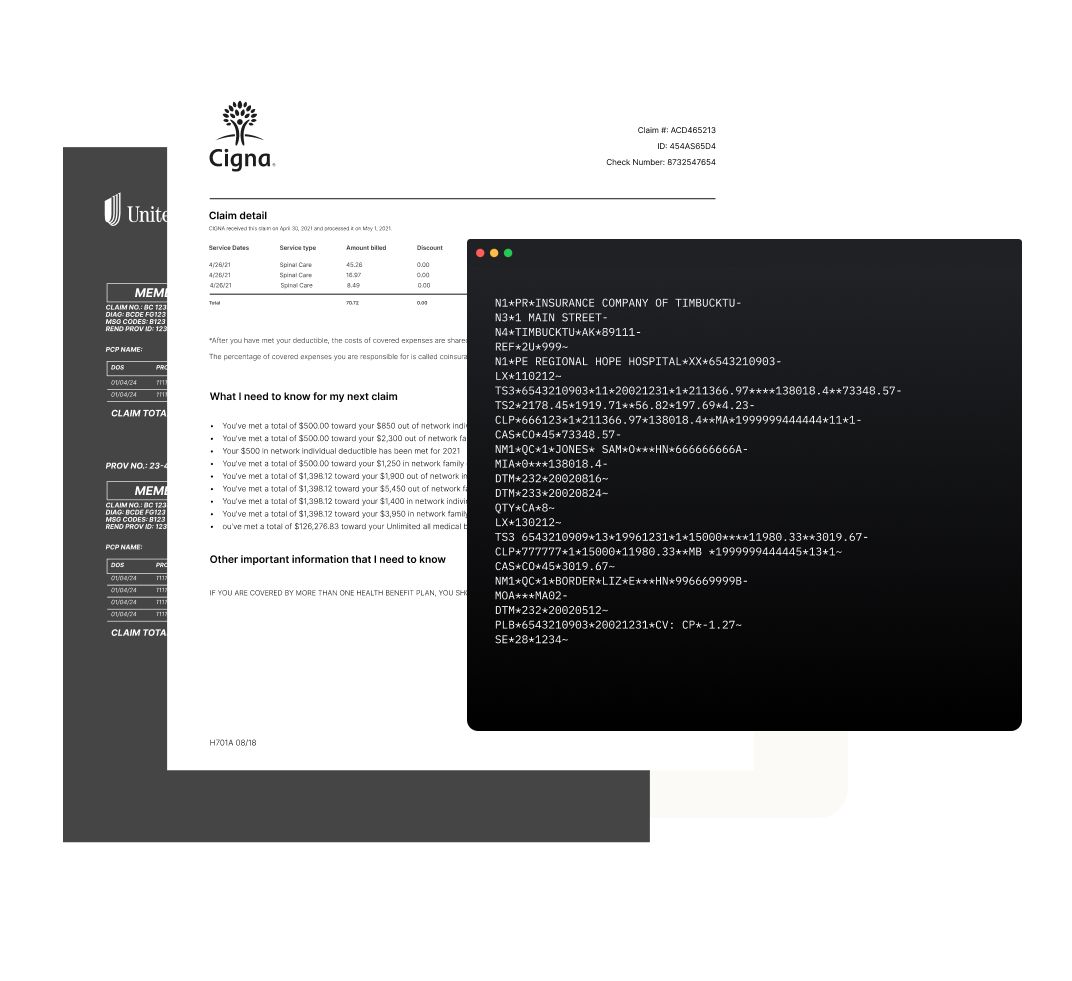
For a billing team, the practical appeal is time and visibility. It can search correspondence rather than hunt for a scanned packet, post remittances rather than retype them, and see whether an insurance payment has actually reached the bank. For a practice owner, the benefit is a less mysterious cash position. For an RCM company, it is a way to manage client mail without making each practice an ad hoc scanning station.
Six days, and all the things that had to happen before them
The Prestige Rehab story is a compact demonstration of the model. The first failure was mundane: a vendor change broke the path between incoming mail and the people who posted payments. The fix was not a new dashboard. It was a set of addresses, accounts, physical mail handling and remittance conversion, arranged in that order. Anatomy says its AI can create ERA files from EOBs without requiring the original electronic 837 claim file. That matters when a team inherits a pile of paper but not a tidy history of the systems that produced it.
Prestige Rehab, as reported by Anatomy
- Day 1: six payment accounts opened, one for each tax ID.
- Day 2: six lockbox addresses activated.
- Day 3: six boxes of backlogged mail shipped for processing.
- Day 6: mail digitized, checks deposited and EOBs converted for posting.
“I asked if we could finish posting before July closed - Anatomy crushed it.”Dr. Daniel Reizis, CEO, Prestige Rehab
It is tempting to describe every such change as an AI story. The more useful lesson is operational: map the entire journey of a payment before buying a tool for any one step. Who receives the letter? Who can see a denial notice? Who deposits the check? Who knows which claims it paid? A practice that answers those questions can identify where automation earns its keep. One with mostly electronic remittances, a reliable deposit feed and little paper may have less need for a physical lockbox.
What the money bought
Anatomy announced a $7.6 million seed round led by Lightspeed Venture Partners in February 2024. Ten months later, it announced a $19 million Series A led by Canapi Ventures, with Lightspeed participating. The two public rounds total $26.6 million. Anatomy said the later capital would help scale its AI healthcare lockbox and financial operations platform. It has not published enough detail to calculate what a typical customer pays for the software or lockbox. A public schedule lists certain banking and card processing fees, but the main commercial conversation still begins with a demo.
The competitive idea is narrower and sharper than “AI for healthcare.” Anatomy is building around a neglected object: the mailed insurance payment. The bank account, the remittance file and the practice system already exist. Its job is to make their records agree. A company that can do that reliably becomes less a replacement for those systems than a translator between them. That is a plausible business precisely because the envelope has proved so stubborn.
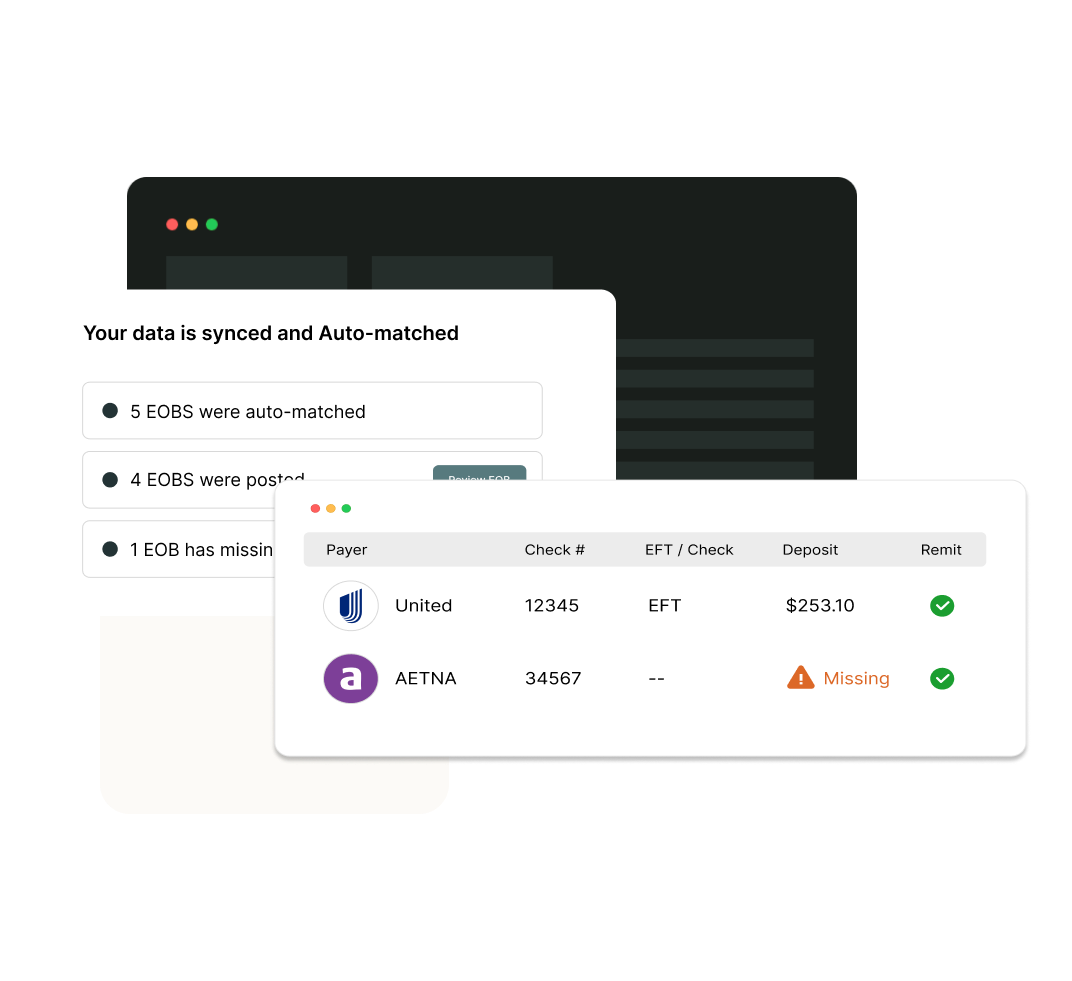
There is a condition attached to that promise. Rerouting mail requires payer and practice coordination; conversion still depends on the quality of the document that arrives; and exceptions still need a human who understands the account. None of those facts makes the thesis less interesting. They make it a real workflow, with a start, an end and a few envelopes in between.