Anand Parikh began with a respectable plan and promptly complicated it. At the University of Michigan, he expected to become a doctor. Biology made sense. Then political science captured him, particularly the question of how people organize themselves and how institutions move. His interests drifted from health policy toward environmental policy. The people changing organizations, he noticed, were often lawyers. So the would-be doctor went to law school.
This is the first useful clue in Parikh's career: he is less attached to a professional label than to the scale of the problem behind it. Biology, politics and law can look like three separate buildings on a university campus. In his working life, they became adjoining rooms. Each taught him a different way to look at systems: how living things behave, how groups make decisions, and how rules turn those decisions into action.
At New York University School of Law, Parikh focused on corporate law and took corporate-finance courses at NYU Stern. His campus activities ranged from the Environmental Law Journal to the NYU Energy Law Association, which he founded and co-chaired. He began his career at Morrison & Foerster, practicing technology mergers and acquisitions. The work offered rigor and proximity to company making, but not yet the feeling of building one from the inside.
The education hidden inside a job description
In 2016, Parikh joined Virta Health as employee number three. A young company does not care much for tidy departmental borders, and he moved across fundraising, finance, legal, business development, people operations and regulatory work. He has said that the company ultimately raised more than $300 million during his time there. More important for his own education, he saw how an idea becomes an institution one meeting, hire, contract and financing at a time.
Parikh later described this period as his industry training. He did not arrive in life sciences with a doctorate. He learned by doing, by working hard and by asking for mentorship. That admission is refreshing because it avoids the founder's favorite costume: instant expertise. Parikh's version of authority was assembled more honestly. Know the structure. Learn the language. Find the person whose knowledge exceeds yours. Listen.
“In addition to hard work, you must actively seek input from those who know more than you.”Anand Parikh, BIOS founder interview
The principle would become central to Faeth Therapeutics. Parikh could contribute legal judgment, financial fluency and the muscle memory of an early operator. The scientific founders around him brought decades of research. Lewis Cantley had discovered the PI3K pathway. Siddhartha Mukherjee, Karen Vousden, Scott Lowe, Greg Hannon and Oliver Maddocks approached cancer biology through different specialties. Their work converged on metabolism, a sprawling map of signals, nutrients and adaptations that refuses to behave like a simple switch.
A company designed around an unanswered question
Faeth began in 2019. Its name came by way of Maddocks, who is Welsh, and a brainstorming process aimed at the company's interest in nutrients and metabolism. Even the naming story feels characteristic: a serious thesis wearing a short, slightly mysterious word. Parikh and Maddocks co-founded the business alongside the scientific group, creating a team in which the organizational chart doubled as an argument for collaboration.
The early proposition was broad. If tumors depend on particular metabolic conditions, could researchers design interventions around those dependencies and combine them with drugs? Faeth built tools to study metabolic vulnerabilities and initially became known for pairing precision nutrition with therapeutics and digital support. Parikh insisted that the work should meet the standards of regulated medicine, with evidence doing the persuading. The distinction mattered in a field where confident dietary folklore often outruns data.
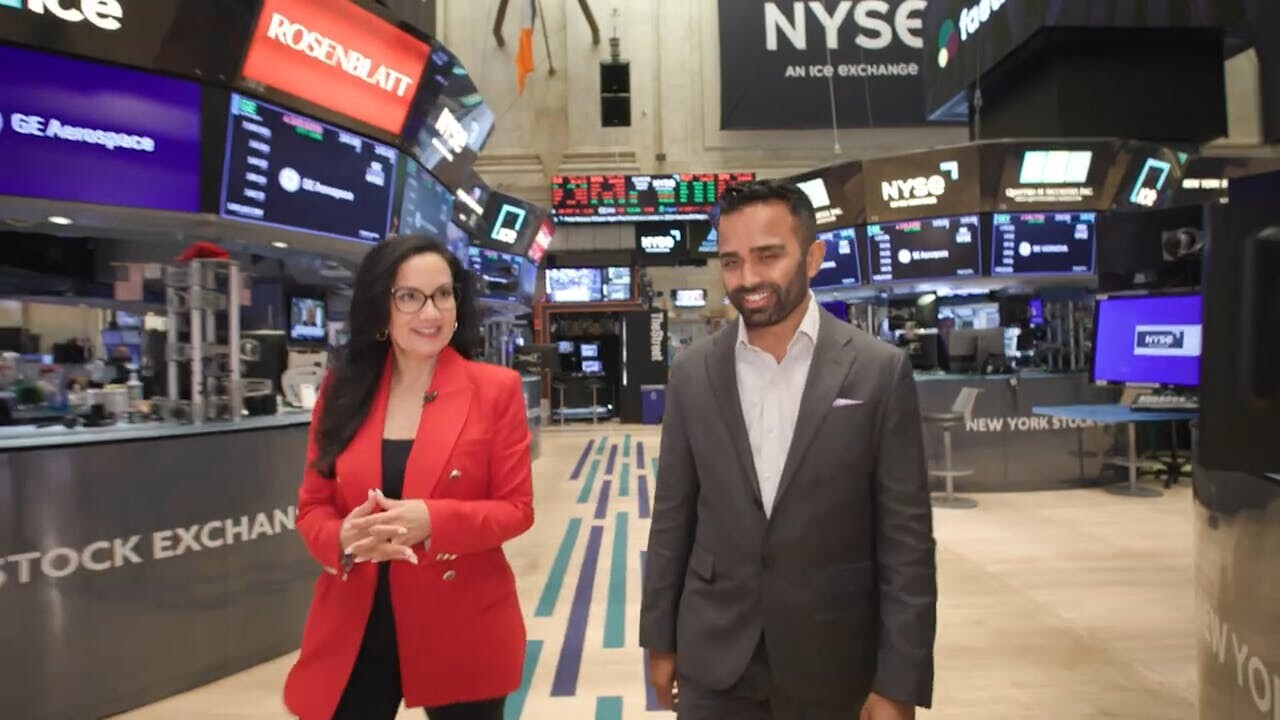
In interviews, Parikh is comfortable making the scientific premise plain without pretending the science is simple. Genes can be described as switches. Metabolic pathways are more like a city during road construction: multipolar, adaptive and full of escape routes. Block one route and traffic finds another. Faeth's strategy evolved toward inhibiting several nodes of the PI3K/AKT/mTOR pathway at once, seeking a more complete blockade than a single-node approach.
The Parikh operating stack
This evolution produced PIKTOR, Faeth's investigational oral combination of serabelisib and sapanisertib. Serabelisib was in-licensed in 2021; sapanisertib followed in 2023. The program targeted PI3K-alpha and both mTOR complexes, turning the original interest in metabolism into a more focused development plan. A Phase 2 study began in 2025. The important word remains investigational: clinical development is a process of testing a hypothesis, not declaring victory over uncertainty.
Keeping the question while revising the answer
Founders are often praised for sticking to a vision, as though fidelity requires freezing it in amber. Faeth's history offers a more practical version. The company kept its conviction that metabolism mattered while its programs and corporate shape became more specific. It raised a $20 million seed round in 2022, co-led by Khosla Ventures and Future Ventures. It moved from platform language and drug-nutrition combinations toward a lead multi-node drug program. The research question persisted; the answer acquired sharper edges.
In February 2026, Sensei Biotherapeutics acquired Faeth in a stock-for-stock transaction accompanied by a $200 million private placement. Parikh joined the combined leadership and board. Four months later, shareholders approved the relevant share conversion, the company took the Faeth Therapeutics name, and its stock began trading under the symbol FTH. Parikh emerged as chair and CEO of the public company he had helped begin seven years earlier.
“Everything that I've learned about leading a life sciences company has been on the job.”Anand Parikh
The sentence lands differently after the merger. Learning on the job can sound scrappy when a startup has fifteen people and a seed round. It sounds more consequential when the job includes public-company governance, clinical milestones and a larger capital base. Yet Parikh's route into the role remains the same: through adjacent disciplines, practical responsibility and sustained contact with experts.
His personal account of ambition begins earlier. Parikh has spoken about moving to the United States as a boy and growing up as an immigrant in Detroit. He learned, he says, that nothing is handed to you and that sometimes you must work harder than everyone else. He names grit and the willingness to outwork as qualities he respects. It is a stern philosophy, but his accompanying emphasis on mentorship gives it balance. Effort matters; so does being teachable.
His law-school record hints at the same preference for building connective tissue. At NYU he did more than earn a JD. He founded and co-chaired the Energy Law Association, worked on the Environmental Law Journal, and participated in coalitions concerned with law, representation and admissions. None of those entries predicts a biotech company by itself. Together they show a person drawn toward the places where specialized knowledge meets an institution: the committee, the journal, the association, the deal.
There is also a practical reason the lawyer-to-operator transition held. Corporate work taught Parikh to inspect assumptions before accepting them. He has credited legal training with sharpening his ability to reason from first principles. At Virta, that habit met the messier test of a young business. A financing decision affects hiring; a regulatory choice reshapes product; a contract can encode a partnership or quietly limit it. The generalist sees those dependencies because the job does not permit tunnel vision. Faeth would ask for the same wide-angle view, now across discovery, clinical development, regulation and capital.
The scenic route was the curriculum
There is a temptation to retell Parikh's career backward, making every turn look destined to produce Faeth. It was not so neat. A teenager's migration, a student's changing major, a lawyer's move into an early startup and an operator's encounter with a neglected scientific idea are not dots that connected themselves. The shape appears because Parikh kept carrying useful tools forward.
Political science left him with a fascination for organization. Biology gave him respect for complexity. Law taught structure and first-principles thinking. Virta supplied the compressed education of an early employee. Faeth demanded that he combine them without confusing fluency for mastery. His most transferable achievement may be this ability to stand at the border of specialties and help people build across it.
That is the less glamorous work inside ambitious science. Someone has to translate between the laboratory, the boardroom, the clinic and the capital table. Someone has to keep a coalition aligned while evidence edits the plan. The task is neither pure invention nor mere administration. It is choreography, with regulations.
It also explains why Parikh's public comments return so often to people. He talks about co-founders, mentors and experts more readily than about solitary inspiration. His own role becomes clearest in relation to that network. Maddocks helped give the company its name and scientific direction. The scientific founders supplied distinct bodies of research. Early investors supplied the capital to test the premise. Later, the Sensei transaction gave the program a public-company platform. Parikh's work sits in the agreements among them: choosing the question, bringing the participants together and keeping the enterprise moving as the answer changes.
Parikh once thought medicine might be his route to impact. He then decided lawyers could act on organizations at a larger scale. In the end, he found a role that borrows from both instincts: build an organization capable of testing a biological idea. The destination makes the detours look sensible, but the deeper lesson is that the detours made the destination possible.