On February 7, 2016, Anand Nagaraj walked into his manager’s office to resign. His promotion letter had arrived the previous working day. The timing was awkward even by the standards of a resignation conversation.
Today, the Dubai-based co-founder and CEO of CredibleX works on another kind of awkward interval: the time between a small business earning money and being able to use it. His career has moved from Citi to Invoice Bazaar to embedded lending, while remaining close to that practical problem. A business can have customers, orders and unpaid invoices, yet still need money to keep operating.
His startup preparations had begun well before his resignation. In January 2015, friends subscribed to an early funding round within a day; a 12-year-old nephew offered $50 in savings. The first customer and funding institution arrived in September 2016. Nagaraj later described making room for foosball and family occasions, and taking his son to see Ronaldo play in Sochi. He encouraged employees to use quiet hours for their own lives. The alternative, pretending to work, struck him as a poor use of everyone’s time.
An invoice is a promise with a date on it
At Citi, Nagaraj had headed Middle East commercial banking products, including supply chain financing. He brought that experience into Invoice Bazaar, founded in 2016. His education included a postgraduate management qualification from the Indian Institute of Management Kozhikode and a fintech certificate course from MIT. The business he built dealt with something less glamorous than those names might suggest: getting suppliers paid earlier.
Invoice Bazaar connected smaller suppliers with larger buyers through a digital platform. Suppliers could check invoice status and sell receivables for cash. For the supplier, that changes when money becomes available; for the buyer, it can fit into procurement. The appeal lies in a small adjustment to a familiar transaction. An invoice already exists. A buyer already owes the money. Financing brings the payment forward.
In 2017, former Citi Asia Pacific chief executive and chairman Shirish Apte invested and joined the advisory board. By then, Invoice Bazaar had expanded beyond the UAE into India and Singapore. Apte liked its ability to work alongside banks. Nagaraj had spent almost a decade at Citi; one of his early backers understood both the institution he had left and the market he wanted to serve.
Triterras announced an acquisition agreement in May 2021, with payments to Invoice Bazaar shareholders of up to $8 million over two years, conditional on revenue milestones. Nagaraj was named executive vice president for the Middle East. That conditional structure matters: the announced ceiling was a transaction term, rather than a measure of his personal proceeds.
- 2016Invoice Bazaar
Supplier working capital - 2021Triterras acquisition
A new Middle East role - 2024CredibleX welcomes Nagaraj
Embedded SME finance
The restaurant already has a platform
By March 2022, Invoice Bazaar was working with Zomato to finance restaurants in the UAE. More than AED10 million had already been distributed through the partnership, and Zomato described an opportunity to reach over 12,000 listed restaurants. These were figures for the partnership and its potential network, rather than a claim that every restaurant had borrowed.
The arrangement drew on receivables and historical performance. Repayment fitted into Zomato’s existing payment experience. That detail helps explain the direction of Nagaraj’s work. A restaurant has a relationship with the platform through which it does business. Financing can use that existing connection, rather than begin with an entirely separate journey.
Working capital has an unromantic job description. It keeps ordinary operations moving while receipts and expenses arrive on different schedules. In that setting, the place where a loan appears can matter almost as much as the application itself. The restaurant partnership gave Nagaraj a concrete example of financing delivered inside an operating relationship. The subsequent CredibleX model makes that distribution principle central.
A second venture, closer to the transaction
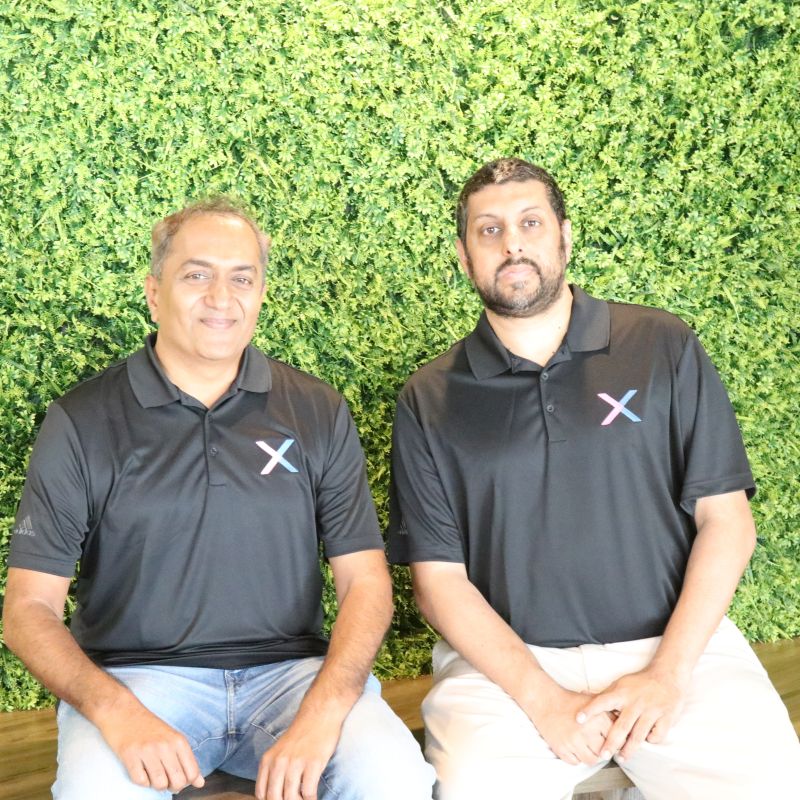
CredibleX was founded in 2023. Its February 2024 announcement welcomed Nagaraj as co-founder and CEO, bringing his experience of building and exiting Invoice Bazaar into the company. The founding team includes Ahmad Malik and Hassan Reda. The sequence is useful: the company’s founding year and Nagaraj’s public arrival announcement belong to different moments.
His colleagues bring their own experience of credit and digital products. The company’s introduction paired Nagaraj’s operating history with Malik’s background in building credit businesses and frameworks. CredibleX works under the Financial Services Regulatory Authority at Abu Dhabi Global Market. Nagaraj also appears in the regulator’s register as a licensed director and senior executive officer.
The proposition is to put financing inside the networks that already serve smaller businesses. Receivables finance addresses money owed to a business. Payables finance addresses what it needs to pay. Revenue-based financing connects funding to its trading activity. These products concern different points in the same operating cycle, so the partner relationship helps determine where each one belongs.
In February 2026, CredibleX and NEO PAY announced a partnership using point-of-sale and ecommerce transaction data to support access to finance. The arrangement connects the payment provider’s view of merchant revenue with CredibleX’s lending assessment. It is a practical expression of Nagaraj’s recurring idea: start near the transaction, where business activity is already visible. A merchant’s payment system becomes part of the route to working capital.
Two kinds of money, two different jobs
In September 2025, Pollen Street announced a $100 million senior secured credit facility for CredibleX. It was Pollen Street’s first transaction in the UAE. The lender described a company with more than 40 team members and over 60 distribution partners. The facility would support expansion of its loan book.
For Nagaraj, that financing also produced a very specific roll call. He publicly credited capital markets colleague Abdullah Riaz, the legal team, co-founder and product chief Hassan Reda, and finance and capital chief Hamsika Gopalan. Then he kept going: data, risk, operations, technology, business development, finance, administration and marketing all appeared in his account of getting the agreement finished.
It is a revealing way to discuss a large number. Data teams had examined the loan book from different angles. Risk colleagues had worked on credit policy and due diligence. Finance had tested cash flow scenarios. The announcement came with the paperwork, controls and coordination required to make a lender comfortable. Even document attestations got their moment in the light.
Mubadala led a Series A announced on May 6, 2026, with Further Ventures participating as part of a broader $15 million equity raise. By that announcement, CredibleX was working with more than 70 distribution partners. The intended uses included technology, data, its lending marketplace and the wider distribution network.
The distinction between the two financings is worth keeping clear. The credit facility supports lending capacity. Equity supports building and expanding the business that arranges and manages that lending. Adding the figures into one triumphant total would conceal what each is for. Nagaraj has to secure capital for both jobs, then ensure the business can put it to work.
Supports the lending book
Supports business expansion
Different instruments. Amounts shown separately, not to scale.

Forty-seven conversations later
Capital comes with its own waiting room. In a June 2026 fundraising interview, Nagaraj put the concentrated effort at eight to ten months and 47 investor conversations. Some investors were the wrong fit for the stage or valuation. Others were raising their own funds. Some had mandates limited to Sharia-compliant financing structures.
Asked for three qualities in an investor, he supplied one: the ability to decide independently and give a clear answer within a reasonable period, around three months. There is something pleasingly economical about that response. A founder who deals in working capital also has to manage the cost of leaving a decision unresolved.
His own May account of the raise gave the numbers a human dimension. Two prospective investors withdrew or paused but explained themselves directly and offered introductions. He respected their conduct. Another pulled out after prolonged legal negotiations, forcing the documents to be reopened and signed again. His complaint concerned the way the withdrawal was handled, including an unanswered message to senior leadership.
He drew a management lesson from the experience: leaders should turn up, speak to people and explain difficult decisions directly. That advice extends beyond fundraising. Customers and employees also have to live with difficult decisions. A timely conversation may not change the answer, but it does change the experience of receiving it.
Be present. Pick up the call, meet the person. Explain things directly.Anand Nagaraj · May 2026
The work after the announcement
In August 2026, Nagaraj and Reda joined Couchonomics with Arjun for a conversation about the SME lending gap. Their discussion covered embedded distribution, underwriting, the balance sheet required to scale and practical uses for AI. The episode also examined why payment data alone cannot solve lending to larger SMEs. The detail is useful because a convenient route to a borrower still leaves a lender with substantial work to do.
Nagaraj’s public updates also introduced Shalini Choudhury as chief risk officer and Mukul Chopra as head of Paabo, CredibleX’s working capital finance marketplace business. He described a marketplace connecting SMEs, advisers, banks, fintechs and alternative lenders. He linked the risk appointment to responsible growth and underwriting standards. Distribution and credit discipline appear together in the way he describes the next phase.
There is a consistent question running through this career: how does money reach a business at the point it can be useful? The answers have involved suppliers, restaurant platforms, payments providers and institutional investors. Each relationship comes with a different timetable. Nagaraj’s work is to make those timetables fit together well enough that the business owner can get on with something else.