A podcast episode ends. The microphones go quiet, the file gets edited, the link goes out. Somewhere, a marketing calendar is already demanding another one. Amy Woods has built a business by staying behind with the episode everyone else has finished with. There may be an article in there. A useful explanation. A short film. Enough good material to make the next blank square on the calendar seem less menacing.
This is the territory of Content 10x, the agency she founded after more than a decade at Accenture. Its work involves taking an idea seriously enough to give it several forms. Woods is a founder, author and podcast host whose subject can sound like a housekeeping task. Spend a little time with her career and it starts to look more like a study of how people spend their working lives.
She knows something about changing the use of an existing asset. Her own consulting experience has had a productive second life.
The two-year plan that stayed for a decade
Woods studied mathematics and management science and spent a year traveling before joining Accenture as a graduate. She expected the job to occupy two or three years. It became a career in large organizational change, including mergers and acquisitions. Her eventual departure was a change of industry; the interest in how complicated work gets organized survived it.
There was also a practical reason to reconsider the arrangement. Consulting meant leaving on Monday mornings and returning on Thursday or Friday nights. After having children, she wanted a working life that could accommodate the parent and professional she hoped to be. Entrepreneurship offered a route worth investigating. By 2016, she was preparing to move on.
She did not arrive with a lifelong attachment to marketing. That makes the origin rather more interesting than the usual childhood lemonade stand. Here was someone learning about online business and noticing a mismatch: organizations put substantial effort into making content, then failed to make much further use of it.
The opening was specific enough to build around. A client might have the expertise and the original recording, while lacking the time or mix of skills to develop everything that could follow. Woods assembled a service around that gap.
the podcast follows
the case in print
to fortnightly
A consultancy lesson in a smaller package
There is a revealing connection in Woods’s early writing about the agency. Her corporate career had included outsourcing, with a bank handing over its IT function so it could concentrate on banking. She understood the appeal of letting different people concentrate on work they knew how to do.
At Content 10x, the same organizational question appears on a different scale. A video editor, graphic designer and writer have distinct abilities. Finding each person, briefing them and making their contributions fit together is a job in itself. The service brings those disciplines into a process the client can deal with through one relationship.
That helps explain why this apparently creative detour suited a former consultant. There is room for imagination, but there are also handoffs, deadlines, checks and decisions. An engaging clip still needs someone to choose it. An article needs to read like an article. A graphic needs to explain something. The spreadsheet and the interesting idea have to get along.
Her agency now offers strategy and original content creation alongside repurposing and distribution. Its public description puts human expertise and distinctive perspectives at the center of the work. The remit has widened around the original problem: helping a business make considered use of what its people know.
The message changes clothes
Woods makes a distinction that is easy to lose in a busy publishing week. Promoting a recording and developing its ideas are different activities. A teaser tells someone that the episode exists. A separate explanation can carry an idea to someone who will never press play. Both can be useful, but they ask different things of an audience.
Her advice is to consider those possibilities before recording begins. Planning the next versions early can make the original material easier to work with. Waiting until everyone has moved on leaves the editor to discover what the camera missed, an occupation with limited opportunities for cheerful surprise.
Different platforms also require different choices. Woods has repeatedly argued for adapting material to its destination. A point that works in a conversation may need a new opening in writing. Someone scrolling a social feed meets it under different circumstances from someone who has deliberately started a long podcast.
“Repurposing doesn’t have to be repetitive.”
Amy Woods
The agency’s name contains a multiplier, although Woods has explained that ten is no rigid quota. The thinking concerns formats, places and people. Turning a recording into ten items merely to satisfy the number would make a rather efficient way of missing her point.
expert conversation
A developed explanationShort video
A moment worth watchingSocial post
A point worth discussing
Illustrative formats, not a promised output count. Each version needs a reason to exist.
The host has to do the homework
In October 2017, Woods put herself on the other side of the process by launching The Content 10x Podcast. Hosting gave her a recurring piece of original work and direct experience of what she asked clients to undertake. It also gave a narrowly defined business a place to explain its thinking over time.
She has since added B2B Content Strategist, interviewing content marketing leaders about how their teams operate. That show makes room for questions about workflows, campaigns and the decisions behind published work. The agency owner gets to listen as well as advise.
Her own speaking career has taken the subject to events including Podcast Movement and Youpreneur Summit. In 2019, she published Content 10x: More Content, Less Time, Maximum Results. Chris Ducker, founder of Youpreneur, contributed the foreword. The book gave the same body of expertise another form, this time one that could sit on a desk.
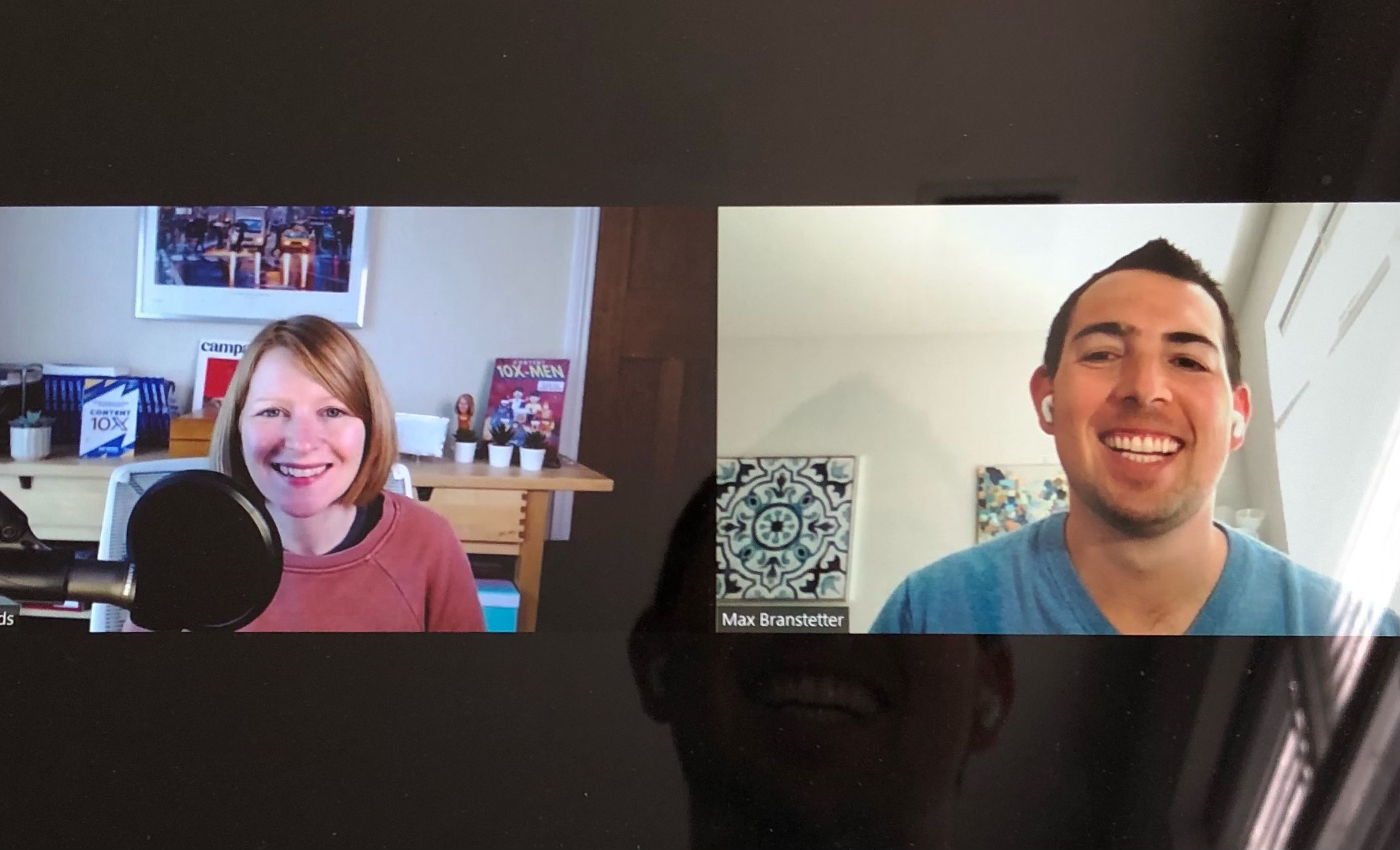
Woods’s guest appearances can wander beyond production schedules. A conversation with Max Branstetter ranges from management consulting to juggling. Asked elsewhere whom she would most like to speak with, she chose David Beckham. Even a person devoted to getting more from a conversation is allowed one particularly appealing guest booking.
Five years of weekly deadlines, then a change
The podcast spent its first five years on a weekly schedule. In 2022, Woods moved it to fortnightly publication. For someone whose business involves getting more value from work, this was a meaningful operational choice: more time to develop each episode and the material around it.
By the show’s eighth-anniversary retrospective, it had reached 345 episodes. Its account of that period describes a publication that generated relationships, speaking invitations and further learning as well as files for an archive. Preparing a topic could involve hours of research. Recording was one part of a larger intellectual commitment.
The schedule change offers a useful way to read her approach to consistency. Showing up reliably can build trust, while the interval between appearances remains open to adjustment. A recurring deadline deserves occasional questioning, particularly when it starts consuming the attention needed to make the work worthwhile.
Episodes at the podcast’s eighth-anniversary retrospective.
A record of staying with a subject.
The list is written the night before
Woods has described herself as someone who acts on decisions. In her words: “I make decisions and I take action.” Her account of daily productivity is similarly concrete. She finishes the day by writing the next day’s tasks in order of priority, then tries to complete the first before moving to the second.
She also pays attention to delegation: being able to do something does not automatically make it the right use of her time. It is a familiar problem for a founder managing specialists. The business depends partly on knowing whose hands a piece of work belongs in.
These habits fit someone who has publicly described trying to remain optimistic, while also acknowledging that she can be hard on herself. Her tastes offer a little relief from the operational discipline. In a 2023 interview, she named Coming to America as her favorite film and Succession as the show she was watching. Business ownership allows room for both a sensible task list and deeply unsensible fictional executives.
New tools, the same responsibility
The questions facing her business have continued to change. Content 10x’s recent work examines AI discovery, employee voices and the operations behind a content team. Woods has discussed using AI for assistance while keeping ownership of opinions and experience with the person whose name appears on the work.
The distinction matters to an agency that helps people communicate through other people’s skills. In her discussion of personal branding, she emphasizes getting to know the individual and representing what they actually think. That requires more than producing fluent sentences. It requires someone worth listening to, and someone doing the listening.
Another of her practical habits is to keep useful interview moments in a content bank. A clip that does not suit one episode’s immediate plan can later belong in a piece organized around a theme. The calendar gets another chance to meet material it might otherwise have forgotten.
A recording finished last month can still contain the answer somebody needs today. Woods has made a working life of noticing those answers and arranging their next appearance. The microphone may be switched off. There is still work to do.
Keep the conversation going
Content 10x · The Content 10x Podcast · B2B Content Strategist · The book · Blog
LinkedIn · Twitter/X · Instagram · Facebook · YouTube · Medium
Watch the Wild Business Growth conversation ↗
Read her career and content interview with Uplift ↗