A potential customer helped Amritanshu Jain see a different company inside the one he was already building. Simplismart had started as an AutoML platform, intended to make machine learning easier to put to work. Buried within it was an inference engine: the machinery that runs a trained model when somebody actually needs an answer. The customer conversation drew attention to its speed. A component of the product became the reason to reconsider the product itself.
For Jain, Simplismart’s CEO and co-founder, this was a practical discovery with an awkward implication. Building something useful and knowing what to sell are separate accomplishments. You can write a great deal of code before a customer supplies the sentence that explains why any of it matters. In his case, the business began to come into focus when the founders listened closely to what someone else noticed.
The engine under the bonnet
Jain and his co-founder, Devansh Ghatak, had reasons to care about the unglamorous parts of machine learning. Jain had worked at Capillary Technologies and Oracle. Ghatak brought experience from Google. They understood the distance between getting a model to work and keeping it working for customers. Production meant recurring engineering work: deployment, monitoring, infrastructure, and the small failures that rarely feature in a demonstration.
Their early platform reflected that experience. They wanted more transparency and flexibility than they found in existing AutoML tools. The initial ambition was broad: help people build, deploy, and manage models. The inference engine sat within that larger system. Once its performance attracted attention, it offered a more specific way into the market. Customers could understand a tool that helped an AI application respond efficiently.
The change also demanded a different vocabulary. An engineer can describe a system by listing its components. A buyer wants to know what happens to the application, the bill, and the team responsible for both. Jain’s story turns on that translation. The founders had to discover which part of their work deserved the first sentence.
Before the cloud, there was Paint
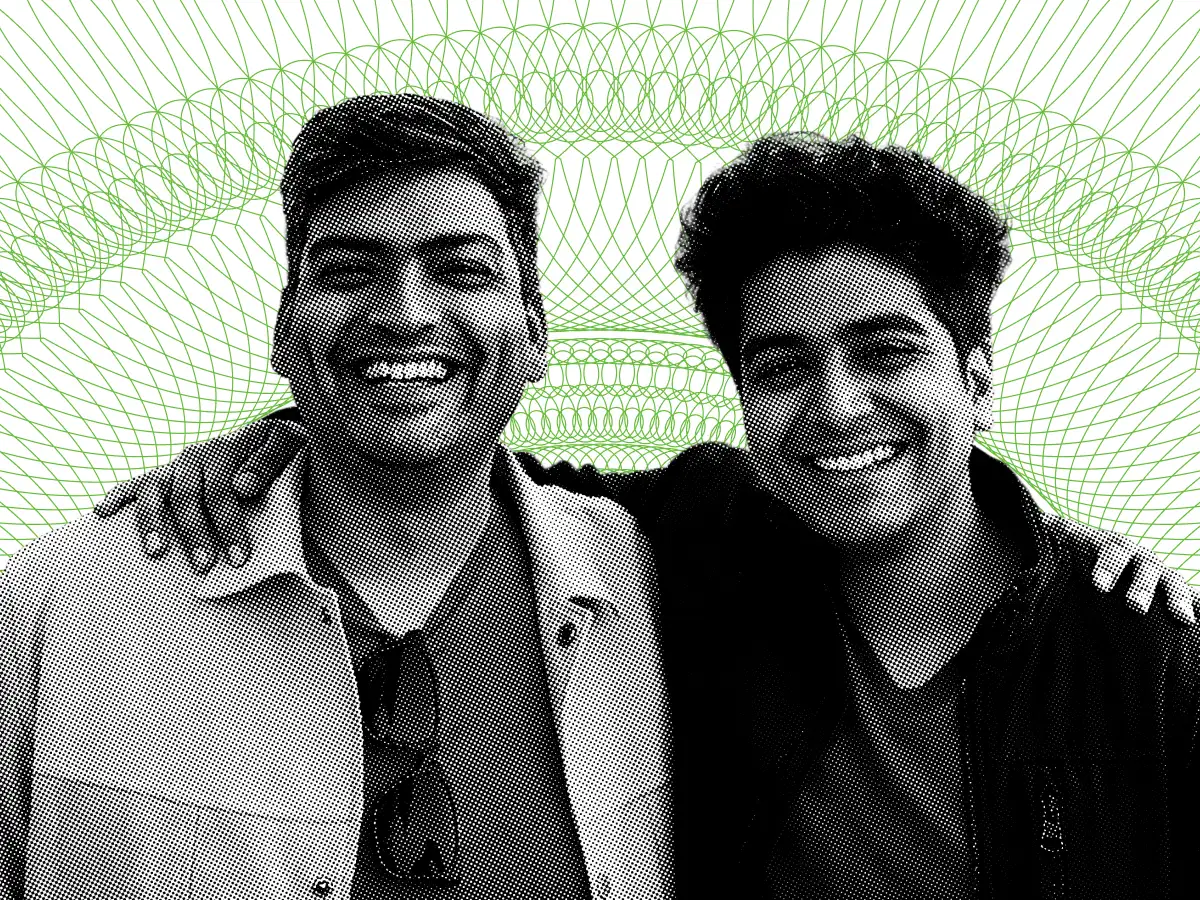
Jain grew up in Delhi, encouraged by his parents to pursue engineering. His introduction to computers came at four, through drawing and colouring in MS Paint. Programming followed in eighth standard. There is something appealing about this beginning: a future infrastructure founder first encountering the computer as a place to make a picture. The machine offered something to do before it offered a career.
At BITS Pilani, where he studied from 2015 to 2019, he did not get to study computer science. He joined the Department of Visual Media, a student organisation, and found a community whose willingness to make things changed his experience of college. He became more outgoing. Academic difficulties kept him from campus placements; an off-campus internship led to a pre-placement offer. His route into professional engineering took a detour.
Ghatak was his roommate. They discussed starting a business together before they eventually acted on the idea. The connection gave Simplismart a history that preceded its incorporation: two people learning how the other thought, then going away to acquire different kinds of engineering experience. In 2022, they founded the company together.
A campus wallet and a crowded chat room
The smaller things Jain built offer another view of his interests. A location-based chat application, Latch, connected people through shared interests and proximity. It included a chatbot for nearby services. A campus wallet project covered both customers and vendors, with food orders and festival transactions among its uses. These were projects concerned with getting people through an actual interaction.
His public GitHub account preserves that student-era appetite for making things. It includes a fork of Virtual Room, a project for synchronised video watching and video chat in a browser, alongside a bill parser and contributions connected to the BITS visual-media community. The range is pleasantly untidy. A software portfolio can resemble a desk where several interesting problems have been left open.
Jain also lists a win at ITC Infotech’s iTech hackathon in 2017 and a Modzy hackathon win in 2021. The latter involved Simplismart and machine-learning pipelines. The progression brings the eventual company into view: from applications with immediate, visible interactions toward the tools that let other people assemble and operate applications of their own.
“We are developers at heart”
Amritanshu Jain, in his October 2024 founder’s letter
One hundred and ninety meetings
There was no smooth glide from technical competence to a funded business. Jain has described a period in which the founders went through 190 investor meetings and came within ten days of shutting down. They were struggling to make the story of the company land. Those numbers are his retrospective account of an early crisis, and they belong beside the later milestones.
The repositioning around inference gave the company a clearer proposition. In that account, Simplismart moved from zero revenue to ₹80 lakh in annual recurring revenue within a month. The distinction matters: ARR expresses a recurring revenue rate on an annual basis. It does not mean ₹80 lakh arrived in the bank during those thirty days. Even with that qualification, the change marked a consequential commercial turn.
There is a temptation to read persistence backwards, once the next funding announcement makes it look sensible. A hundred and ninety meetings would feel rather different without the announcement. Jain’s experience leaves room for a less tidy lesson: effort alone does not settle the question of what to build or how to explain it. Feedback has to alter the work.
What a faster answer actually buys
Inference is an ordinary word for a demanding job. Once a model has been trained, it still has to process each new request. A voice application needs a response quickly enough to keep a conversation moving. A document-processing workload may care more about completing a large queue economically. Both need the system to behave predictably when demand changes.
These examples help explain why Jain’s conversations about AI infrastructure keep returning to trade-offs. Latency is the wait for a response. Throughput measures how much work a system can handle. Cost determines whether the application’s economics make sense. Accuracy constrains what an engineer can sacrifice in pursuit of the other three. Raising one number is useful only in the context of the whole job.
In his discussions of open and closed models, Jain emphasises the enterprise’s particular needs and constraints. Open models can provide customisation and control, while operating them creates its own responsibilities. Choosing a model and running a service are connected decisions. The attraction of Simplismart rests in making those operational decisions easier to carry out, repeatedly, as the workload changes.
A company built in movable pieces
Modularity gives that argument a technical shape. In his conversation with AWS’s Goutam Kurumella, Jain describes an inference stack organised into components that can be improved separately. Serving, compilation, and infrastructure management each have their own work to do. This makes the architecture relevant to a field where models and optimisation techniques keep changing.
The approach asks a different question of a new technique: where does it fit, and what does it improve? A modular stack creates places to answer that question without rebuilding everything around it. Jain has discussed incorporating techniques quickly, as well as the difficulties of observability and autoscaling. These details explain why the company’s concerns extend well past the speed of a single response.
That breadth also appears in Simplismart’s work with Microsoft’s Azure stack: model deployment, scaling, monitoring, and enterprise governance. Jain describes the future he wants in terms of infrastructure that is modular and transparent. A useful platform must let a team understand what is happening and adjust it. The control matters most when a system moves beyond a small experiment.
Seven million dollars, then a wider audience
In October 2024, Simplismart announced a $7 million Series A led by Accel, with participation from Shastra VC, Titan Capital, and angels including Notion co-founder Akshay Kothari. The planned uses included research and development and growth. By then, the company had begun serving enterprise customers in production, giving the founders something more concrete than an architectural diagram to discuss.
Accel’s investment account drew attention to the founders’ decision to keep the system flexible across hardware and cloud providers. For Jain, this was consistent with the original frustration: engineers wanted room to make their own choices. The company’s platform used a declarative approach, resembling Terraform, to describe and manage model workflows. It placed repeatable operations alongside performance optimisation.
In February 2026, Simplismart announced availability of its inference platform as a white-labelled solution for NVIDIA Cloud Partners. The audience now included providers helping other businesses run AI workloads. By October 21, further fundraising talks of $40 million to $50 million were being reported. Those discussions remained reported talks, separate from the completed 2024 round.
The part of the product worth listening to
Jain’s ambition has grown around a recognisable problem: teams want more say over how AI runs, and they need tools that make that control practical. His work has carried him from campus applications to production pipelines and conversations with cloud providers. The scale has changed; the obligation to make the software useful remains familiar.
The revealing moment is still the customer noticing the inference engine. It punctures the comforting idea that founders always know exactly what they have made. Jain had built enough to receive an unexpected answer, and then changed direction around it. In a business crowded with announcements about what comes next, there is considerable value in paying attention to the thing already working under the bonnet.