A student can know what a hedge fund is and still have no idea whether working for one would suit them. AmplifyME puts that uncertainty on a screen. There are prices to quote, clients to serve and decisions to make while the market moves. A respectable answer in a seminar suddenly has a deadline.
The London education technology company builds simulations of finance jobs, then uses the resulting performance data to help teach students and assess potential recruits. The attraction is easy to grasp: a person who has never worked on a trading desk gets to try some of its tasks. An employer gets to watch.
In its April 2026 announcement, AmplifyME reported more than 300,000 student participants, over 400 university partners and a library exceeding 250 simulations. Those are company-reported measures of reach, rather than a count of jobs secured. The more interesting development is what the business now wants those exercises to do: influence who gets considered in the first place.
A classroom with a bid and an offer
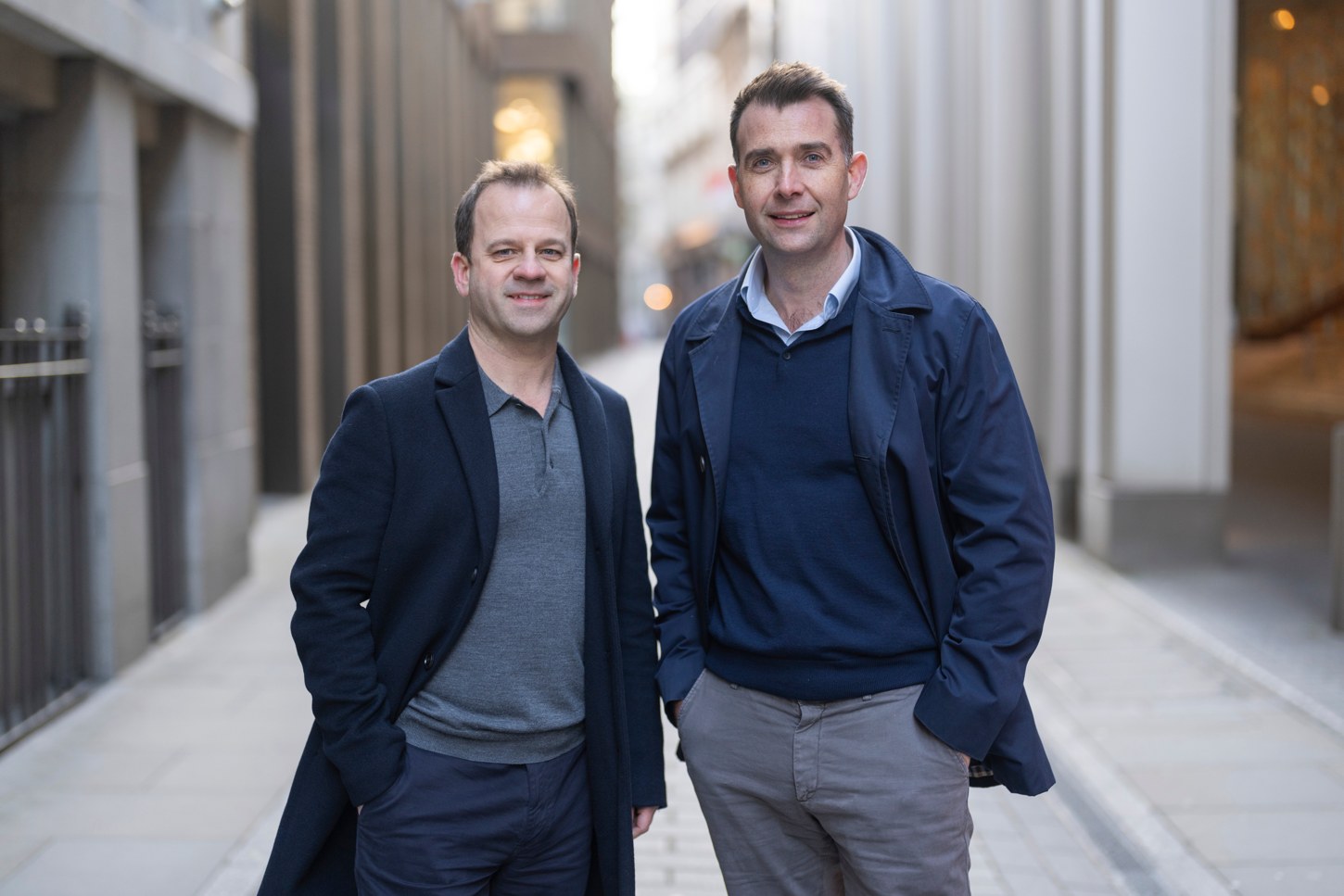
Will de Lucy and Piers Curran founded the business in 2009 as Amplify Trading. Both came from trading. De Lucy has recalled meeting Curran on a futures trading floor in 2002, an environment where decisions supplied their own unforgiving feedback. Their company carried that practical emphasis into education, starting with trading-floor simulations and expanding into banking and quantitative finance.
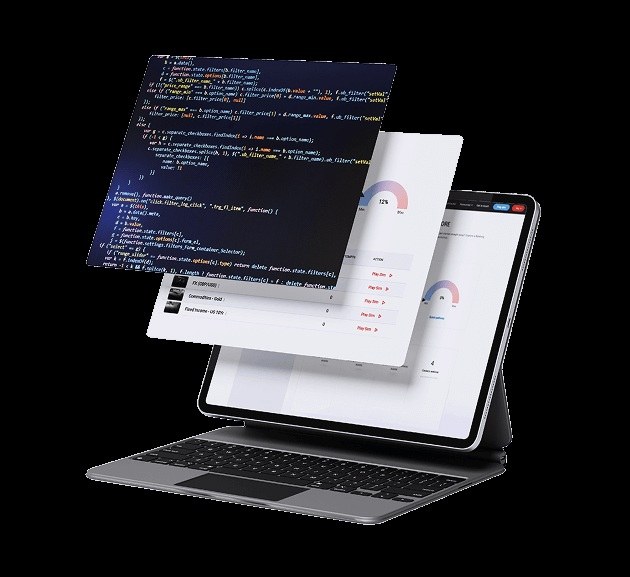
In the markets exercise described by Morgan Stanley, participants take the roles of investment banks and hedge funds. Banks compete to serve clients while managing risk; funds seek returns and competitive execution. The software introduces market shocks and records performance, including pricing and client matching. It is a compact way to discover that being right about a market and serving a client are different skills.
The broader catalogue reaches beyond trading. Banking participants work on financial models and transactions. Quant participants can automate processes and strategies using Python. This specificity matters: “finance” is an enormous career category, and enthusiasm for one corner says little about enjoyment of another. A simulation gives the job description something to do.
The training tool that recruiters noticed
Finance Accelerator began as a way to prepare new hires for their desks. Its recruiting potential emerged when people outside the usual candidate pool performed well. Morgan Stanley’s Will Smith helped champion a wider partnership after attending university sessions and seeing students whom conventional recruiting might miss.
“Sometimes the candidates that perform well in these simulations aren’t great at conveying that in interviews.”Will de Lucy, in Morgan Stanley’s 2022 account
The bank’s published example was Montana Lee, a Duke engineering student who had not planned on finance. A simulation sparked her interest, and she was fast-tracked for a summer analyst opportunity before moving toward a full-time equity sales and trading role. The exercise helped both sides discover a possibility.
That is a more useful origin for the recruiting product than a sweeping claim that interviews have stopped working. The mismatch was specific: some participants could demonstrate abilities they struggled to explain. AmplifyME added another piece of evidence to the conversation. Its usefulness depended on a bank being willing to consider that evidence.
The business also reconsidered how it presented itself. In June 2023, it consolidated Amplify Trading and AmplifyME under the latter name. Its announcement cited customer feedback, market positioning and a desire to simplify the experience while expanding recruitment services. The broader name suited a company whose ambition now extended well beyond teaching traders.
One exercise, three customers
AmplifyME operates where education, recruitment software and specialist finance training meet. Students use it to explore roles and practise. Universities use it to connect teaching with applied work and career preparation. Financial institutions use simulations to attract candidates, assess them and train interns or graduates. Each audience sees a different benefit in the same underlying activity.
A learning and hiring workflow, not a promise of placement.
Duke’s Pathways offering makes the university proposition tangible. All undergraduates are invited to participate. The platform combines live simulations, on-demand learning and career support, with routes through markets, banking and quant. Its September 9, 2026 launch event asks students to examine a real company’s financial statements and learn how analysts turn them into projections.
That gives teaching and careers teams a shared activity. A student can practise a technical task, see where they struggled and bring a more informed question to a networking call. University access also puts the experience into an existing community, reducing the need for every learner to discover a separate training provider.
For institutions, AmplifyME sells both software-enabled experiences and delivery. Its training offer can run online or in person, with expert trainers and reports for learning and HR teams. Its attraction products put employers’ roles in front of students; assessment products examine the resulting decisions. Calling the business simply an online course provider misses much of what the buyer receives.

Free to try. More to study.
The entry product is a free, two-hour Finance Accelerator. Students choose markets, M&A banking or quant, make decisions in a live session and receive feedback. The introductory quant event requires no coding. That is different from the broader Quant Pathway, where Python becomes part of the work. The distinction makes the first encounter less forbidding.
Longer programmes have substantial price tags. For its August 24-28, 2026 London bootcamp, AmplifyME advertised £1,500 against a £1,999 recommended retail price. The listing included 13 simulations, a Level 5 LIBF qualification and a visit to Morgan Stanley’s EMEA headquarters. These were advertised cohort terms, not a standing offer for every future session.
Bootcamp and summer figures are promotional prices displayed for the August-September 2026 programmes.
The three-week virtual Summer Analyst Training Programme, scheduled for August 17-September 4, 2026, was listed at £1,990 against £3,250 RRP. It advertised 20 live simulations and a LIBF-accredited Level 6 Diploma in Applied Finance. The purchase is a structured training programme; the “summer analyst” wording should not be confused with employment at a bank.
Students can take a practical lesson from the product ladder: identify the question before buying the course. Someone exploring whether markets interest them has a different need from someone seeking intensive modelling practice. A university-sponsored route may already provide access. The valuable output is what the learner can explain and demonstrate afterwards, not simply the programme name on a profile.
The score has to travel
AmplifyME’s High Potential Candidate programme gives selected strong performers further coaching, training and opportunities for employer referrals. The sequence matters. A simulation result may lead to an invitation; further preparation may lead to a referral. The employer still decides whom to hire. There is a selection process between enjoying the exercise and receiving an offer.
For recruiters, the copyable idea is to observe a relevant task and use the evidence alongside other information. For students, it is to treat feedback as a guide to the next attempt. A high score is most informative when the participant can explain the decisions behind it, including what went wrong. Otherwise, it risks becoming another impressive-looking line with little substance.
The company is not alone here. Finsimco also sells finance and professional-services simulations for teaching, training and assessment. AmplifyME’s case therefore rests on its particular role coverage, university distribution and employer relationships. “Learning by doing” describes a method available to competitors, rather than an exclusive invention.
Its assessment pitch also addresses AI-assisted applications through live, job-relevant tasks. That is a product proposition, not proof that any simulation is immune to assistance or bias. The meaningful questions concern the task: does it resemble the role, what does the score measure, and how will a recruiter use it? If those answers are weak, a colourful dashboard will not repair the hiring decision.
A bigger route into the classroom
In March 2026, Northcote Equity invested to support international expansion and product development. De Lucy described the preceding 17 years as self-funded growth. AmplifyME’s announcement put talent attraction, candidate assessment and training at the centre of its plans, including a new assessment platform for 2026.
In April, former Pirum Systems chief executive Phil Morgan became non-executive chairman, bringing capital-markets and financial-technology experience. Then, on July 28, AmplifyME announced an initiative with CFA Institute to offer practical simulations through participating universities in its University Affiliation Program network. That extends the distribution argument: reach students through institutions they already attend.
The CFA announcement identified a familiar snag. Employers want practical experience, but internships cannot accommodate everyone seeking it. Simulations offer another place to practise parts of the work. They are most useful when teaching, feedback and an employer’s requirements connect, and less useful when participation becomes a certificate-collecting exercise.
AmplifyME has built its business around letting people discover what happens when the textbook closes and the decisions begin. Sometimes the result is a stronger candidate. Sometimes it is a student choosing a different career. Both are useful things to learn before the first real day on the desk.
Step onto the simulated desk
Explore AmplifyME, its free events, London bootcamp and simulation catalogue. Follow the company on LinkedIn, X or Facebook.
For more: company news, career stories and Market Maker interviews and episodes on YouTube ↗.