Co-Founder & CEO · CodeSignal · San Francisco
The man who decided the resume was the problem - and built a $90M company to prove it.
Armenia's national math champion. MIT triple-degree. Google alumnus. Co-founder of CodeSignal, the AI-native skills platform that has run 800,000+ evaluations for companies like Google, Meta, Netflix, and Anthropic. His thesis: what you can do should matter more than where you went to school.
Profile
There is a specific moment Tigran Sloyan returns to when he explains why he built CodeSignal. He and his co-founder Aram Shatakhtsyan were both MIT-caliber engineers - one with an MIT diploma, one without. Recruiters buried Tigran in messages. Aram heard silence. Same skills. Different letterhead. That asymmetry, playing out across millions of job searches every day, became the company.
CodeSignal started in 2015 as CodeFights, a competitive coding game where developers went head-to-head on challenges. The gamified layer was the hook - and it worked. But underneath the game was something more durable: a rigorous, data-driven way to measure what engineers could actually do. The pivot to professional hiring assessment wasn't a break from the original idea; it was its fulfillment.
By 2018, CodeFights became CodeSignal - a name that said exactly what the platform did. Replace the noise of resumes and unstructured interviews with a clean, verifiable signal: proof of skill. The company's hashtag, #GoBeyondResumes, isn't marketing language. It's the operating principle.
I believe in the idea of dreaming big and believing in something that is much bigger that you can't even possibly imagine how you could achieve that - and then going and getting it.
- Tigran SloyanToday, CodeSignal runs the talent infrastructure for some of the most demanding technical organizations on the planet. Google uses it. Anthropic uses it. Netflix, Meta, TikTok, Instacart, Robinhood, Capital One - the client list reads like a who's who of companies that can't afford to hire the wrong person. The platform conducts AI-powered interviews, runs coding assessments in real development environments, benchmarks candidates against millions of data points, and does it all while flagging the fraud attempts that have doubled since 2025.
That last part - fraud - is where the mission gets complicated in interesting ways. When 80 percent of Gen Z uses AI daily, what does a fair skills assessment even look like? Sloyan's answer: build detection systems sophisticated enough to stay ahead of the cheating, while making the assessments themselves realistic enough that gaming them requires the skills being tested. It's a cat-and-mouse game with genuinely high stakes.
Fraud in hiring isn't new, but it is always evolving with the times. 80 percent of Gen Z uses AI daily, and access to AI tools raises the stakes for maintaining fair and reliable skill evaluation. - Tigran Sloyan
The AI pivot at CodeSignal isn't cosmetic. The company launched an AI Interviewer that conducts structured interviews across sales, finance, marketing, accounting, and engineering roles. It can switch languages mid-call. There's a learning component - CodeSignal Learn - with an AI tutor named Cosmo that coaches communication style, tone, and approach. The platform has quietly become an end-to-end talent operating system, from first screen to skills development to workforce analytics.
Revenue hit $53.8M in 2024 on a 140-person team. Thirty percent of those people are in Armenia - a deliberate choice. Sloyan grew up there during the difficult 1990s, and keeping operations in his home country isn't a cost play. It's a statement about where talent actually lives when you're willing to look for it.
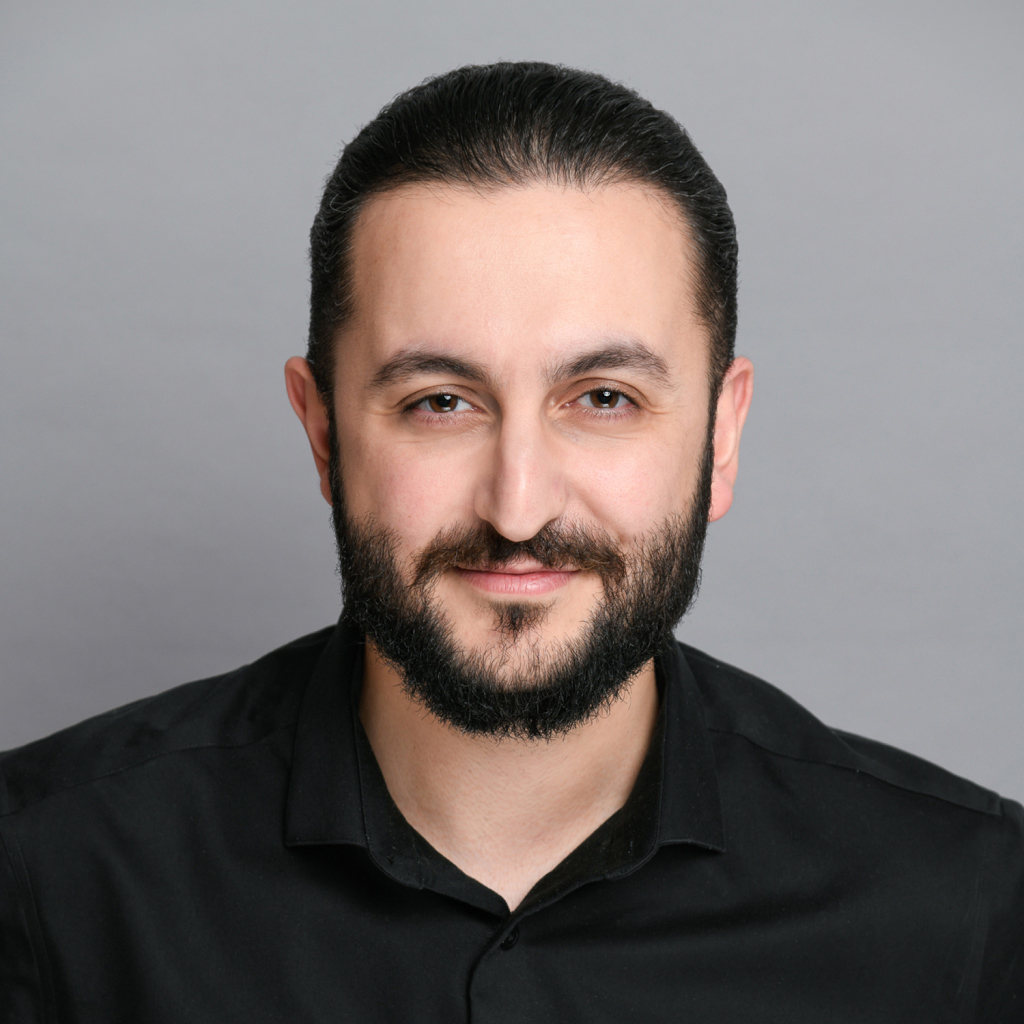
Origin
The private schools in 1990s Armenia weren't admitting Tigran Sloyan. All three turned him down. Then those same schools dangled full scholarships in front of him - available to anyone who won the National Math Contests. He won every single one. Then he won eight international mathematics awards on top of that.
It's a story he tells without bitterness. The system created a perverse incentive, and he ran straight through it. The lesson wasn't about proving people wrong; it was about what becomes possible when you set an audacious target and take it seriously.
MIT followed - triple degrees, mathematics and computer science and economics. Then Google, where he worked on Hangouts in the Education sector and Google Login for Travel and Publishing. The credential path was impeccable. But credentials, he would discover, were exactly the problem he was going to spend the next decade dismantling.
He met his future co-founder Aram Shatakhtsyan through international math and science olympiads - the same competitive circuit that had shaped Tigran's early years. When they both ended up in tech, the contrast in how they were treated by recruiters was stark enough to feel like a founding document.
After MIT, Tigran generated immediate recruiter interest. His co-founder Aram - equally skilled, equally accomplished, but from an Armenian university - was largely invisible to those same recruiters. The asymmetry was obvious. The solution became CodeSignal.
The Platform
Four capabilities. One goal: replace the resume with something verifiable.
Structured AI-conducted interviews across engineering, sales, finance, marketing, and more. Multilingual. Scalable. Switches languages mid-call.
Real-world coding environments. Validated questions. Predictive scoring benchmarked against millions of data points. Live collaborative coding for technical interviews.
Practice-based learning with AI tutor Cosmo, who coaches communication style, tone, and approach. Upskilling, reskilling, and skills gap identification at scale.
Organizational skills landscape dashboards. Benchmarking. Predictive analytics. Fraud detection systems that flagged record-high cheating attempts in 2025.
CodeSignal has spent a decade building the data moat that makes skills-based hiring credible. The platform doesn't just run assessments - it benchmarks, predicts, and continuously validates against real-world performance data.
In His Own Words
It's always the case that you've got some companies who are very aware of this; very aware that, for example, for software development, generative AI is like the introduction of a calculator.
[Employees] need to understand skills, they need to discover skills, they need to develop skills. It's going to become such a top of mind thing for all Fortune 500s.
Building high-quality skills assessments and interview questions is hard. Thanks to AI, we're now delivering that expertise at scale and speed never seen before.
In 2015, we saw a huge gap between traditional hiring methods and the rapidly evolving demands of the tech industry.
Hiring that relies solely on resumes and behavioral interviews creates inconsistency and unfairness in the recruitment process.
I believe in the idea of dreaming big and believing in something that is much bigger that you can't even possibly imagine how you could achieve that - and then going and getting it.
Career Arc
Details Worth Knowing
Rejected from all three top private schools in Armenia as a child. Won the scholarship they promised to anyone who won the National Math Contests. Won all of them.
Three MIT degrees: Mathematics, Computer Science, and Economics. Most people pick one.
CodeSignal started as CodeFights - a competitive coding game. The enterprise hiring platform emerged from watching the game data reveal who could actually code.
He met his co-founder Aram Shatakhtsyan through international math and science olympiads, not a networking event or Y Combinator batch.
30% of CodeSignal's team is in Armenia. In a company that could hire from anywhere, that's a values decision, not a logistics one.
His Twitter account (@TigranSloyan) has been active since October 2010 - before CodeSignal, before CodeFights, before the pivot that built the company.
He describes language as "lossy" - information degrades every time it passes between people. His response: document everything in writing, simplify every message.
Watch
Find Tigran