A college degree is an impressive container. It can hold theory, argument, friendship, wrong turns, sudden enthusiasms and enough coffee to alarm a cardiologist. The troublesome bit arrives when a graduate must explain what, exactly, they can do on Monday morning. John Fillmore has spent much of his career worrying at that gap. His present answer is refreshingly concrete: give students real briefs, current tools, distributed teams and work worth showing, then let them earn credit for it.
As chief executive of Podium Education, Fillmore leads a company that works with universities and employers to place career exploration and project experience inside the academic program. The model does not ask a history major to become a miniature management consultant, or a computer-science student to forsake first principles for this quarter's software fashion. It asks both to practice moving from knowledge to consequence.
That distinction sounds small until one notices how much of early professional life is hidden from a syllabus. Work arrives half-explained. Tools have peculiar menus. Teammates answer from other time zones. A client revises the brief after everyone has agreed to it. Success depends on technical ability, certainly, but also on judgment, communication and the useful social art of asking a good question before producing a bad answer.
A career built along the seam
Fillmore's route to this work began at the University of Oregon, where he graduated in 2002 from the Lundquist College of Business and the Robert D. Clark Honors College. Years later, returning as a partner rather than a student, he wrote that the school had changed his life. The affection comes with a cheerfully visible tell: when he joined a higher-education panel, he pointed out the Oregon socks in the photograph and added a “Sco Ducks.” Even strategy executives are permitted a team color.
Before business school, he worked in California's Office of Planning and Research, eventually serving as chief deputy director under Governor Arnold Schwarzenegger with a focus on education and economic development. The title belonged to government; the problem already looked like his future. How does a large institution convert plans into outcomes for people whose lives do not fit neatly inside an organization chart?
Harvard Business School followed from 2007 to 2009. Fillmore graduated with High Distinction as a George F. Baker Scholar. He then worked at Bain & Company, adding the consultant's habits of framing, measurement and asking whether a system can survive contact with scale. In 2013, he joined Chegg.
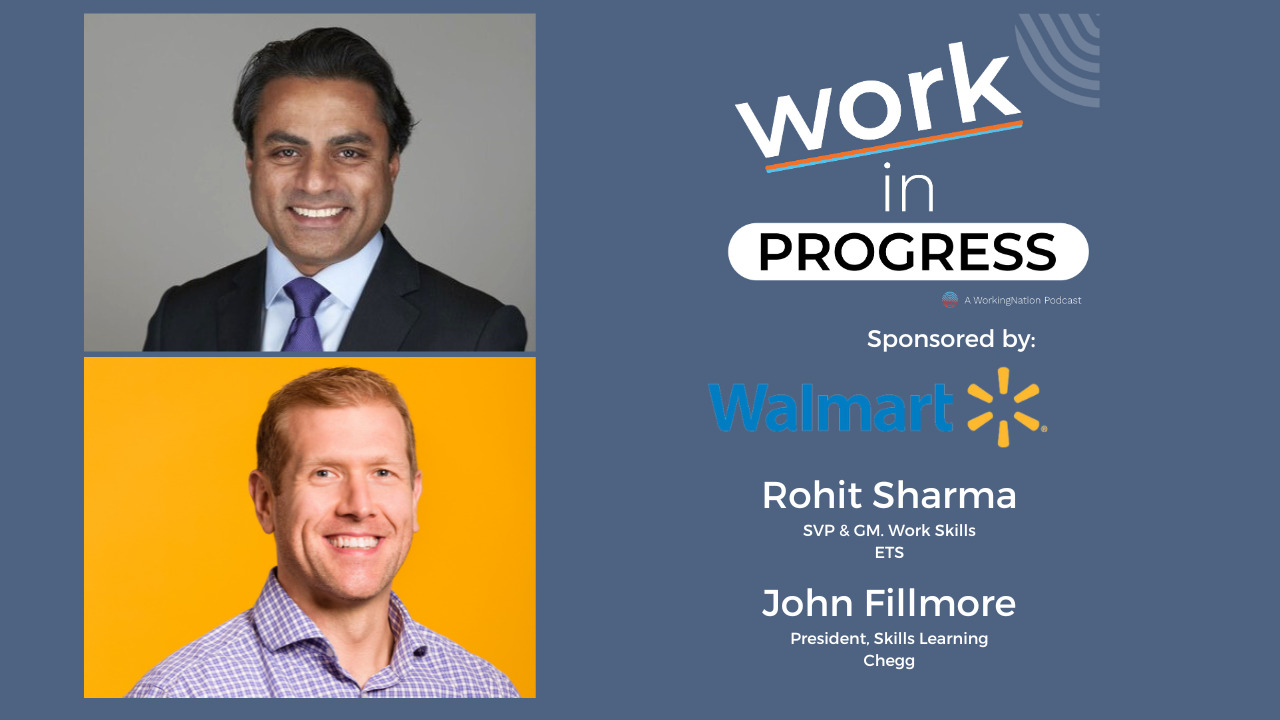
The Chegg decade offers a compact education in the changing business of education. Fillmore first led Required Materials, the practical world of getting students what a course demanded. He became chief of business operations in 2015 and chief business officer in 2018. By September 2020, he was president of Chegg Skills. The progression ran from the object a student needed, to the machinery of the company, to the capabilities a learner hoped to carry into work.
When Fillmore left in 2023, Chegg's leadership credited his counsel, wisdom and leadership across ten years. His own farewell to that chapter was characteristically personal. Writing about longtime chief executive Dan Rosensweig, he described the decade as the best professional experience of his life. The language matters. In Fillmore's public writing, operating achievements are rarely solitary. He names the colleague, the team and the quality that made the work possible.
I'm a massive optimist on how technology is going to impact the future of work.John Fillmore, speaking about AI and workforce preparation in 2023
Optimism with homework
Fillmore's optimism is not the decorative sort placed at the end of a conference slide. In a 2023 conversation about artificial intelligence and work, he argued that technological change creates demand for talent and new jobs. Then he moved swiftly to the homework. Employers will need people who can work with AI-produced answers and decide whether those answers support the right business strategy. Fluency without judgment is merely faster confusion.
He was equally blunt about the learners whom conventional education has failed. Dropping someone directly into a coding bootcamp, he suggested, can resemble the fantasy in Good Will Hunting: go away and somehow figure it all out. Many learners first need technology fundamentals, confidence learning online, a view of what a data analyst or cybersecurity role actually involves, and support while they discover their strengths.
That is why mentoring featured heavily in the programs he discussed at Chegg Skills. In a digital bootcamp partnership with Arizona State University, students could learn in a cohort or on their own schedule and receive one-to-one support. The flexibility acknowledged an obvious fact that institutions occasionally treat as a surprise: adult learners have jobs, families and complicated lives.
Put the useful thing in the course
Fillmore joined Podium Education as chief operating officer in 2024 and became chief executive. The company had been founded five years earlier around a for-credit Global Career Accelerator. It later added a career network through its acquisition of Untapped and developed a Career Discovery Experience aimed at students earlier in college.
The operating thesis is about placement as much as content. Career centers do vital work, but an appointment at a career center is still an appointment a student must know to make. Internships can be transformative, but access often depends on time, money, geography and personal networks. Put an experience inside a credit-bearing course and it becomes part of the route, not a detour available to the unusually informed.
At Oregon, Fillmore has described the result as “masterclass-style” experiential learning that mirrors a modern workplace. Students in the university's Global Career Accelerator can add projects and certifications to their résumés while earning credit. The industry names are familiar, but the more interesting product is the student's artifact: the app, analysis, campaign or recommendation that gives an interview somewhere useful to begin.
The documented arc: from access to applied experience
There is a fine line here. A university cannot chase every new software release without becoming a rather expensive tutorial channel. Nor should education reduce itself to vacancy-filling. Fillmore's case is more durable than either. Students need technical skills, but they also need intercultural competence, collaboration and the capacity to revise an idea after evidence arrives. The tools will change. The experience of thinking with other people under real constraints ages better.
When opportunity is optional, networks decide who finds it. When practice sits inside the curriculum, more students can leave with evidence instead of adjectives.
The operator who gives away the credit
Fillmore's public persona offers a clue to how he operates. In a tribute to Chegg colleague Heather Hatlo Porter, he described three people every special company needs: the person who grabs the shovel and gets the work done, the person always seeking growth and a challenge, and the heart-and-soul colleague who keeps the values alive. Then he told Porter she was all three.
It is a tidy taxonomy of his own interests. Execution matters. Learning matters. Culture matters. Colleagues have publicly described him as empathetic, action-oriented and operationally exacting. His own posts spend their adjectives generously on other people. When Podium appeared in Huron's RISE 40 report on the student lifecycle, Fillmore singled out the company's founders and its learning-design leadership. Chief executives are often paid to absorb credit. He seems happier redirecting it.
The habit also fits the product. Experiential learning is a team sport disguised as a course catalog entry. Universities own the academic setting. Employers bring problems and context. Learning designers turn those ingredients into work a student can reasonably do. Students supply effort, interpretation and the occasional excellent surprise. The platform succeeds when none of those parties is reduced to a logo.
The University of Oregon Lundquist College of Business changed my life.John Fillmore, on returning to campus
A degree with fingerprints
The college-to-career gap attracts grand diagnoses. Employers say graduates lack experience. Students say entry-level jobs demand years of it. Universities add programs. Software companies add dashboards. Everyone builds a bridge and wonders why the river is still crowded.
Fillmore's career suggests a less theatrical approach: stay with the problem while changing the tool. Public policy offered one view of institutions and economic outcomes. Bain supplied a language for scale. Chegg began with access to materials and expanded toward learning and skills. Podium puts the assignment closer to the work itself.
The aspiration is inclusive in the precise sense of removing a hidden prerequisite. A student should not need a family friend in marketing to discover what a campaign brief looks like. A first-generation student should not have to decode the existence of experiential learning before being allowed to experience it. A course can introduce the tool, the problem, the teammate and the deadline.
College will remain larger than employment, as it should. It is also reasonable to ask that a graduate leave with something bearing fingerprints: a thing made, a difficult choice explained, a collaboration survived. Fillmore has moved from the room where policy is planned to the company where practice is designed. His bet is that the workshop belongs inside the degree. The students will decide what to build there.