On September 20, 2024, American Healthcare REIT paid approximately $258 million for something it mostly owned already. It bought the last 24% of Trilogy REIT Holdings from its joint venture partner. There was no new collection of buildings to admire. The prize was the remaining interest in a business whose results AHR already knew. For a company called a real estate investment trust, that is a revealing purchase.
- AHR owns healthcare properties and shares in the operating results of senior care.
- Trilogy puts several levels of care within a campus.
- The upside depends on occupancy, pricing and the people running the place.
Start there, rather than with the familiar argument that America is getting older. A larger elderly population explains why someone might want senior housing. It does not explain why one owner should earn more than another. AHR’s answer lies in the relationship between the property, its operator and the capital that pays for both.
01 / The rent check has company
A conventional landlord can let a tenant operate the business and collect agreed rent. AHR does some of that. Its outpatient medical buildings provide space for healthcare providers. Its triple-net properties put specified property obligations on tenants. But its senior housing operating properties and integrated senior health campuses tie its results more directly to the underlying care business.
In practical terms, an occupied room brings revenue, while staffing and other operating expenses consume it. Under managed structures commonly described as RIDEA, the owner can participate in the difference. Better operations can improve that difference. Higher labor costs can shrink it. A building’s purchase price is only the opening entry in a much longer calculation.
That makes the customer question unusually interesting. Residents and families need care and somewhere suitable to live. Physicians and health systems need clinical space. Operating partners need property capital. Shareholders buy exposure to the resulting income. Each group encounters a different part of the same enterprise, and satisfying one does not automatically satisfy the others.
02 / The $258 million vote
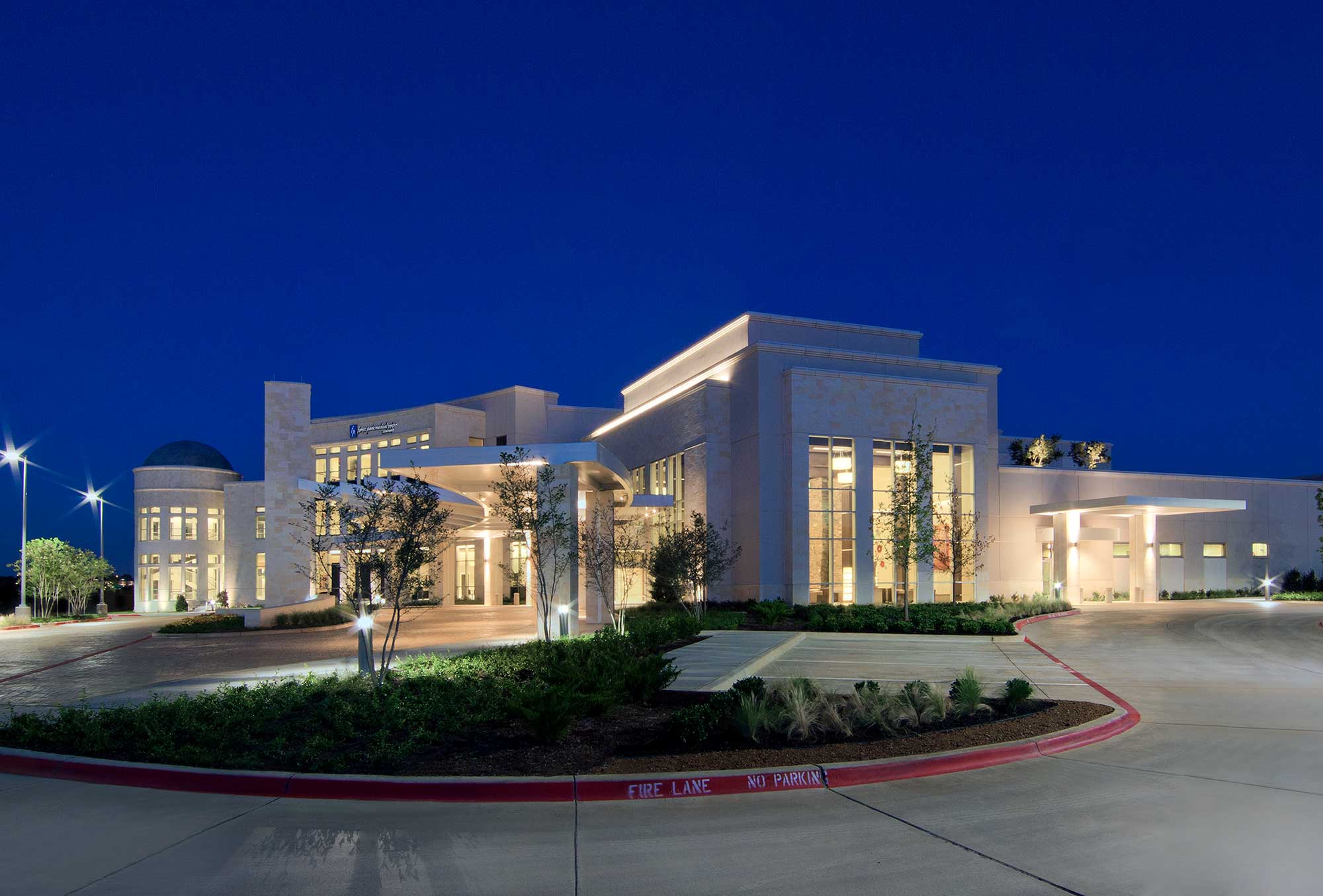
Trilogy’s integrated campuses offer a continuum that can include independent living, assisted living, memory care and skilled nursing. The appeal is easy to understand: a resident’s needs can change without every change requiring an entirely new destination. For the owner, different services also bring different staffing requirements, payment arrangements and operating demands.
The September buyout consisted of a $247 million base price and approximately $11 million of distributions owed to the departing partner. AHR used proceeds from its September equity offering. Buying the final interest concentrated its exposure to Trilogy’s performance. The transaction is evidence of management’s conviction; it is not proof that the conviction will always pay.
“Right now we believe the best risk-adjusted returns are managed long-term care”Danny Prosky · Nareit interview · January 2026
The choice places AHR alongside healthcare property investors such as Welltower and Ventas, competing for assets, operators and capital. Its particular combination includes Trilogy campuses, regional senior housing partners and leased medical properties. Comparing these companies by property count alone misses the central issue: which operating risks sit behind each dollar of income?
03 / First, fix the financing
AHR itself was assembled. In October 2021, Griffin-American Healthcare REIT III and IV combined, alongside the acquisition of American Healthcare Investors’ business. More than 100 sponsor employees joined the resulting self-managed company. The transaction brought property ownership and the management platform together, rather than leaving the latter outside the REIT.
The next step took longer. AHR initially pursued a public offering in 2022, when rising rates squeezed the market for listings. It finally reached the NYSE in February 2024 at $12 a share, the bottom of its marketed range. The original timetable had stalled. Access to capital was a constraint even while the underlying demographic argument remained intact.
The initial pricing announcement described a $672 million offering. With the underwriters’ option exercised, the completed sale was larger. AHR intended to use approximately $717.6 million of net proceeds to repay its credit facility. Before the later Trilogy purchase came a decidedly unromantic task: making the balance sheet more useful.
04 / Look inside the growth number
By June 30, 2026, AHR’s portfolio comprised 327 properties and approximately 23.34 million square feet. Its second-quarter results show why the operating side attracts attention. Same-store net operating income grew faster in senior housing and integrated campuses than in outpatient medical or triple-net leased properties.
Q2 2026 same-store NOI growth · year over year
NOI is a property operating measure, not net income or a stock return.Same-store comparisons help separate changes at existing properties from growth through purchases. They still require care. Net operating income does not deduct every corporate or financing cost. AHR reported $30.6 million of second-quarter GAAP net income attributable to controlling interest, alongside its operating measures. The figures answer different questions.
Expansion continued. In September 2026, AHR announced approximately $572 million invested in six Kensington communities, part of an eight-community portfolio contracted at approximately $873 million. Two remained subject to closing conditions at that announcement. Jeff Hanson had become permanent CEO in July; Aric Chang became CFO in October. The platform was adding assets and changing leadership together.
05 / Copy the sequence
The portable lesson is the sequence: understand the operator, arrange the capital, then commit to the property. In his Nareit interview, Danny Prosky described finding operating partners before pursuing assets. That reverses the tempting habit of falling for a building and only afterward asking who can run it.
The limits follow directly. Demand cannot rescue an acquisition priced too richly. Occupancy gains may disappoint if payroll rises faster than revenue. Expensive financing can absorb operating improvements. AHR’s approach therefore asks investors to study care operations as well as property. The interesting thing about its real estate is how much of the outcome happens after the purchase.