In July 2026, Jeff Hanson became chief executive of a company he had helped build long before its shares had a ticker symbol. American Healthcare REIT announced his appointment on July 22. He would remain chairman. Danny Prosky, his business partner of more than two decades, would remain a director and adviser. The titles changed; the names around the table were familiar.
That is the useful place to begin with Hanson. His career has plenty of large numbers, including a $4 billion transaction and a national investment business with hundreds of employees. But the recurring characters are more revealing. Hanson, Prosky and Mathieu Streiff kept building together as their business passed through different owners, structures and market stages. Corporate stationery had a busier life than the partnership.
For a real estate executive, buildings are the obvious subject. With Hanson, the more interesting question is what survives a transaction. A property can be sold. A fund can reach its exit. The people who know how to assemble the next business may still be sitting across from one another.
A broker learns to own the consequences
Hanson studied business administration at the University of Southern California, concentrating on corporate finance and real estate finance. The pairing fits the work that followed: understanding a building as a physical asset and understanding the financial structure around it. A good address and a good balance sheet have to get along.
Before moving into investment management, he worked in Grubb & Ellis’s Institutional Investment Group as a senior vice president. He ranked among the firm’s ten leading brokers nationally by production. Brokerage gave him a place in the transaction business before he moved to the principal side, where the buyer’s decisions continue to matter after the closing dinner.
From 2006 through 2011, he led the Grubb & Ellis investment management platform. It encompassed more than 600 professionals and $8 billion in assets, spread across several kinds of investment arrangements. His responsibilities included leading Grubb & Ellis Equity Advisors and chairing its second healthcare REIT. The job already involved managing an organization as well as evaluating property.
The partnership outlasts the letterhead
In 2011, Hanson, Prosky and Streiff founded American Healthcare Investors to continue the healthcare real estate investment business. The new firm sponsored publicly registered, nontraded REITs. These were investment vehicles with public reporting obligations, although their shares did not trade on a stock exchange.
The distinction matters to the story. Raising money and buying properties could establish a portfolio. Giving investors a route to liquidity was another task. Hanson’s business had to think about how an investment would finish while it was still being assembled.
In a 2014 interview, asked what made him proud, Hanson began with his partnership and the team they had maintained since 2006. He also emphasized investing personal capital alongside shareholders. His stated argument was straightforward: a decision feels different when its consequences arrive in your own account.
“When you align interests with real skin in the game”
Jeff Hanson, 2014
That emphasis on shared exposure offers a more specific glimpse of his business personality than an adjective on an executive biography. He talked about ownership, people and continuity. The interview’s striking detail is where he chose to start when invited to take credit: with the other people.
Buying with the ending in view
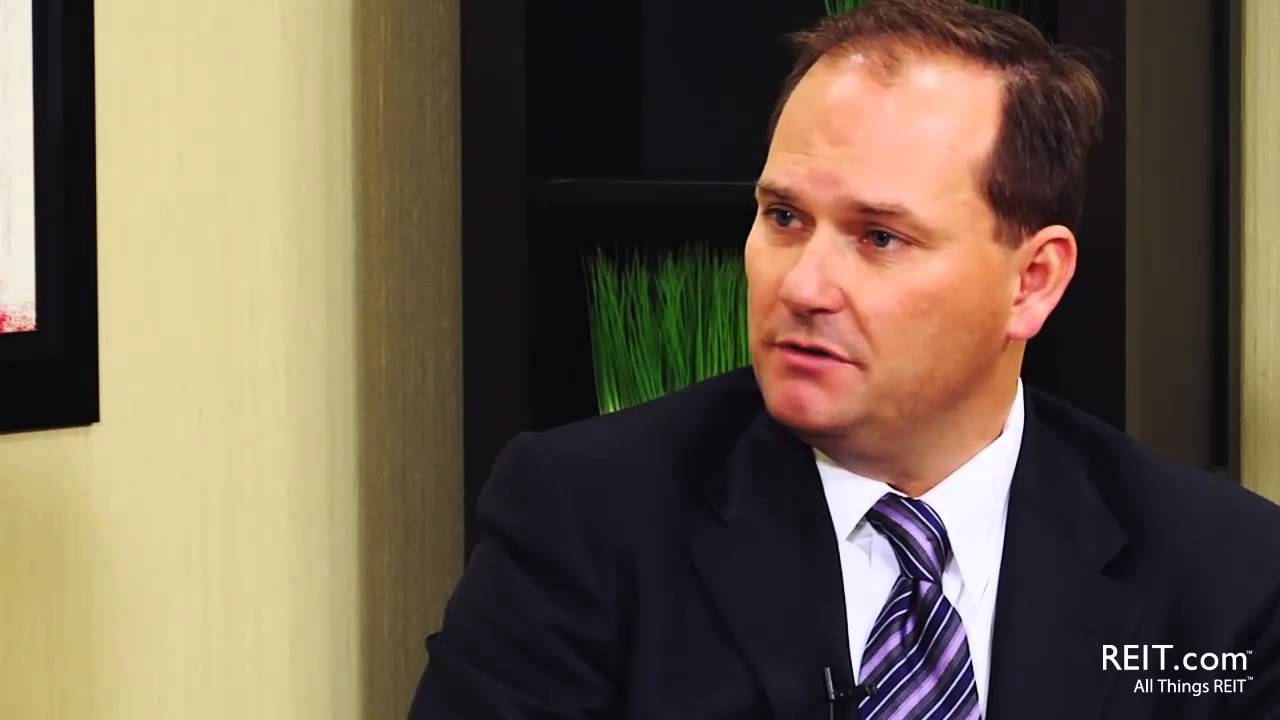
By late 2013, Griffin-American Healthcare REIT II had expanded into the United Kingdom through the Caring Homes portfolio. In a video interview in San Francisco, Hanson described the operator relationship as a route to further growth. The international move involved acquiring real estate and establishing a relationship that could produce additional investments.
He was already using the language of a capital partner. An operator had a business to run and ambitions for it. His firm could supply financing for expansion. The property purchase brought those two parties together, with the possibility of more work after the initial agreement.
In December 2014, NorthStar Realty Finance acquired Griffin-American Healthcare REIT II in a cash-and-stock transaction valued at approximately $4 billion. Shareholder proceeds were structured as roughly two-thirds cash and one-third NorthStar stock. The deal gave the portfolio an ending, while the founders’ investment business continued.
The sale announcement described Hanson as the REIT’s largest stockholder. His emphasis on co-investment therefore had a concrete counterpart. A transaction affecting outside investors also affected the person who had been chairing their company. Alignment, in this instance, had a line on the shareholder register.
December 2014
56m shares × $12
Different transactions, different measures. Neither figure represents Hanson’s personal wealth.
Three pieces become one company
The next chapter required a different arrangement. On October 1, 2021, Griffin-American Healthcare REIT III and REIT IV combined, alongside the acquisition of American Healthcare Investors. The resulting company was American Healthcare REIT. Its portfolio had an approximate gross investment value of $4.2 billion at formation.
The organizational change was substantial. More than 100 AHI employees, including the three founders, became employees of the combined company. Investment management moved inside the business that owned the assets. Acquisitions, asset management, accounting, finance and tax now belonged within a self-managed enterprise.
There is a fairly human detail buried inside that corporate architecture: the founders moved with their employees. The business they had operated as an external sponsor became part of the company’s own organization. A legal diagram can make this look bloodless. For the people doing the work, it changed who employed them and where responsibility sat.
The proposed merger presentation had discussed a potential stock-market listing in 2022. The eventual debut came in February 2024. That interval belongs in the story. A plan for liquidity and the day shares actually start trading are separate milestones, however confidently they share a presentation slide.
- 2006Hanson leads the Grubb & Ellis investment platform.
- 2011American Healthcare Investors is founded.
- 2021Two REITs and the investment manager combine.
- 2024AHR begins trading on the NYSE.
A ticker arrives after the business
The February 2024 offering priced 56 million shares at $12 apiece, a base offering of $672 million before expenses and any additional underwriter purchases. Trading began on February 7 under AHR. This was an exchange debut for a company with a long operating history behind it.
Hanson was chairman at the time; Prosky was president and CEO. The distinction keeps the achievement in proportion. The listing belonged to a company and a management team, with responsibilities distributed among them. Hanson’s part in building the enterprise does not erase his partners’ work.
A year later, the company marked its listing anniversary with an opening-bell ceremony scheduled for February 10, 2025. The exchange welcomed its executives and guests, with Prosky designated to ring the bell. Public markets have a pleasing instinct for ceremony: years of legal and financial preparation eventually receive a sound effect.
For investors, the change was practical. Exchange trading created a market for the shares. For the organization, it added a public-company setting to a business assembled through earlier funds, partnerships and mergers. The ticker condensed that history into three letters.
The return to the operating chair
Hanson served as interim CEO beginning in February 2026. The July announcement made his appointment permanent, elevated Gabe Willhite to president alongside his chief operating officer role, and named Scott Estes lead independent director. Prosky continued on the board and as an adviser.
On the second-quarter earnings call, Hanson outlined two priorities: scaling the business and strengthening the leadership team for the years ahead. Those priorities pull on each other. More acquisitions create work for the organization expected to absorb them; additional leadership capacity can determine how much expansion it can handle.
His language now places considerable weight on supporting operators with capabilities as well as money. The company describes technology, data analysis and asset management as part of its offer to operating partners. That makes the people responsible for running individual properties central to the investment proposition.
It also brings the story back to an old Hanson theme. In the earlier interview, he credited the team for what the business could accomplish. In the current strategy, the operating team remains part of what a prospective partner is being asked to value. The machinery is larger; people still have to make it work.
The deal where price did not settle everything
In September 2026, American Healthcare REIT announced that it had acquired six Kensington Senior Living communities for approximately $572 million. They formed part of an eight-community portfolio under contract for about $873 million. Two further purchases remained subject to closing conditions, with completion expected in the fourth quarter.
Kensington would continue operating the properties. Its founding managing partner, Dave Faeder, said AHR had been selected for the long-term relationship despite another bidder offering more. The company’s account of the deal therefore provides a useful example of the pitch Hanson has been making: the choice of capital partner can involve more than the purchase price.
That does not settle how the investment will perform. It does explain what the buyer and operator said they were choosing. Hanson described the acquisition as an opportunity the company had spent years preparing to capture. The promise lay partly in future work together.
His career has moved from brokerage to investment management, from sponsoring funds to chairing a listed company, and back into its chief executive role. Through those changes, a recurring ambition has become visible: build an organization that partners want to keep working with. In a business that celebrates the closing, Hanson’s story keeps returning to who is still there afterward.