In 1999, the trouble at Ventas could be expressed in one number: more than 98 percent. That was the share of revenue coming from Vencor, the healthcare operator whose financial distress threatened its landlord. Ventas owned the buildings. Someone else delivered the care. On paper, those were separate businesses. In practice, their fortunes were almost inseparable.
- Senior housing is the growth engine; independent operators deliver the day-to-day service.
- Its buying discipline combines the local market, the building, and the operator.
- Population growth helps. Staffing, affordability, and financing still decide the economics.
Debra Cafaro arrived as chief executive that year. Ventas had emerged from the Vencor separation in 1998; she inherited the consequences. Vencor entered bankruptcy in 1999. A portfolio of healthcare buildings was useful only if somebody inside could keep paying rent. The immediate problem was the tenant’s ability to pay.
The repair required concessions. Ventas restructured $1 billion of its own debt and agreed to reduce Vencor’s contractual rent by approximately 20 percent. Its 2000 annual report acknowledged two remaining obstacles: expensive capital and insufficient diversification. There was no mystery about what needed to change. More buildings would mean little if the same vulnerable tenant occupied them.

02A birthday is becoming a business event
Fast-forward to 2026. The oldest baby boomers are turning 80. Ventas describes an American 80-plus population set to grow by more than 55 percent by 2035, alongside historically low new construction. That is its central proposition: demand for supported living is increasing while additional places to live take time and money to build.
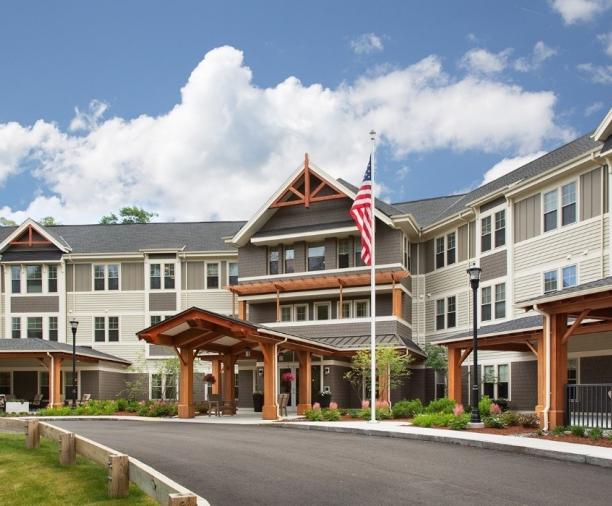
The company now owns a portfolio spanning the United States, Canada, and the United Kingdom. It calls itself the world’s second-largest senior housing owner. Its senior housing network includes more than 900 communities, roughly 100,000 seniors, and about 50 operators, as of June 30, 2026. The early concentration problem has become a much broader collection of operating relationships.
For families, these communities offer independent living, assisted living, or memory care, depending on the property. For operators, Ventas supplies property capital and asset management support. For investors, its publicly traded shares offer exposure to healthcare real estate. Those are different audiences, and understanding the distinction explains why the name on a community’s front door may never say Ventas.
03The building is only one-third of the decision
Atria, Sunrise, and Le Groupe Maurice are among the operators associated with Ventas properties. The company’s formula joins three decisions: market, asset, operator. A growing older population in a particular area matters. So does a building’s local competitive position. So does the team responsible for filling rooms and serving residents.
Consider two portfolio examples on its senior housing site: 11 Texas communities operated by Civitas, and 20 communities operated by Grace Management. One transaction established a new operator relationship; the other expanded an existing one. The strategy leaves room for local expertise rather than requiring every acquired building to fit a single operating brand.
Ventas Operational Insights, formally launched in 2022, gives that approach an analytical engine. The company says it draws on more than a billion data points to examine markets, communities, and operators. This is an internal asset management capability. The practical ambition is to make better purchasing and operating decisions across a collection of properties that remain intensely local.
04There is a bill for all this patience
In 2025, Ventas closed $2.5 billion of senior housing investments. Its 2026 second-quarter release reported $3.4 billion of investments focused on senior housing year to date and raised the year’s expected investment volume to $4.5 billion. These are purchases with financial return expectations; the larger number remains a forecast.
Funding those purchases changes the capital structure. By the second-quarter release, Ventas had settled forward equity sales for $2.6 billion in gross proceeds. Selling shares supplies capital, but also spreads future earnings across more shares. A bigger property portfolio must earn its keep. The relevant question is whether growth improves results for each shareholder.
The operating evidence was encouraging: second-quarter senior housing same-store cash net operating income rose 16 percent year over year. Occupancy and revenue per occupied room both increased. That measure describes property performance before several corporate expenses; it is not net profit. The distinction matters when an acquisition story comes wrapped in large percentages.
05The other doors in the portfolio
Senior housing gets the attention, but Ventas also owns outpatient medical buildings, research properties, and specialized healthcare facilities. Its outpatient platform includes Lillibridge, the wholly owned subsidiary responsible for property management and leasing. Buildings on or near medical campuses serve providers who need convenient space for patients.
The research portfolio follows a university-centered, credit-focused model. Ventas lists properties associated with Brown, Arizona State, and Pittsburgh, among others. Its specialized healthcare properties include hospitals, rehabilitation facilities, and long-term acute care. Under triple-net leases, tenants generally take responsibility for property taxes, insurance, and maintenance alongside rent.
There is another customer: institutional capital. Ventas Investment Management gives pensions, endowments, and other institutions a way to co-invest. It reported $4.8 billion in assets under management at June 30, 2026. A development venture with GIC adds another route to financing research properties. These arrangements connect outside capital with Ventas’s sector knowledge.
“They gave us what we needed - time.”Debra A. Cafaro · 2000 annual report · on restructuring lenders
06Count the neighbors. Then inspect the kitchen.
Ventas competes with healthcare property investors such as Welltower and Healthpeak, as well as private buyers. Its distinguishing combination is senior housing exposure, multiple operators, university-oriented research, and an internal analytics platform. Scale helps it finance transactions; local operating judgment determines whether the acquired communities perform.
The limitation is equally concrete. An aging population does not guarantee that a particular community is affordable, well staffed, or attractive to families. Higher wages, expensive financing, fresh local construction, or an operator’s difficulties can upset the arithmetic. The pandemic already demonstrated that demand based on age cannot insulate senior housing from disruptions to moving in and delivering care.
The useful lesson travels beyond property investing: identify demand you can observe, then examine the bottleneck between that demand and an actual purchase. For an operator, that means matching capital with local execution. For a family, it means investigating the community and care team themselves. Ventas’s next birthday bet succeeds only when people choose the buildings it already owns.