Consider two people buying a flight. One has a meeting at nine on Tuesday. The other wants four days somewhere warm. A conventional airline can sell both a seat. Allegiant has built its business around the difference between them: the second person can move the trip. That small freedom changes which airport works, how often a plane needs to fly, and what a ticket needs to include.
- Nonstop leisure flights connect smaller cities with vacation destinations.
- A limited timetable concentrates demand; bags and seat choices add to the fare.
- The resort experiment ended with a $200 million sale. Sun Country brought the next expansion back to aviation.
Look at Allegiant’s map and the customer comes into focus. There is Flint. There is Portsmouth. There is a flight from a nearby regional airport to a place with sunshine. The proposition is practical: avoid the connection, start closer to home, and accept that the plane may not leave on the day you first had in mind.
The first customer was the wrong customer
This was learned, rather than obvious from the beginning. Founded in 1997 by Mitch Allee, Jim Patterson and chief pilot Dave Beadle, the original Allegiant tried charters and a more conventional business-travel service with multiple daily flights. It filed for bankruptcy protection in December 2000. The schedule that promised convenience had not produced a viable business.
Under new ownership and management, including Maurice Gallagher, the airline shifted toward leisure travelers. Its 2006 prospectus spelled out the mechanism: keep fixed costs low enough to adjust flying to demand, daily and seasonally. A small market might support a vacation flight without supporting a business traveler’s timetable. The opportunity lay in separating those two requirements.
“We don’t fly every day, only the days when most people want to fly.”
Allegiant’s customer FAQ
For a hub airline, a small city can be a feeder into a larger network. For Allegiant, it can be the beginning of the holiday itself. That distinction is the company’s particular expertise: matching a modest pool of travelers with a destination they want, at a frequency they can fill.
The fare is the beginning
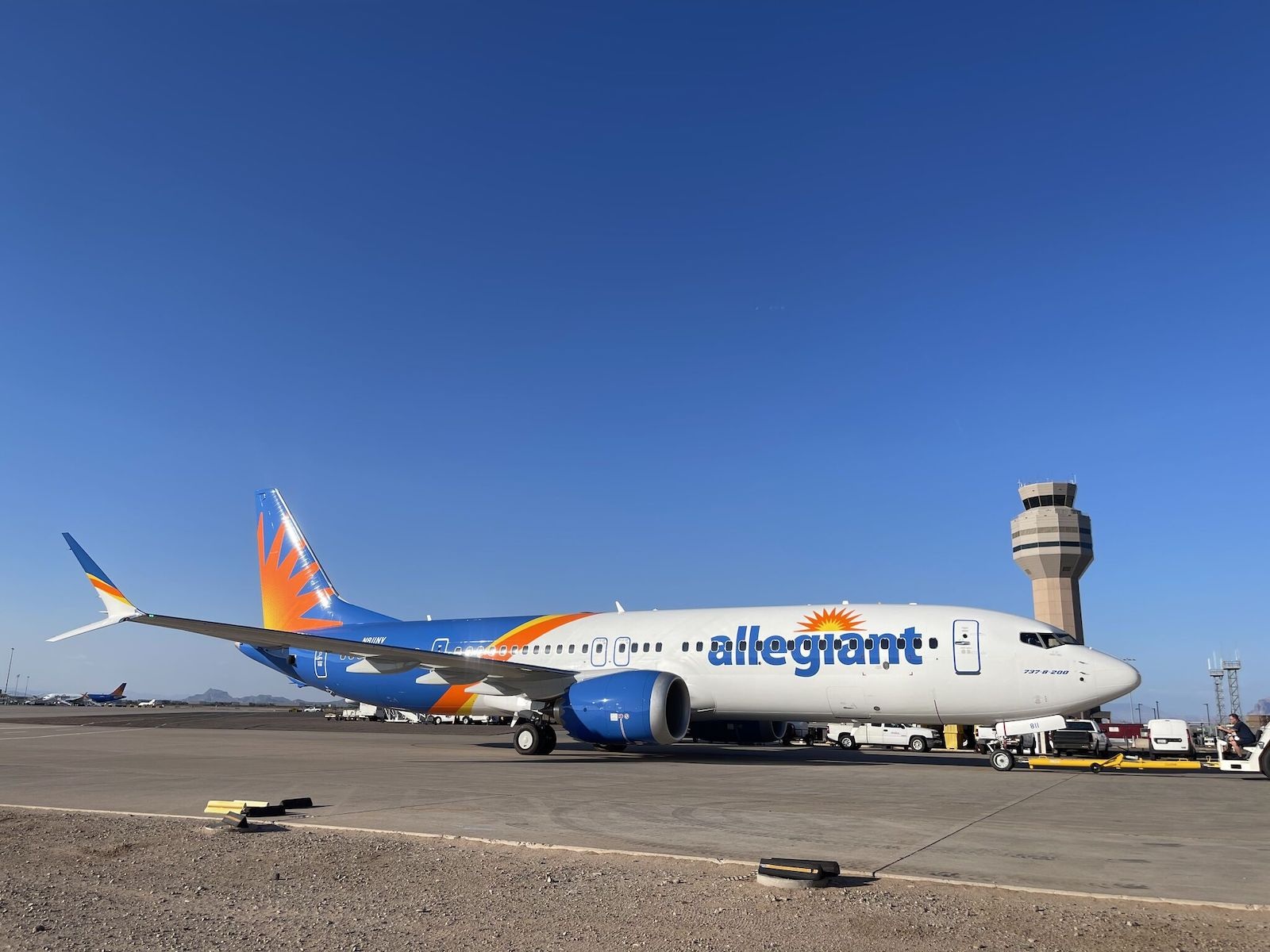
Allegiant sells the flight, then sells choices around it. Checked bags, paid carry-ons and advance seat assignments create revenue beyond the base fare. Travelers can also buy hotel stays and rental cars through its travel offerings. The airline is competing for a vacation budget, with several opportunities to earn from the same trip.
In 2025, its reported average ancillary fare was $76.35 per passenger. That is an average revenue measure, not a universal surcharge. Some people buy more; others travel light. It does explain why comparing the opening fare alone misses a substantial part of the transaction.
An average, not a mandatory fee.
There is another transaction behind the scenes. Bank of America paid Allegiant $139.6 million in co-branded credit-card remuneration in 2025. The Allways Rewards Visa turns everyday spending into travel rewards. For Allegiant, the customer relationship can generate income between vacations. Its economics extend beyond the moment someone sits down on an airplane.
A $720 million lesson in staying close to home
Owning the destination looked like a plausible next step. Sunseeker Resort in Charlotte Harbor, Florida, offered a way to capture more of the vacation. But construction delays, higher costs, hurricane damage and disappointing operating performance made the extension expensive. The property opened in December 2023 after a development cost reported at about $720 million.
On September 4, 2025, Allegiant sold the resort, golf course and related properties to Blackstone affiliates for $200 million before closing adjustments. The difference is stark, although it should not be confused with a single accounting loss: depreciation, impairments and other adjustments complicate that calculation.
In his 2026 shareholder letter, CEO Greg Anderson described the sale as a way to concentrate on the low-fare airline. The useful lesson is specific. Sharing a customer does not mean sharing an operating skill. Selling hotel rooms alongside flights and managing a storm-exposed resort demand different kinds of judgment, capital and attention.
Buying more of what it knows
Allegiant’s next major expansion stayed closer to aircraft. It completed its Sun Country acquisition on May 13, 2026. Announced at approximately $1.5 billion including debt, the deal added a complementary leisure network and something less visible to vacationers: Sun Country’s Amazon cargo flying and charter contracts.
Those operations offer different sources of demand from a discretionary beach trip. At closing, management described a combined fleet of 195 aircraft serving nearly 175 cities. It also projected roughly $140 million in annual synergies within three years. Those savings remain a target, with integration work between the announcement and the result.
For passengers, a completed acquisition does not immediately produce one airline. Booking channels and rewards programs remain separate during integration. Travelers should manage the trip with the carrier they booked. The distinction matters more than the enlarged route map on a corporate presentation.
Bring a flexible calendar
The product continues to change. In July 2026, Allegiant announced Expedia Group as its first authorized online travel agency partner, widening distribution beyond its familiar direct channels. Complimentary non-alcoholic drinks began August 1. Allegiant First, a premium seating tier, is planned for select aircraft in spring 2027.
For someone planning a trip, the method is straightforward: check the operating days first, verify the actual airport, then price the bags and seats the party needs. Compare that complete itinerary with alternatives from Frontier, Southwest, Breeze, Avelo or a connecting network carrier. Ground transport belongs in the calculation, too.
A fixed appointment, a tight return deadline or a need for frequent backup flights may favor another schedule. But for the traveler who can move the holiday, Allegiant offers a useful exchange: some calendar flexibility for a nearby departure and a nonstop journey. Its central insight remains pleasingly ordinary. People in smaller cities want vacations, too.