Ali Jhaver needed to make payroll. The product he had brought a development team together to build had failed, and the team still needed work. His answer was practical: put their skills to use helping businesses with digital marketing. The company that became Adit began with an obligation to people already in the room.
That beginning is worth keeping in view. A business can acquire a polished explanation of its purpose after it has found its customers. Jhaver’s account starts with a failed application and salaries to cover. It has the useful untidiness of an actual decision. There was a team, there was a problem, and there had to be something to do on Monday.
Some early clients used software to record incoming calls. Jhaver listened to find out which appointments his marketing had produced. A website visit could suggest interest; a booked appointment gave him something concrete to show the customer. Listening, initially a way to prove the work had earned its fee, opened a door into a different business.
A guarantee with consequences
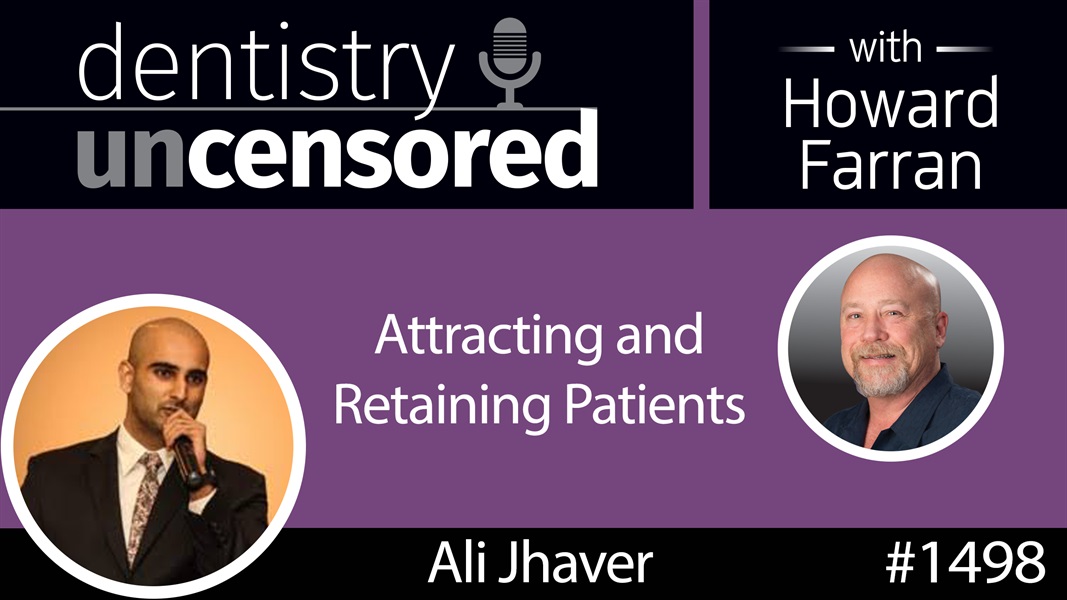
By February 2018, Jhaver was explaining Adit’s Patient Booking Guarantee to interviewer Howard Farran. The proposition put the fee behind a measurable result: reach an agreed number of bookings, or the marketing service was free. Adit presented clients with a list of people who had booked, which they could check against their own records.
Think about the choice of measurement. Clicks happen before a business has done much of the work of winning a customer. An appointment happens later, after someone has found the office, decided to make contact and managed to reserve a time. Choosing that point as the test of success made the office’s response part of the marketer’s problem.
It also made the sales pitch unusually easy to understand. Nobody needed a small seminar on advertising terminology to grasp an appointment in a calendar. Jhaver had studied economics and attended the University of Houston from 2008 to 2011. Here was a commercial arrangement with an incentive plain enough to fit into one sentence.
There was software in the mix already. In the same interview, he described Pozative, a review-generation application Adit had built. He explained the company’s name as advertising, AD, joined to IT for technology. Those four letters allowed room for both sides of his business. Conveniently, they also spared everyone a rather long business card.
The agency had more than one address
Jhaver’s early company was broader than the product it eventually became. In a conversation with Russ Capper at Adit’s Arena Towers office in Houston, he appeared alongside fellow founder Fahad Hashimi. Their list of work included websites, mobile applications, online stores, customer relationship management systems and point-of-sale applications. Customers came from several industries.
The business also extended beyond Houston. Jhaver described clients in the United States and Canada, with a second location in Calgary. He said the back-end team worked from an office in India while creative work happened locally. Hashimi described referrals as an important way the company found business. This was a company being assembled through relationships as well as code.
For a founder, that arrangement creates an education that no dashboard can supply by itself. Different customers bring different explanations for why something has gone wrong. Working across those requests gives a software business choices about what to standardize. The interesting decision in Jhaver’s career was where he eventually concentrated that attention: the everyday operations surrounding a booking.
Success made the job bigger
When Jhaver returned to Farran’s show in November 2020, he described a company that had grown from roughly 50 to 80 customers at the time of their earlier conversation to about 750. Those were his figures at that moment, a snapshot of an expanding business rather than a permanent company statistic.
His explanation of the product had expanded too. He walked through discovery, acquisition, engagement and reactivation: being found, making a booking, communicating and bringing existing customers back. Online scheduling and text messages now sat alongside marketing. Adit was following the work beyond the first successful introduction.
- 01DiscoveryGet found
- 02AcquisitionBook a time
- 03EngagementKeep in touch
- 04ReactivationBring people back
The sequence explains why a marketing founder might end up caring about reminders. Each stage creates a handoff, and each handoff asks someone to remember what happens next. An advertisement can do its job while the larger process still disappoints. Following the sequence gives a founder more problems to solve, but also a better view of what the customer was buying in the first place.
A dashboard needs a point
In September 2021, Adit launched its Practice Analytics module. Jhaver’s explanation was economical: “Data is only useful if it tells a story.” The module assembled performance measures into dashboards, including booking rates, database growth and retention. The intended audience was an operator making decisions, rather than someone with a spare afternoon for a spreadsheet.
“Data is only useful if it tells a story.”
Ali Jhaver · September 2021
That sentence also offers a way to read his own career. The raw information was there in calls, bookings and customer questions. The value came from arranging it into something a business could act on. A record of activity might establish that work happened. A useful interpretation should help someone decide what to do next.
Dashboards can become a form of office decoration: plenty of numbers, impressive colors, no clear decision. Jhaver’s stated test places a demand on the person building the software. If the buyer must reconstruct the meaning from scratch, the product has handed back a substantial part of the job. An interface earns its place by making that work easier.
The shared inbox problem
Another 2021 release contained a small, revealing accommodation. Adit’s Internal Chat allowed new user accounts without requiring a separate email address for each person. The company pointed out that some offices shared one email account. It was the sort of detail that looks minor until the software insists your workplace should be organized differently.
The chat tool supported individual and group conversations, file sharing and mobile use. Jhaver framed it in terms of consolidating subscriptions. More jobs could happen within the platform customers already used. He also congratulated the team on the launch in a public LinkedIn post. The business had moved well beyond making a website easier to find.
The shared inbox detail gives that expansion some texture. Software can assume every worker has an individual account, a dedicated desk and uninterrupted time to learn a new tool. A busy small business may supply none of these. Designing around an existing habit requires attention to the place where the product will actually be used. Elegance in a demonstration is only the beginning.
The phone returns, with AI attached
By late 2025, Jhaver’s public writing was again concerned with calls. A November article under his name explored missed inquiries and the role of conversational AI. The vocabulary had changed since the agency years, but the business question remained familiar: how much opportunity disappears between somebody making contact and somebody following through?
On November 25, Adit announced an expanded AI Suite. It described Call Intelligence tools intended to interpret conversations, surface follow-ups and help managers understand booking outcomes. The announcement reported more than 5,000 practices and 30,000 active users. These are company-reported adoption figures, useful for scale, separate from any claim about what a particular customer will achieve.
Then came the AI Front Desk Agent in February 2026. Adit described software for incoming calls, scheduling requests, reminders and follow-ups, with customizable workflows and information syncing into existing systems. Jhaver called it an extension of a practice’s frontline team. The ambition now included having software participate in the exchange that his earlier business had listened to afterward.
That is a substantial change in responsibility. A call recording can be inspected at leisure. A live interaction requires the next step to happen while somebody is waiting. The product’s promise has moved closer to the moment of service, where small delays and muddled responses become immediately visible. The phone is a demanding place to test an idea about convenience.
Let the office keep working
In March 2026, Adit announced an official partnership with OpenDental. For customers already using both systems, it said no additional setup was required and existing functions would continue. Deeper synchronization and automation were described as future enhancements. The immediate promise was continuity, a surprisingly persuasive word when a business already has a full day planned.
The announcement fits the progression of Jhaver’s company. First came the effort to show that marketing produced bookings. Then came more of the tools surrounding those bookings. Now there is a growing obligation to make those tools cooperate with systems customers already rely on. Every addition has to earn the time it asks an office to spend.
Jhaver’s public career offers a useful picture of entrepreneurship as sustained attention. The failed application did not provide the destination. Working with customers supplied the next problem, and then another. A team that needed work became a business that listened to work happening. Years later, the central question still fits inside an ordinary phone call: what should happen next?