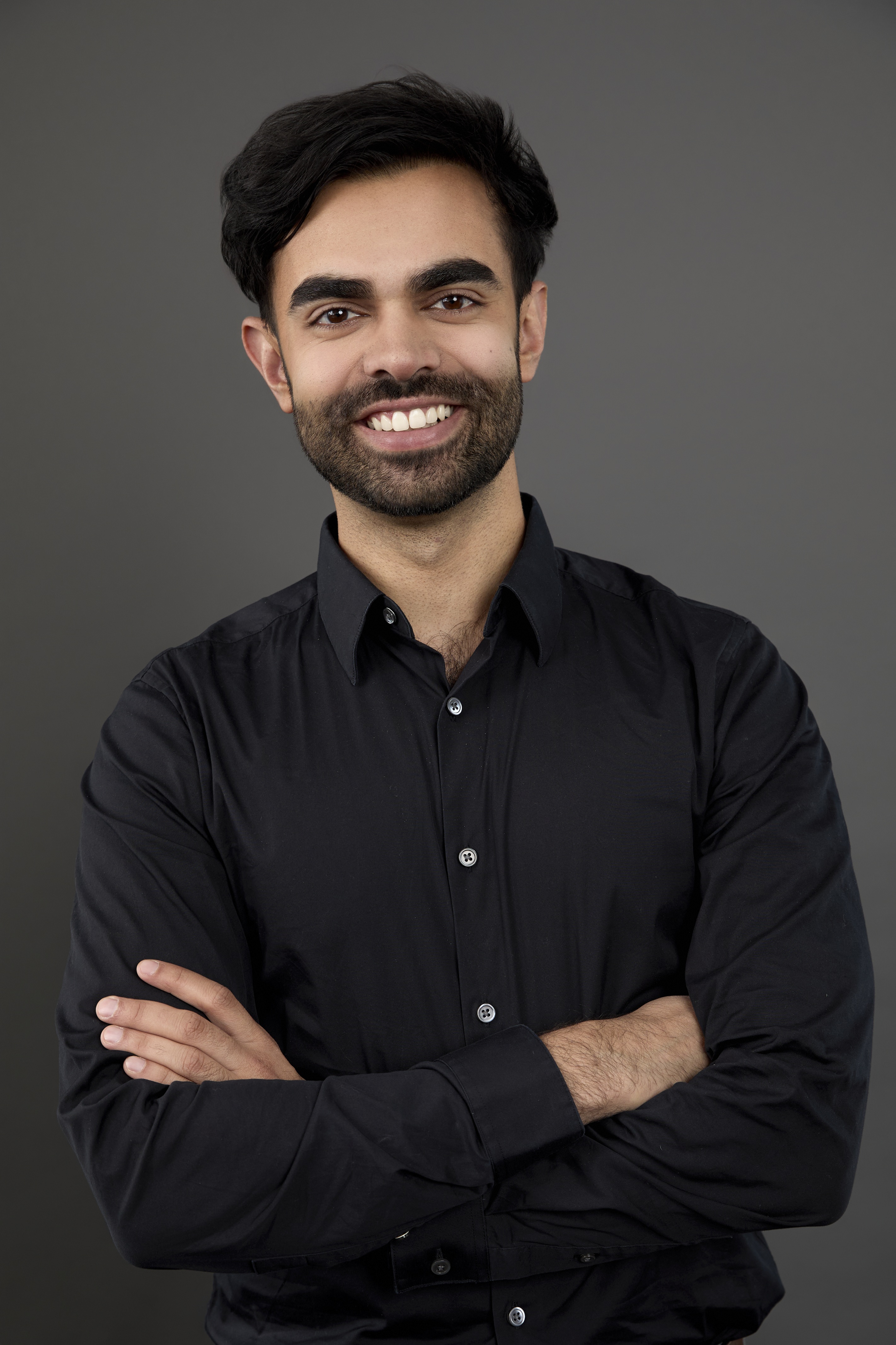
Alex Dhillon runs Outtake, a New York company that points autonomous AI agents at the open web and tells them to hunt. The agents sweep social media, domains, app stores, and ad libraries looking for the fakes - the cloned login page, the impersonator account, the rogue app wearing your logo, the phishing campaign built to drain your customers. When they find one, they do not file a ticket. They classify it, investigate it, and move to get it removed. What used to take a security team days, weeks, or months, Outtake aims to finish in hours.
The premise is blunt: if attackers are using AI to manufacture deception at scale, defenders cannot keep answering with humans, alerts, and dashboards. Dhillon calls the destination always-on security - a posture where the defense never sleeps because the offense never does. Outtake describes its mission as defending digital trust in an AI-driven world, and the company stitches individual threat signals into maps of coordinated abuse so a single fake is understood as part of a campaign, not a one-off.
It is working faster than most two-year-old companies have any right to expect. Outtake's customer roster includes OpenAI, mobile-ads giant AppLovin, Bill Ackman's Pershing Square, and federal agencies. Annual recurring revenue grew sixfold year over year. The customer base grew more than tenfold. In a single year, the platform scanned roughly 20 million potential cyberattacks - the kind of volume that makes the case for agents better than any pitch deck.
"We're headed towards this world of always-on security."
- Alex Dhillon
The conviction has a specific origin. Dhillon spent nearly five years at Palantir, much of it on the experimental product team, reporting directly to the company's CEO and CTO. The job was to poke at emerging technology and figure out what it would mean for corporations and governments. Watching generative models improve, he reached an uncomfortable conclusion: the Turing test was becoming a quaint relic, because the machines were already passing it. If a model can convincingly imitate a person, it can convincingly imitate a brand, a bank, a government login - and it can do it a million times before lunch.
That left a binary, the way Dhillon tells it. Either the internet drifts into a place where nothing can be trusted and the economy pays the price, or technology gets used to detect and shut down AI-driven threats in real time. He left Palantir in 2023 to build the second outcome. His old boss, Palantir CTO Shyam Sankar, later came back as one of Outtake's angel investors - a quiet vote of confidence from the person who watched him work.
"If your opponents are using AI, you must do the same to remain competitive."
- Alex Dhillon
Dhillon's own path to the problem is wonderfully off-script. At UC Berkeley he triple-majored in molecular genetics, economics, and public health. Before tech he did research at The Brookings Institution and analyst work at Cornerstone Research and DN Capital. None of that screams "future cybersecurity founder," which may be the point. He approaches digital trust less like a firewall vendor and more like a biologist studying how an infection spreads through a population - find the pathogen, trace the vectors, neutralize it before it multiplies.
He has been candid about being surprised by his own market. Early on he expected Outtake to sell into consumer-heavy industries - travel, healthcare, pharma - where everyday people get phished. Instead the strongest early pull came from B2B organizations with serious reputational risk, the companies whose names attackers most want to wear. So Outtake leaned into protecting the brands people trust most, on the theory that defending the high-profile targets keeps the whole online commons a little more believable.
The team reflects the standard he is chasing. Outtake's staff is drawn from Palantir, SpaceX, Notion, Meta, and Microsoft - a technically rigorous, product-first, customer-obsessed crew of former founders and operators. That talent density is part of what turned heads in the January 2026 round. The $40 million Series B was led by Iconiq, and the angel list reads like a who's who of people who do not casually lend their names: Microsoft CEO Satya Nadella, Palo Alto Networks CEO Nikesh Arora, Pershing Square's Bill Ackman, Palantir's Shyam Sankar, Anduril co-founder Trae Stephens, former OpenAI VP Bob McGrew, Vercel CEO Guillermo Rauch, and former AT&T CEO John Donovan. The Series B followed a $16.5 million Series A led by CRV in April 2025, and earlier backing that brought total funding past $56 million.
What Dhillon is selling, underneath the agents and the dashboards he is trying to replace, is confidence. Confidence that the email is real, the domain is real, the app is real, the brand on your screen is the brand it claims to be. In an internet where anything can be faked cheaply, that confidence is becoming the scarcest commodity online - and the most valuable thing a company can defend. He is betting that the only way to protect it at the speed attackers now move is to fight machines with machines, every hour of every day.
"The Turing test seemed almost obsolete as we were already passing it."
- Alex Dhillon, on the moment that started Outtake
It is a big claim with a simple test attached. If the internet stays trustworthy enough to keep doing business on, the always-on agents will be part of the reason. If it does not, Outtake will have been the company that saw it coming first. Either way, the molecular geneticist from Brooklyn is no longer experimenting at someone else's company. He is running the experiment himself, at scale, in public, with the world's most-impersonated brands as his lab.