Alex Cattoni was meant to go to law school. In 2008, she sold her car instead, packed her belongings into a suitcase, and moved from Canada to Kuala Lumpur for an internship at Mindvalley. The job was in customer support. It offered no grand entrance into copywriting, a profession she had barely encountered. But it put her inside a young online business, where a sentence could travel farther than any printed brochure and where she discovered that marketing could be both a craft and a career.
The leap is easy to tidy up after the fact. Cattoni’s telling is less tidy and more useful: she wanted to travel, delayed law school, and applied for a role in an industry she did not know. She came from Alberta and describes herself as an Irish-Italian girl with a loud, sassy streak. Malaysia offered distance from the expected next step. The customer-service desk turned out to be an unexpected vantage point. She saw what people asked, what confused them, and what made a company’s message feel clear.
Within about three and a half years at Mindvalley, she moved through project and business management into creative direction. She also worked on the company’s A-Fest event. There is a practical education in that sequence: first listen to customers, then help run the work, then decide what the brand should say. Cattoni would carry all three jobs into the one for which she became known.
The route, with the detours left in
- 2008 - Customer-support intern at Mindvalley in Kuala Lumpur.
- 2011 - Returns to Canada and starts a marketing consultancy.
- 2019 - Begins teaching copywriting on YouTube.
- 2020 - Builds Copy Posse as a training community.
- 2026 - Brings her own website and writing back into focus.
The copywriter who arrived by accident
When Cattoni left Mindvalley in 2011, she had no clients lined up. She began as a marketing consultant, helping businesses plan funnels and automate campaigns. Clients kept asking if she knew a copywriter. Eventually she tried writing the copy herself. In a later interview she was careful about the distinction: she had written some copy at Mindvalley, but copywriter had never been her job title there. The specialized work grew out of a broader understanding of what clients needed.
For years, she wrote behind the scenes for brands in the personal-development business. Email sequences, sales pages and launches paid the bills. She has said she reached six-figure freelance income. She also recalls the less photogenic experiments on the way to Copy Posse: more than 200 domains bought, over $100,000 lost on failed ideas and investments, and digital products recorded that never saw daylight. Those numbers are her own account, and they make the later founder story feel more like a sequence of attempts than a lightning strike.
Client work taught her a peculiar kind of self-knowledge. To sound like someone else, she had to notice every piece of her own language she removed. Slang, jokes, the slightly sharp line that could make a reader laugh: all of it went into the margin. “I had to constantly edit my own voice out of what I was writing,” she said. A copywriter can spend a career making other people recognizable. Cattoni began to wonder what would happen if she allowed herself the same privilege.
“I had to constantly edit my own voice out of what I was writing.”Alex Cattoni, on years of client work
A wall of motivational quotes
She considered starting a YouTube channel for roughly a year and a half. The obstacle, by her account, was sometimes the wall behind her. Other creators had polished sets. She wanted a backdrop that looked as though she belonged on camera. Then a friend reminded her that she had announced the same plan a year earlier. She went to a local bookstore, bought motivational quotes, put them on the wall, and started recording.
This was 2019, and the early numbers offered little applause. Cattoni says it took six months to reach 1,000 subscribers. She filmed on weekends while still writing for clients, sometimes needing many takes to finish a video. She has left one rough early upload available so viewers can see the distance between that webcam-era effort and what followed. Its imperfect light and sound make a stronger case for practice than a polished origin myth could.
The subject of the videos was copywriting, but the point of view was broader. Around the same time, Cattoni had grown tired of misleading claims, fake scarcity, and the small indignities of aggressive sales funnels. At a party, a man heard her job title and reduced it to spam emails. The joke stung because it described a reputation her trade had earned in some corners of the internet. She wanted to teach people to write persuasively without treating the reader as a target to be cornered.
She has a blunt shorthand for that mission: “de-douchify the internet.” It sounds like the sort of line a more cautious marketing department would cross out. That is precisely why it stuck. Cattoni has explained that the phrase emerged in conversation with a student rather than from a formal branding exercise. The line gave a loose set of convictions a memorable address. It also allowed the Copy Posse to gather people who shared a view of the work, instead of simply wanting another headline formula.
A posse, not just a course
Copy Posse took shape in 2020 as an education business and a community for copywriters, marketers and business owners. Its name suggests a crowd; its recurring lesson asks each member to sound more like an individual. The company now describes its reach as more than 500,000 people across its programs and social channels. It sells training, runs community offerings, and connects businesses with writers trained in its approach.
The first program grew from listening. Cattoni has described gathering about a thousand survey responses to understand what prospective students struggled with. She launched the Copy Posse Launchpad to a list of 2,300 people and says it brought in $84,000. The striking detail is the order of operations: videos prompted conversations, responses informed a product, and email carried the offer. Her own business used the same tools she had spent years applying for clients.
She followed with REIGN, a virtual mastermind for more experienced marketers and owners, in 2021. DigitalMarketer recognized her as Marketer of the Year in 2022. The Universal Womens Network named Alexandra Cattoni a 2023 Women of Inspiration Game Changer Award winner. In 2024, the first Posse Fest LIVE brought the online community together in Vancouver. Photographs from the event put a microphone in her hand and a room full of people around a once solitary freelance craft.
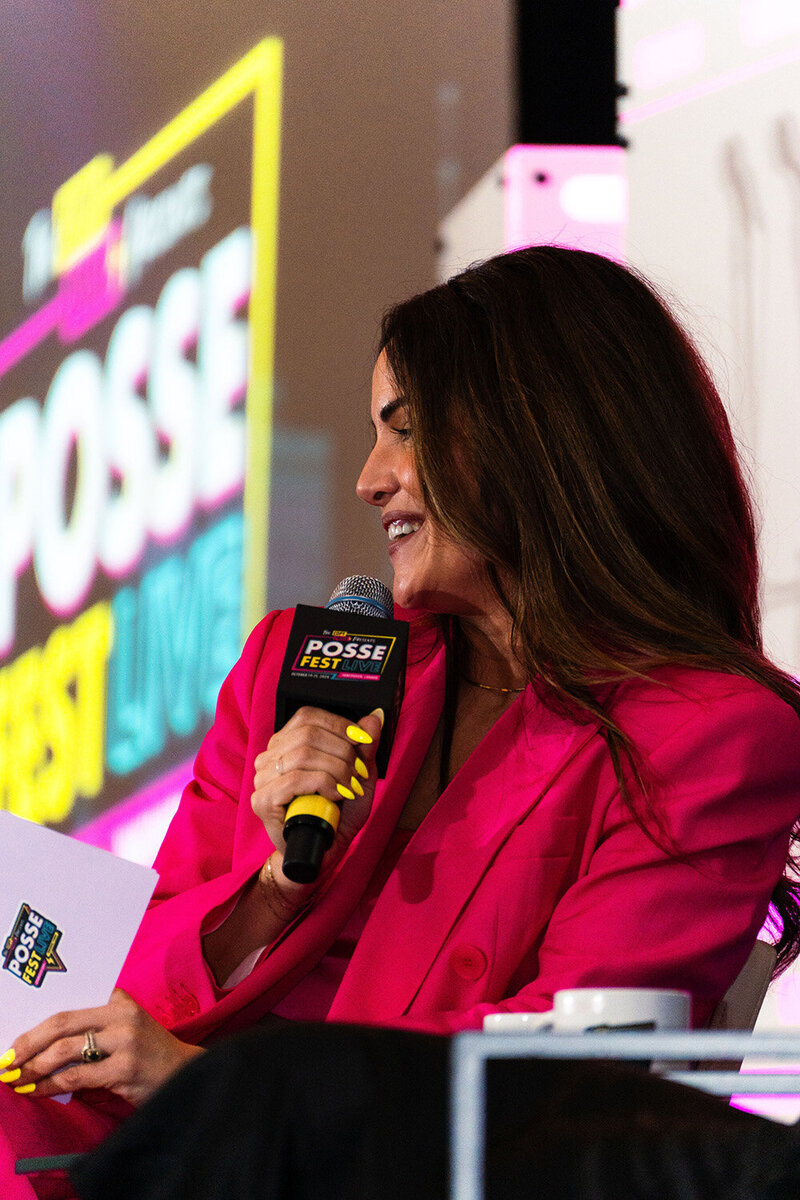
Recognition suits the founder story, but Cattoni’s public persona is more interesting in its rough edges. She describes an all-women team. She talks openly about abandoned projects and months of slow audience growth. Her company bio lists Italian food, wine, travel and true crime among her interests; Copy Posse also introduces Tater, her dog. The details do some of the work her teaching recommends: they let a person appear where a polished expert could have stood alone.
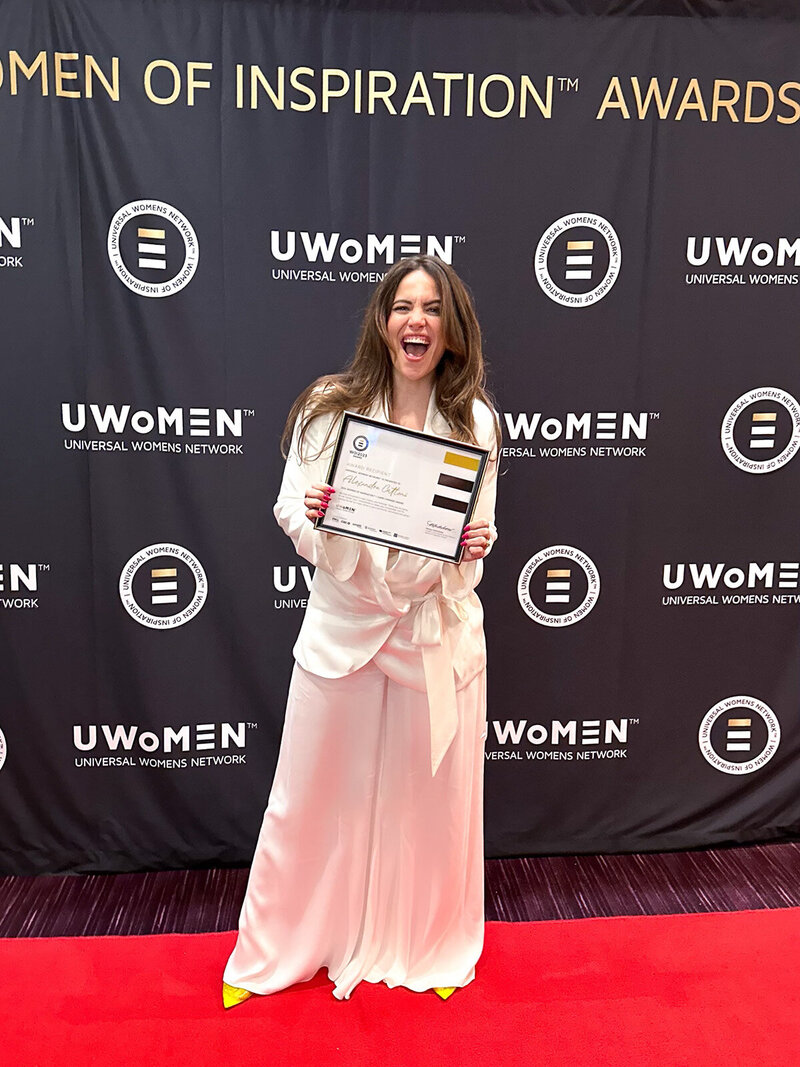
The founder meets her own brief
In 2026, Cattoni told her LinkedIn audience about an awkward conversation with a speaker coordinator. He had been referred to her for a major event, opened AlexCattoni.com, and could not tell why. The page still described a freelance copywriter who worked behind other people’s businesses. It had little to say about the YouTube channel, the teaching company, the community or the speaker he had been asked to consider. She had built an unmistakable brand for Copy Posse and allowed her own introduction to expire.
Her response was characteristically public. She brought the personal site back, began writing on Substack, said she would do more keynotes, and opened a limited number of strategy sessions with brands and owners. Copy Posse remains the place where she teaches. The personal platform makes room for an older question, newly urgent in an era of easy synthetic prose: how does a real person sound when she stops trying to be palatable?
Cattoni’s answer has never been quiet. She writes that the internet needs people willing to say what they mean. She argues that a good hook makes a promise the content can actually keep. In one interview she put the production rule plainly: “I never do a video without first knowing the hook.” The skill is commercial, certainly. It is also a discipline of respect. A reader has given you attention; the least a writer can do is repay it with the thing the headline offered.
That may be the connecting thread from the customer-support desk in Kuala Lumpur to the new personal homepage in Vancouver. Cattoni learned to listen to the person on the other end, spent years making brands sound like themselves, then built a company around teaching that practice. Now she is applying the lesson to the name above her own door. For someone who sold her car to postpone a plan, she has made a career of finding out what the next sentence could say.