The revealing object in Alcalde & Fay's story is not a handshake. It is a list. A town writes down the road that floods, the rotary it cannot afford, the water project waiting for a permit. The list is local, literal and usually longer than the budget. Washington, meanwhile, speaks in authorizations, appropriations, notices of funding opportunity and agency guidance. The firm's job is to make one list intelligible to the other system.
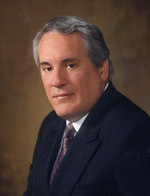
That work has kept the Arlington consultancy in business since 1973. Founder Hector Alcalde arrived with twelve years of experience as chief of staff to a chairman of the House Ways and Means Committee. He had been an educator in Florida before Washington taught him another curriculum: who decides, when they decide and what form a request must take before anyone can say yes.
Alcalde later described his colleagues with an almost comic absence of glamour. They were, he said, "good technicians" with a "pretty good understanding of the process." In a trade that sells proximity, technician is an unusually useful word. It moves the attention from the cocktail reception to the machinery.
The client with the pothole
The firm's distinctive market is the public body that needs a Washington office but cannot sensibly build one: a city, county, airport, port, school district or community college. Corporate clients and issue coalitions sit beside them, but municipalities have supplied the durable center of gravity. The current public client list wanders from Chincoteague, Virginia, to Fresno County, California, with long stops in Florida.
The operating method is surprisingly legible. With a new municipal client, the firm helps officials rank a wish list. Which project is ready? Which federal account might pay? Which request is plausible this cycle? The client settles its priorities, and the lobbyists map them to committees, agencies, grant windows and a legislative calendar that does not care when city hall finally reaches consensus.
A retainer buys a calendar
Public contracts make the business model less mysterious. Windermere, Florida, paid about $380,000 over five years, roughly $6,300 a month, while pursuing traffic, stormwater, bicycle and pedestrian projects. Other disclosed agreements put the price in the same neighborhood: Wichita authorized up to $78,000 for a year of federal legislative services in 2017; Port Tampa Bay later budgeted up to $90,000 for an annual extension; the Port of Los Angeles used $90,000 per-firm annual agreements.
What does the retainer buy? Monitoring is the quiet half: bills, regulations, budgets and agency actions that may help or hurt. Advocacy is the visible half: briefings, meetings, drafting, coalition support and the steady repetition required to keep one client's project from disappearing among thousands. Grant work adds another layer - identifying programs, shaping applications, gathering local and congressional support, and talking with the agency that will score the submission.
“They're keeping us in the loop.”Hendry County attorney Mark Lapp, on the value even when causation is hard to prove
That modest endorsement contains the honest pitch. A consultant cannot make Congress appropriate money or force an agency to award a grant. It can keep a client from missing the hearing, the deadline, the rule change or the moment when a vague idea needs to become a costed project.
What failed first was the old route
In the mid-2000s, municipal lobbying was tightly associated with earmarks. A member of Congress could insert money for a named local project into a larger spending bill. Alcalde & Fay was good at this. Windermere reported $1.19 million in federal money against $380,000 in fees, a 313 percent return. Homestead reported $9.9 million in awards after $237,000 in fees. The numbers made an irresistible brochure.
They also made an irresistible target. Critics argued that the process turned public money into a product sold by private intermediaries. Scandals elsewhere in Washington brought new disclosure rules, fewer earmarks and, eventually, a congressional moratorium. The simple path - ask a legislator to place a project into a bill - became politically expensive and sometimes unavailable.
The firm's response is the most copyable part of the story. It followed the allocation power. If Congress would send more money through authorized agency programs, then clients needed competitive applications, not just congressional requests. Alcalde & Fay now advertises grant assistance from opportunity search through drafting and support-building. It did not change the client's problem. It changed the route through the maze.
One firm, several kinds of translation
Today the menu extends beyond classic legislative work. Advocacy communications turns a technical position into language for media and policymakers. Coalition management aligns members that share an outcome but not always a reason. The firm says this can include budgets, accounting, meetings, websites and regular materials - the administrative plumbing behind a unified voice. Government marketing helps companies approach federal procurement. A Virginia subsidiary represents clients before the governor, cabinet, agencies and General Assembly.
The breadth is useful, but the firm is not a universal answer. Its model makes sense when a client has a concrete public-policy objective, internal staff who can supply evidence quickly, and enough time for a process measured in budget cycles. It is weaker when the goal is merely "visibility," when a project is not locally approved or technically ready, or when leaders expect a consultant to guarantee an award. A town without a coherent priority list has not hired a shortcut. It has hired an expensive witness to its indecision.
A grant or appropriation has many parents: local staff, engineers, lawmakers, agencies, coalitions and timing. Treat return-on-fee figures as outcomes during an engagement, not proof that one firm caused every dollar.
The part worth stealing
You do not need a Wilson Boulevard office to borrow the method. Start with the client's actual constraint, not a fashionable policy phrase. Cut the wish list to projects ready for scrutiny. Map every project to a decision-maker and a calendar. Translate the request into the vocabulary of the program. Recruit validators before the application lands. Then keep a record of every promise, deadline and objection.
None of this sounds like influence in the cinematic sense. It sounds like preparation. That is precisely Alcalde & Fay's durable insight. Washington is full of people trying to be heard. The scarce service is knowing when the system is able to listen, what it can legally do, and how a local problem must be described before it fits through the door.
Keep exploring