AJ Shankar had a 1999 Nissan Altima and a presentation that kept getting him another meeting. Then another. Then a rejection. Twenty-nine investors turned him down during the fundraising round that would help determine Everlaw’s future. The car was getting him around Silicon Valley. His argument was getting him almost there.
The temptation was to improve it a little more. A sharper explanation, perhaps, or a more persuasive answer to the familiar objections. Instead, Shankar concluded that polishing had become a trap. He needed to experiment with the approach. A founder who made his living helping people find evidence had acquired an inconvenient collection of his own.
That episode offers a useful way into his story. Shankar is a computer scientist who became absorbed in litigation, a chief executive who questions software deadlines, and a puzzle enthusiast whose colleagues once spent three hours escaping their own office. He seems most interesting at the point where an accepted arrangement begins to look negotiable.
A compiler, then a courtroom
He grew up in Connecticut. At Harvard, where he graduated in 2001, he studied applied mathematics and computer science. His public résumé also records a high school life that included varsity sports and principal trumpet in the Connecticut Youth Symphony. There were several ways to occupy his attention before legal documents entered the picture.
Programming became compelling in college. A compilers course let him see how instructions written by a person became something a machine could execute. For someone initially drawn to mathematics, the attraction was partly the pleasure of making an abstraction do something. He described programming as combining creativity, elegance, logic, and the satisfaction of building.
Berkeley followed in 2002. His doctorate concerned computer science, with research in programming systems under Rastislav Bodik. He completed it in 2009. Before Everlaw, he also co-founded Modista, a visual-shopping company. It won Berkeley’s business plan competition and Venture Lab Prize in 2008. His route to enterprise software included a detour through helping people shop.
The legal connection arrived through work as a technical expert for Hagens Berman. A law firm needed someone who could understand the technology involved in litigation. Shankar encountered lawyers trying to manage enormous amounts of evidence with tools that made the task harder than it needed to be. Their practical difficulties gave his technical training somewhere to go.
Jeff Friedman, a partner at the firm, helped him see the opportunity. Their expertise fitted together: litigation on one side, computer science on the other. Shankar dates Everlaw’s founding to 2011. Its first setting was his North Berkeley apartment, where he wrote code in the bedroom. When the first employee, Joel, arrived, the dining room became additional office space.
- 2001Harvard
Applied mathematics & computer science - 2009UC Berkeley
Computer science Ph.D. - 2011Everlaw
From apartment to litigation software
The Altima school of fundraising
Building the product and explaining the company turned out to be different assignments. During his Series A effort, Shankar found that investor interest could stretch through several conversations without producing an investment. Near-success became its own persuasive illusion. There was always a reason to believe the next revision would finish the job.
His eventual response was to rethink how he framed the business for investors. Andreessen Horowitz provided a term sheet within a week of his changed approach. The firm announced its investment in January 2016. Its partner Steven Sinofsky understood the painful business of legal technology from another direction: experience with litigation and the software that supported it.
The story has a familiar fundraising ending, but the interesting lesson sits earlier. Repetition can teach you how to perform a routine more smoothly while leaving its premise untouched. Shankar’s account makes experimentation a response to evidence. Twenty-nine rejections were expensive feedback. They were also specific enough to make another small adjustment look inadequate.
By November 2021, Everlaw was announcing a $202 million Series D at a valuation above $2 billion. That round supplied a very different set of numbers for a founder once driving between unsuccessful meetings. It also created a larger version of the original job: choosing where to put people, capital, and engineering attention as the platform expanded.
Series D financing, at a valuation above $2 billion.
An office with a hidden key
Some of the more revealing evidence about Shankar concerns what happened between product releases. In 2016, he described an office where people regularly played board, card, and video games. Colleagues worked through crosswords together. Their taste for puzzles eventually produced an engineering project with an unusual acceptance criterion: everybody had to get out of the room.
Lead engineer Zach Travis built an escape room inside the office. Clues used logic, colleagues’ knowledge, and even the wiring of a network switch. A modified chat transcript concealed numbers that became a phone number; calling it produced a robotic message with another clue. The office equipment had apparently been promoted to the entertainment department.
They escaped after three hours. Shankar wrote about it with the satisfaction of someone who had enjoyed being made to think. The episode supplies a less formal picture of collaboration than a company values statement. People had to notice different things, recognize who knew what, and connect answers whose usefulness was not immediately obvious.
“Good decisions today lead to better outcomes tomorrow.”
AJ Shankar, on software development
His engineering philosophy gives that interest in solving a whole problem a more practical expression. He has argued against organizing software development around arbitrary deadlines and large teams divided into narrow responsibilities. At Everlaw, he describes smaller teams, sometimes a single engineer, owning a feature across the stack and deciding when it is ready.
The reasoning is about consequences. Code written under pressure can create defects or architectural decisions that make future work slower. Giving somebody responsibility for the complete implementation allows decisions to be made together. Leaders still check progress and help remove obstacles. Customers still need working software. His objection concerns the cost of letting a date make engineering decisions.
There is a personal consistency here, though it should not be mistaken for a universal prescription. Shankar likes understanding how things fit together. His account of compilers, his enjoyment of collaborative puzzles, and his preference for whole-feature ownership all point toward that interest. A neatly divided task is useful only if somebody can still understand the result.
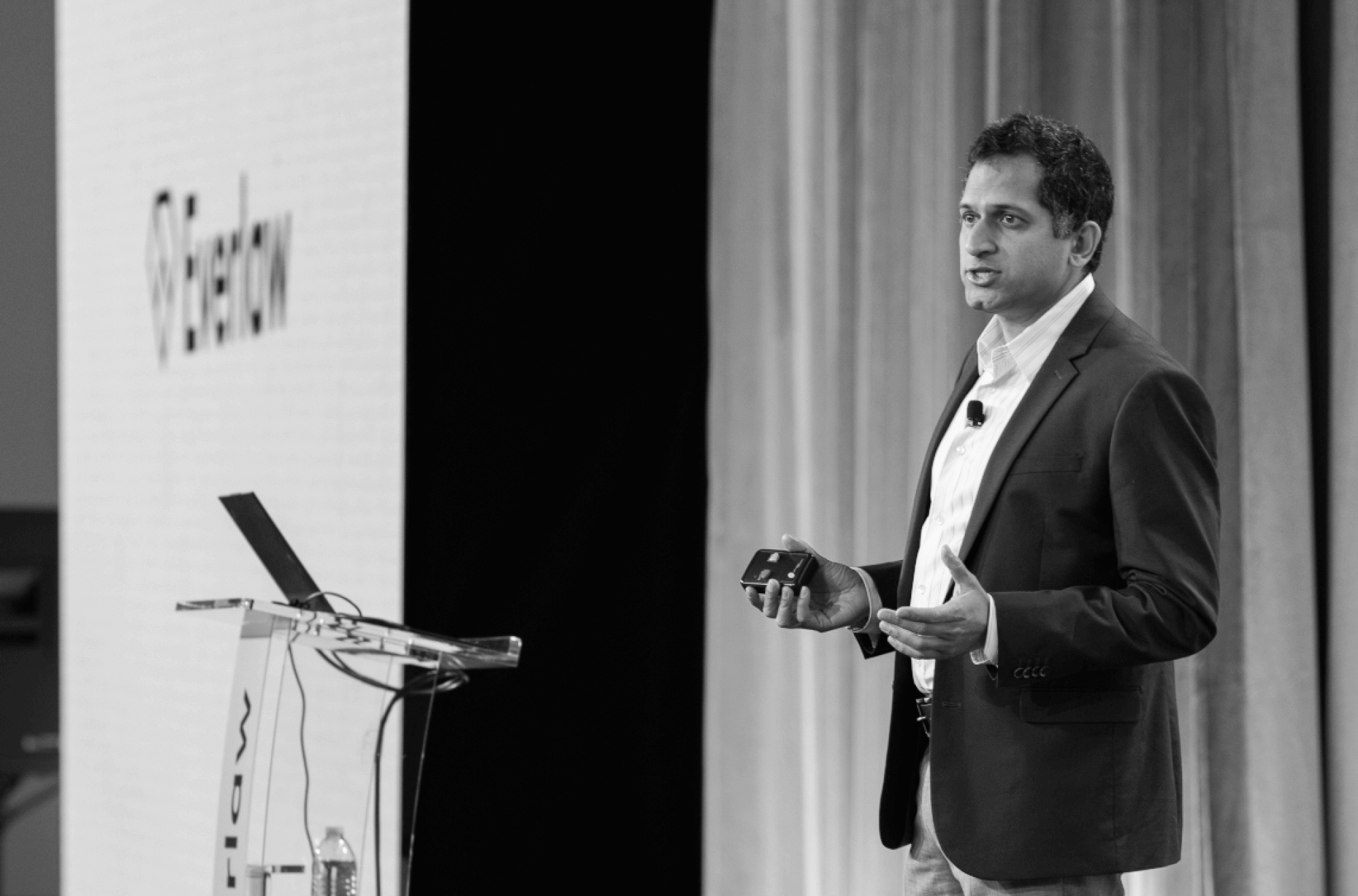
An answer that brings its paperwork
Generative AI gave him another version of the problem. A system can produce fluent language without giving its reader a dependable reason to believe it. For a product built around litigation evidence, that gap reaches directly into the work. A legal team needs a way to move from a statement back to the documents supporting it.
In June 2023, Shankar published Everlaw’s generative AI principles. They included user control, confidence in results, and transparency, privacy, and security. Among the specific commitments was an emphasis on citations to passages in the user’s evidence wherever possible. The resulting product would have to make verification part of the experience.
The company introduced its generative AI assistant in beta that July, putting summarization and writing help into existing legal tasks. Later came Deep Dive, which lets users ask questions across document collections and receive answers linked to supporting material. The progression matters because the user’s question grows larger while the requirement to check the answer remains.
In March 2026, Everlaw reported that more than 30 million documents resided in Deep Dive databases. That is a measure of the collections using the feature, rather than a promise that every question has a simple answer. The point of the product is to let people begin exploring the facts across a large record earlier in their work.
By August, Shankar was explaining a broader role for Everlaw as the evidence layer beneath other legal AI tools. Integrations with Google, Microsoft, Harvey, and Thomson Reuters reflected a willingness to let the customer’s work happen in several places. His ambition was to keep the evidence, analytical capabilities, and permissions available across those environments.
A ChatGPT Enterprise plugin followed in September. It extended that idea to another interface, allowing legal teams to query case materials while retaining Everlaw’s access permissions. The strategy asks a founder to think beyond the boundaries of his own application. The connection to the record becomes something other tools can use.
The long game, close to campus
The question of who gets to use the technology has also become part of the company’s work. Everlaw for Good began in 2017. By March 2026, the company said the program had supplied more than $6 million in donated technology. In the preceding fiscal year, it supported more than 675 active cases across 235 organizations, including nonprofit and investigative work.
Shankar’s public persona leaves room for smaller preferences. He keeps lists. His favorite Pixar film, when asked in a 2022 community discussion, was The Incredibles. He has spoken appreciatively of Iain M. Banks’s Culture novels and their view of humans living with technology. The interests are specific, and refreshingly free of a five-step leadership method.
In a March 2026 conversation at Everlaw’s Oakland headquarters, he described his commitment to the long game and said his fundraising decks had never included an exit slide. He had stayed close to Berkeley since arriving for graduate school. The work had changed size around him. The original attraction, a difficult problem with consequences for other people, remained substantial enough to keep him there.
Follow the questions
Read Shankar’s essays, visit Everlaw or his personal site, and find him on LinkedIn and X.
Watch the 2026 LawNext conversation ↗
Read his fundraising account ↗
Read his argument about software deadlines ↗