Samir Raiyani
He spent twenty years reading patents. Now he is teaching machines to write them - and insisting the lawyer keeps the pen.
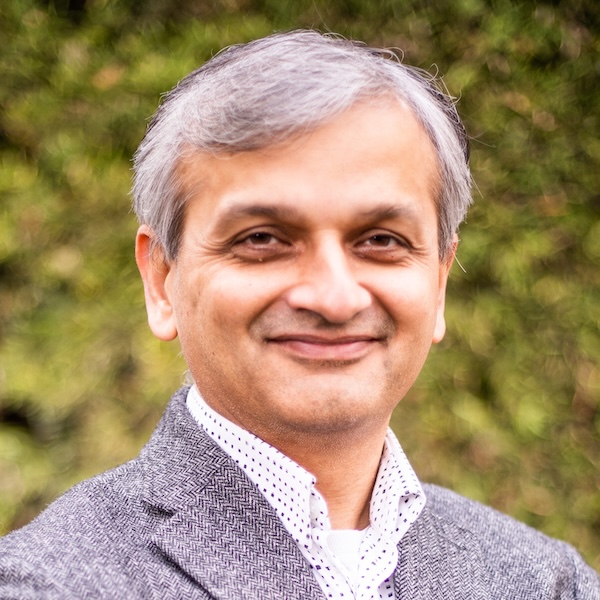
The face of patent automation. Raiyani has built two companies around the same quiet obsession - the patent - first by analyzing them at scale, then by writing them with AI.
The slowest corner of law, rewired
Patent drafting is a strange kind of craft. It is part engineering, part legal argument, part defensive paranoia about every word a competitor might one day exploit. It is also slow, manual and expensive. Samir Raiyani decided that was a software problem.
IP Author, the Fremont company he founded in 2023 and runs as CEO, is a generative-AI platform built for the people who live inside that craft: patent attorneys, in-house counsel and corporate IP teams. It drafts patent applications, generates responses to office actions, runs prior-art searches and builds evidence-of-use charts - the unglamorous, high-stakes work that fills a patent professional's week.
The pitch is deliberately un-flashy. IP Author does not promise to replace the attorney. It promises to make the attorney faster. Customers report cutting drafting time by 40 to 60 percent while keeping the legal rigor intact, and more than a thousand patent professionals across the US, Europe and Asia now work inside it.
In November 2025, the company raised new funding from eLab Ventures and Illuminate Ventures - fuel to grow its research and engineering teams and push deeper into the US and European markets. Under the hood sits a thoroughly modern AI stack: large language models orchestrated with LangGraph and LangChain, vector search across Pinecone, Weaviate and Faiss. Unusual plumbing for a tool whose users wear suits to depositions.
This funding helps us move faster toward our goal of making patent drafting and prosecution faster, easier, and more reliable through AI that enhances attorney productivity.
Six jobs nobody loves, handed to the machine
Application drafting
Turn invention disclosures into full patent applications, claims and figures - with the attorney editing, not starting from a blank page.
Office action responses
Generate first-draft responses to examiner rejections, the back-and-forth that can drag a patent out for years.
Prior art search
An integrated engine to surface the references that can make or break a claim before it is filed.
Evidence of use
The EoU Assistant maps a granted claim onto a competitor's product - the read-on detection that licensing fights are built on.
Classification & intake
Invention management and patent classification to keep a growing portfolio from turning into chaos.
Collaboration workspace
A shared space carrying an idea from invention disclosure all the way through final filing.
Drafting time, before and after
Customers report IP Author trims 40 to 60 percent off the hours a patent application normally swallows. A rough picture of how that lands across the workflow:
Figures reflect customer-reported drafting-time reductions; exact gains vary by matter and team.
An inventor who builds tools for inventors
Before he built software for patent lawyers, Raiyani was on the other side of the desk. A part of his PhD research was granted a patent - on software-defined-network based multi-radio-access technology. Networking, not legal tech. He is, in the most literal sense, a customer of the system he is now trying to fix.
The path ran through serious rooms. An undergraduate degree in electronics and communication engineering from L.D. College of Engineering, class of 1992 to 1996. A master's in computer science from Stanford. A stint as Director at SAP Research in Palo Alto, where one of his projects was a web-service architecture for monitoring fire-truck missions in real time - enterprise software with sirens attached.
He founded MediSpark, a healthcare startup later acquired by iScribe. Then, in 2007, came Dolcera: a knowledge-services firm that grew into one of the largest patent-analytics shops in the world, with Fortune 500 clients across high tech, consumer goods, medical devices and finance. For years, Dolcera's business was reading patents - millions of them - and telling clients what they meant.
IP Author is the logical next move, and the mirror image. Dolcera analyzed patents that already existed. IP Author writes the ones that do not yet. Same obsession, opposite direction. Along the way Raiyani has put his own name on more than a dozen patent applications in software engineering and business methods, which means he reads claim charts the way some people read box scores.
The receipts
Co-pilot, not replacement
In a field drowning in AI hype, Raiyani's stance is almost contrarian: the machine assists, the attorney decides.
It is an easy thing to say and a hard thing to mean. Patent work is adversarial and permanent - a sloppy claim can sink a portfolio worth millions, and an examiner remembers everything. So IP Author is built around augmentation: human-centered AI that drafts, suggests and searches, then hands the judgment back to the person whose license is on the line.
That positioning is also a bet about who buys. Law firms and corporate IP departments are not early adopters by temperament. They want speed without surrendering control, and Raiyani has spent two decades learning exactly what that audience will and will not tolerate. The pitch is not "fire your associates." It is "let them spend their hours on the parts that need a human."
Whether AI can truly draft a defensible patent claim is still an open question the whole industry is arguing about. Raiyani's wager is that the honest answer - not yet, alone, but soon, together - is the one that wins the customers who matter most.
Five things that stick
He built the same thing twice from opposite ends - Dolcera analyzed patents, IP Author writes them.
His own granted patent is on networking technology. He is an inventor first, a legaltech founder second.
A tool for patent lawyers runs on LangGraph, LangChain and vector databases - Pinecone, Weaviate, Faiss.
At SAP Research he once built software to track fire-truck missions in real time.
More than a dozen patent applications carry his name across software engineering and business methods.
His teams have spanned the US, Europe and Asia - patent work, it turns out, is borderless.