In Omaha, the emergency begins with a telephone. Air Methods’ national dispatch center brings together AirCom and Direct Patient Logistics, the people who arrange movement before anyone hears a rotor. At its May 2025 opening celebration, the company described 225 teammates, backup power at every workstation, and redundant networks. The helicopter gets the photograph. The power supply gets a patient closer to a hospital when the lights go out.
- Air Methods connects patients with critical care through aircraft, clinicians, and dispatch.
- Its 2023 restructuring removed about $1.7 billion of debt while operations continued.
- A 2026 Texas county agreement tackles another distance: the one between treatment and affordability.
That is the useful way into this company. Air Methods sells something more complicated than speed: the ability to keep a medical journey working across several handoffs. Its customers include hospitals and emergency services. Its patients include people whose nearest suitable treatment is inconveniently far from where something has gone wrong.
One helicopter. Then the rest of the system.
Roy Morgan founded Air Methods in Colorado in 1980 with one helicopter and one hospital contract. The company’s account says a personal experience persuaded him that medical helicopters needed appropriate equipment and staffing. The distinction mattered. Owning a machine that flies and delivering care inside it are different undertakings.
The acquisition of Mercy Air in 1997 brought competencies in dispatch, billing, medical staffing, and marketing. Community-based operations began that year too. The company was collecting the less photogenic pieces of healthcare alongside aircraft. Today, United Rotorcraft, its products division, designs and manufactures aeromedical and aerospace technology. Even the cabin belongs in the story.
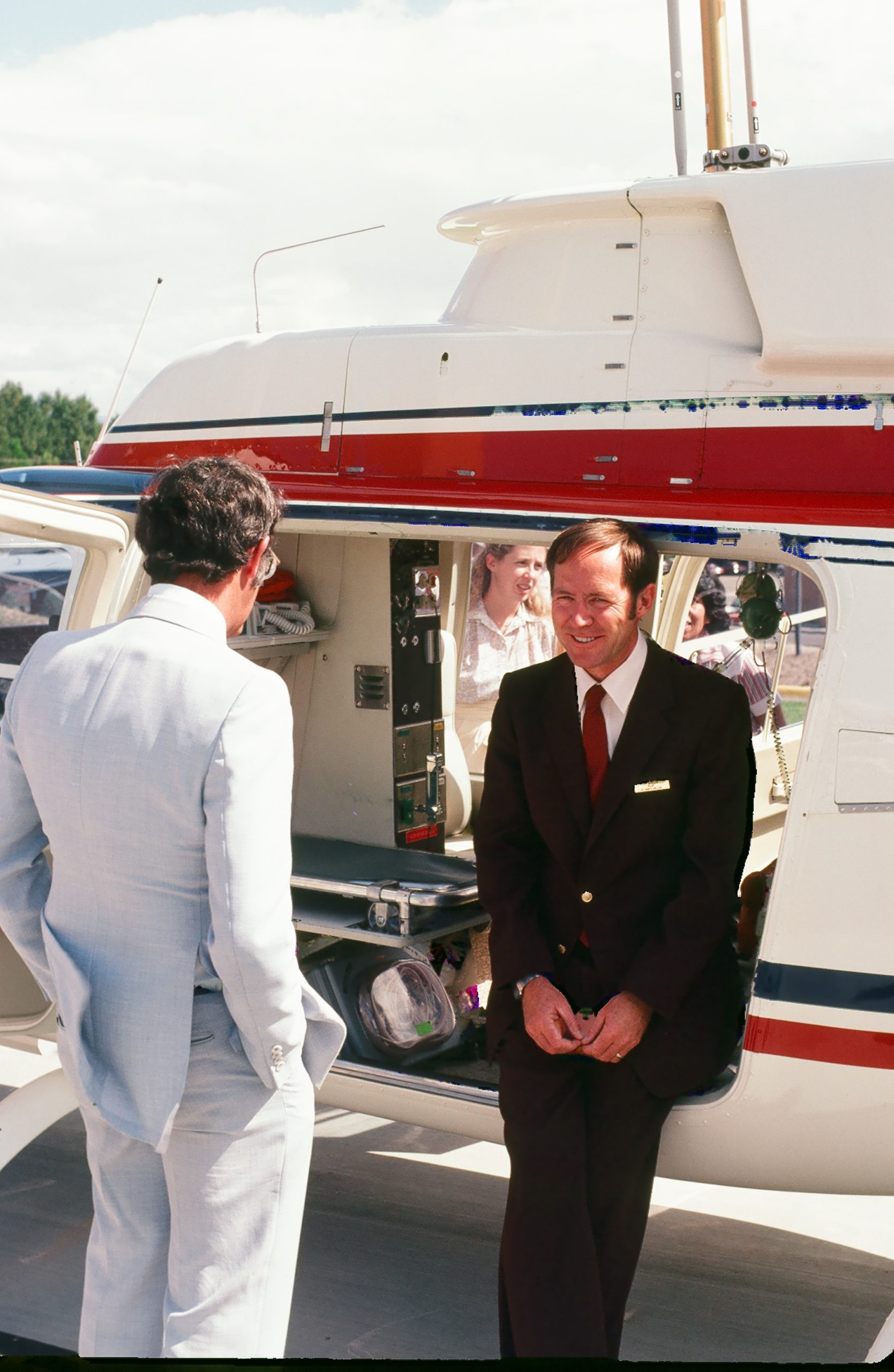
For a hospital, the arrangement can mean aviation expertise without building the entire flying operation itself. For a rural community, a nearby base connects local emergency care to more specialized facilities. Patients generally meet the service through medical professionals: Air Methods says emergency deployments begin with a physician or first responder’s request.
The cabin is a workplace
Consider the partnership announced with Covenant Health in April 2026. Two East Tennessee bases were planned, each with an Airbus H135. Air Methods would supply pilots and mechanics; Covenant would supply clinicians. The announced equipment included infant transport pods, cardiac support devices, and whole blood. Responsibilities were divided around a shared patient journey.
The business therefore spans transport reimbursements, healthcare partnerships, and supporting services. It also sells education through Ascend, with online review courses and in-person readiness programs. A hospital can need an aircraft operation; an ambulance service can need training. Both fit the company’s accumulated expertise.
- 01Medical request
- 02Dispatch + safety assessment
- 03Clinical transport
- 04Receiving care
Weather can change the route. Coordination must continue.
The scale is substantial, but its measures need dates. The 2026 corporate fact sheet lists more than 450 helicopters and fixed-wing aircraft, more than 250 bases serving 46 states, and over 475,000 clinical training hours annually. Those are company-reported figures. Training hours describe preparation, not a guaranteed outcome; the distinction is essential when the product is care delivered under pressure.
Alternatives include Air Evac Lifeteam, PHI Health, Metro Aviation, and regional hospital programs. Air Methods’ distinctive proposition is the combination: a national operating network, clinical education, patient logistics, and aircraft interiors. That combination matters most to organizations buying several capabilities together. An aircraft count alone tells a hospital very little about how a transfer will work.
Readiness has a balance sheet
The machinery of care has to be financed. American Securities acquired Air Methods in 2017 in a transaction valued at approximately $2.5 billion, including net debt. By October 2023, the company was seeking Chapter 11 protection. Reuters reported roughly $2.24 billion in debt, with higher interest rates, labor costs, and changes to surprise-billing rules weighing on the business.
Those pressures help explain what failed financially. They do not establish that patient demand disappeared. The company continued operating during its court-supervised restructuring. When it emerged on December 28, ownership passed to lenders and noteholders, debt fell by approximately $1.7 billion, and certain new owners were investing approximately $185 million.
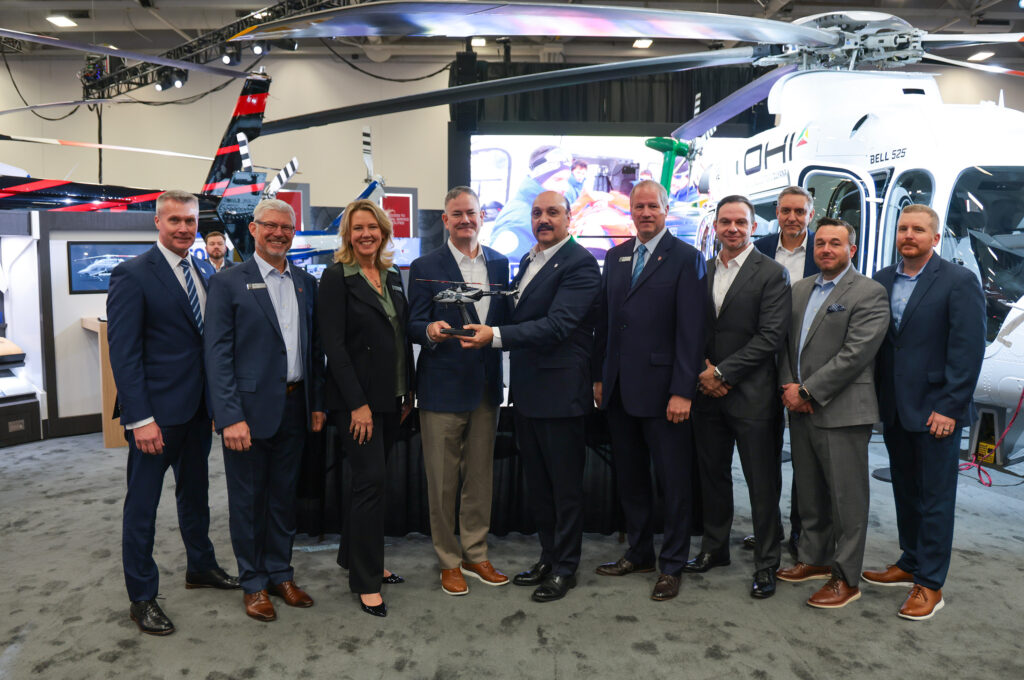
The public record gives us a change in ownership and financing, rather than a private moment of managerial revelation. Management’s stated priorities after the reset included new bases, frontline staffing, and more insurance-network agreements. Rob Hamilton became CEO in 2025. That March, Air Methods announced agreements for nearly 50 additional aircraft from Bell and Airbus.
The bill gets its own flight plan
In October 2026, Air Methods announced a one-year agreement with Caldwell County, Texas, covering approximately 55,150 residents. Under the announced arrangement, residents would face no out-of-pocket costs for covered emergency transport through the partnership, whether insured or uninsured. Air Methods would work with insurers; the county would cover remaining cost-sharing, subject to an agreed cap.
The qualification matters. Someone pays for readiness even when the patient does not receive that part of the bill. The county agreement is a financing arrangement with boundaries, rather than proof that flying has become inexpensive. It offers other communities a concrete idea to examine: negotiate payment responsibilities before an emergency, while everyone has time to read.
The useful skill is knowing when to stay down
Air Methods says its safety programs received more than $100 million over the decade described on its safety page. Its declared aim is plain: “Everybody comes home.” Simulator training and a structured safety-management system make that aim operational. Weather can still prevent a flight; the company describes coordinating ground transport when necessary.
“Everybody comes home.”Air Methods’ stated safety priority
There is a lesson here for anyone running a service with consequential handoffs. Build the coordination, rehearse difficult decisions, and give people permission to stop. Aircraft cannot erase unsafe weather, unsuitable landing conditions, or the need to choose an appropriate receiving facility. The value of this network lies in making those decisions work together, including the decision that today’s patient should travel by road.