The first assignment was a bug fix. Or rather, a handful of bugs and small changes: the sort of work that rarely makes it into a software company’s grand account of itself. Greenpeace Austria needed help. Agiliway did the work. Then came a larger assignment, a SQL task manager extension that Greenpeace’s software development head, Marco Häfner, would describe as the “heart of our fundraising.”
- Custom engineering for businesses and nonprofits, from a missing specialist to a product team.
- CiviMobile puts nonprofit contacts and event tasks on a phone.
- The practical lesson: test a partner on a real, bounded problem before expanding the brief.
That progression is more interesting than a list of programming languages. A supplier is admitted through a small door, learns how an organization works, and eventually helps maintain something consequential. The buyer gets evidence before making a bigger commitment. The supplier earns a better assignment. There is a business model tucked inside that unremarkable sequence.
Buy the missing piece
Founded in 2015 by outsourcing veterans, Agiliway builds software for other organizations. Its work spans applications, testing, data, cloud infrastructure, and increasingly AI. Sergiy Korniyenko, Bohdan Dmytryshyn, and Mark Koelsch are identified in public company profiles as its co-founders. The original premise was to offer experienced engineering with fewer of the cumbersome processes the founders had encountered in larger outsourcing businesses.
Consider T-Pro, the Irish clinical documentation company. It wanted a Windows application that would let clinicians dictate into the software already on their computers. Its technology chief, John Paul Hayes, says the missing ingredient was in-house .NET expertise. Agiliway supplied developers, testers, and project management. The task was specific: make speech useful inside an existing working environment.
Omilia’s experience supplies a useful price check. In a May 2020 Clutch review, its executive reported roughly $1.2 million in development spending and another $150,000 for transcription. The work included engineering staff and native speakers preparing audio transcripts for speech-recognition models. These are figures for one relationship, reported by the customer. They show how quickly a seemingly simple outsourcing decision can encompass several kinds of labor.
Agiliway describes tailored commercial arrangements based on team structure, duration, workload, and project scope. Its place in the market is between hiring every specialist yourself and commissioning an outside team to build and support a system. The comparison that matters is the capability your product needs, the management time you can supply, and the total cost of keeping it running.
A database with somewhere to go
Agiliway also has a product of its own. Presented in May 2018, CiviMobile connects the nonprofit platform CiviCRM to a native mobile application. Contacts, activities, cases, and events become available on a phone. Event workers can register attendees, check people in, and scan tickets. A fundraiser can consult a contact record away from the office.
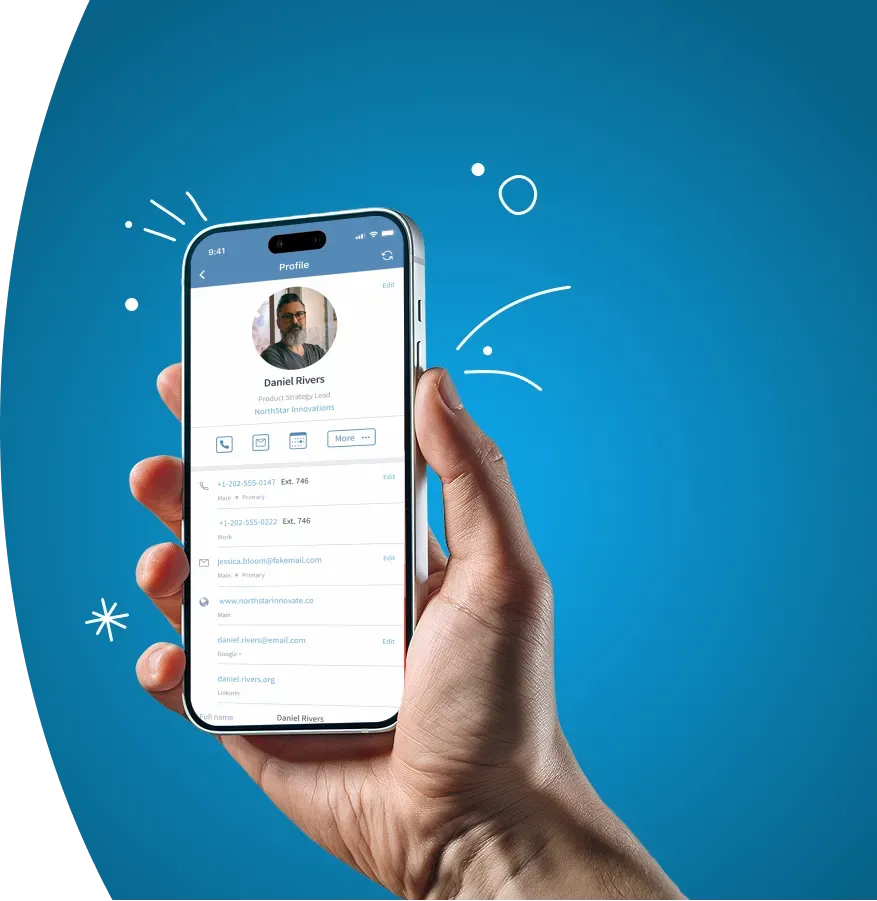
The distinction sounds modest until you picture the user. A volunteer at an event entrance does not need a lecture about digital transformation. They need the right record while a person is standing in front of them. A mobile interface changes where an existing system can be useful. That is a smaller claim than reinventing nonprofit work, and a much easier one to understand.
There is a dependency: CiviMobile needs a CiviCRM installation with the corresponding server-side API extension. It also offers branded versions for organizations that want their own identity on the app. The product gives Agiliway a concrete connection to nonprofit operations, alongside its paid implementation work.
The map changed in a hurry
Outsourcing also involves geography. In March 2022, Agiliway announced a Krakow development center. The explanation was unusually specific. Planning had begun the previous autumn, driven by rising salaries and competition in Ukraine’s software market, plus the desire to increase capacity and serve more European clients. Poland’s proximity to Lviv helped determine the destination.
Russia’s attacks on Ukraine accelerated the opening. An expansion conceived for commercial reasons acquired immediate significance for continuity. Keeping that sequence straight matters: the plan predated the invasion, while the timetable changed because of it. Today, Agiliway lists delivery locations in Poland, Ukraine, and Argentina, with its headquarters in Austin.
The demo still needs a home
The same distinction between an initial idea and an operating system runs through its newer AI work. ClientSuccess says customer demands for a more secure, scalable implementation led it toward infrastructure such as AWS or Azure, with Agiliway helping on implementation and prompt engineering. A working demonstration can provoke requirements that were invisible when everyone was still admiring the demonstration.
“We started with a prototype that we threw away”Loren Larsen, Videra Health, in a company-published testimonial
Videra Health’s account supplies the sharper version: an early prototype was discarded before the team built the applications and deployed them on AWS. It is a customer recollection, not a diagnosis of what went wrong. But it captures a familiar expense in software: discovering a promising direction does not make the first implementation suitable for production.
Agiliway now describes AI use agreed with clients and reviewed by humans. It displays quality, information-security, and AI-management certifications. In September 2026, it also announced Google Professional Cloud Architect expertise. For a buyer, these are useful starting points for questions about review, access, deployment, and accountability.
Start smaller than your ambition
The transferable idea is the Greenpeace sequence: choose a contained problem, watch the team solve it, and expand responsibility as evidence accumulates. This requires someone inside the customer organization who can set priorities and judge the result. Integration, data access, and maintenance still need owners. When existing software already solves the problem adequately, custom development may buy complexity you never needed. Agiliway’s most persuasive introduction remains the small assignment that earns the next one.