One hundred robots, one object shaped like an H, and a basic assignment: move it. Adrian Cabrera De Luis was among the researchers behind a 2013 study of machines doing together what a single machine could not. The robots did not need a briefing on the object’s shape or a roll call of their colleagues. They needed a direction and enough collective force. For anyone who has tried to organize a meeting, this is an enviable arrangement.
The experiments belong to an earlier chapter of the Maestro Labs founder’s career, before AI email assistants and acquisition announcements. Yet they offer an interesting way into his story. A large task can become manageable when smaller actions line up. That resemblance is an observation about his career, rather than a claim that an inbox behaves like a laboratory swarm. Email, regrettably, has yet to learn to move in a straight line.
A light at the end of the experiment
His master’s project, dated August 17, 2012, concerned collective transport in large swarms of simple robots. It sat between Harvard’s Self-Organized Systems Research group and EPFL’s Laboratory of Intelligent Systems, with Radhika Nagpal and Dario Floreano as professors. Ants supplied the natural example: several individuals can carry something too awkward or heavy for one.
Cabrera’s project involved developing a light-seeking algorithm, tracking movement with a vision system, and designing objects to test. Those are wonderfully physical verbs for someone now selling software that helps with correspondence: develop, track, manufacture, test. The work required observing whether a proposed behavior survived contact with actual machines and actual objects.
The subsequent conference paper, co-authored with Michael Rubenstein, Justin Werfel, Golnaz Habibi, James McLurkin and Nagpal, combined a mathematical model with experiments on two robot platforms. Its demonstrations included a moving object and a changing destination. Simplicity had to be earned through analysis and testing. Calling the individual robots simple did not make the collective problem easy.
An editorial map of the work, rather than a claim that all three systems operate alike.
Two million people, several time zones
By March 2018, Cabrera was a first-year MBA student at MIT Sloan and a co-founder of Alpaca. He described himself as Bolivian, Spanish and Swiss. The business organized Facebook communities, then focused on apartment rentals. Its origin was practical: friends running a rental website in Germany needed a less expensive way to connect supply and demand than continuously buying advertising.
In that interview, he reported two million group members and growth of 120,000 users a month. His team was remote, with co-founders in Germany and Chile. Scheduling across time zones was one of the difficulties he singled out. Even a business built around helping people connect had to find a convenient hour to talk.
He valued the entrepreneurship center’s willingness to share advice across different businesses. His own advice was more forceful: “Don’t ask for permission just go!” It is a useful glimpse of his public voice: direct, impatient to begin, and interested in the practical business of finding people who can help.
“Don’t ask for permission just go!”
Adrian Cabrera De Luis, 2018
The community gets a buyer
Alpaca eventually became part of another business. In a 2023 announcement, Cabrera celebrated its acquisition by Boom and expressed enthusiasm for Rob Whiting’s plans for the real estate industry. Whiting described Alpaca as a social-media platform reaching more than six million renters globally. That was the buyer’s description of its reach, rather than a count of paying subscribers.
The intended fit was distribution. Boom wanted to bring its rent-reporting product to more renters and develop ways to serve apartment owners and operators. A community that had started as a way around expensive advertising had become something another company wanted to acquire.
There is a useful distinction here between building a product and building access to people. A rental listing needs someone looking for a home. A service needs a route to its customers. Alpaca’s story puts that second problem in the foreground. For a founder moving into productivity software, the question of where people already gather would remain relevant.
Finding the customer inside the inbox
Maestro Labs brought him into email software. Public career records place the start of his MailMaestro CEO and co-founder role in January 2023. His education includes microengineering at EPFL, a Harvard visiting-scholar period and an MIT Sloan MBA completed in 2019. Engineering and business sit next to each other on the résumé, without either quite explaining the whole route.
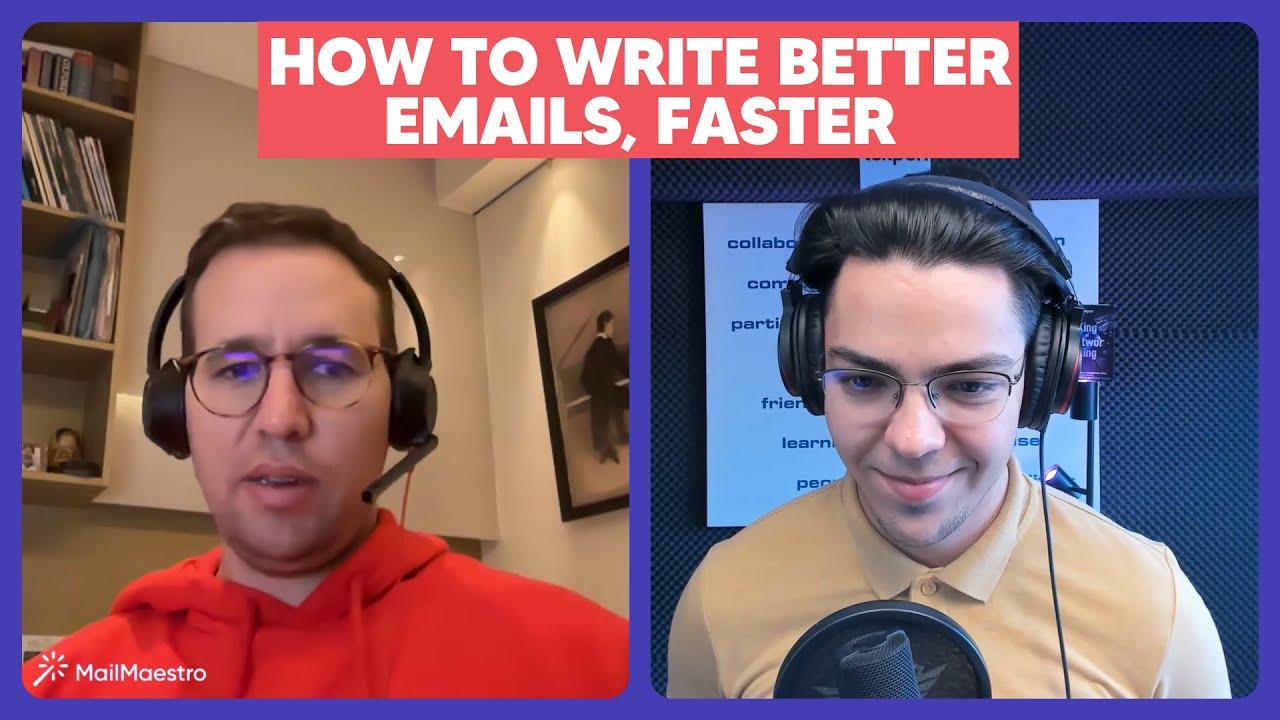
His July 2024 conversation with Cristian Dina makes the product choice more concrete. Cabrera discussed software inside Outlook and Gmail, helping people summarize threads and attachments, prepare replies and improve drafts. He also highlighted the usefulness of writing assistance for people communicating in a language that is not their first.
Distribution entered the conversation again. He described discovery through Microsoft’s app store and LinkedIn, alongside referrals. The location mattered: the software could meet people within a service they were already using. His advice to founders was to build and test an early product without waiting for perfection. The quick start was a way to learn whether anyone wanted it.
The surprisingly consequential edit
A September 2024 product announcement under Cabrera’s name dealt with a modest change: generated drafts would appear in the MailMaestro window. Users could compare a version, review it and try another prompt without moving back and forth between windows.
It is a small enough improvement to escape a grand presentation about the future of work. It also gets close to the actual experience of using an assistant. A first draft is rarely the end of an email. Someone still reads it, changes a phrase, decides the tone is wrong, or realizes the request was unclear. The space between generating words and approving them contains much of the work.
That feature supplies a quieter view of Cabrera’s business than the acquisition announcements. Saving a switch between windows will never sound as glamorous as inventing a new category. Repeat the switch throughout a working day, though, and the inconvenience becomes easier to appreciate. The product has to make sense at that scale of attention.
Buying a route into Gmail
In January 2025, Maestro Labs announced the acquisition of Flowrite’s email-writing business. Flowrite’s team would continue working on Flow AI, its language-model evaluation platform, while Maestro integrated the acquired business into MailMaestro. This was a transfer of a product business, with the original team continuing elsewhere.
The announcement framed the deal as an expansion into Gmail and international markets. It said a seed round had financed the transaction, with participation from a consortium including family offices and senior executives from several technology and investment firms. Individual executives’ participation should not be confused with an investment by their employers.
For Cabrera, who had already seen a community business bought for its reach, the other side of an acquisition table brought a familiar commercial question: how do you reach the next user? Flowrite offered an established email-writing business to integrate. The transaction enlarged the task from improving a tool to bringing another product’s users into its future.
- 2013Collective-transport paper presented at AAMAS
- 2023Alpaca acquisition announced; MailMaestro role begins
- 2025Maestro Labs acquires Flowrite’s email-writing business
A small team’s argument for AI
Cabrera has argued that AI can give smaller businesses access to tasks that once required hiring specialists, including website work and content production. The aspiration is greater capacity for small operators. It connects naturally to a company selling assistance with the routine work of communication: a smaller team needs ways to get through its workload.
In an August 2025 episode of EPFL AI Center’s Inside AI, he discussed his path through engineering, consulting and entrepreneurship with Marcel Salathé. The conversation’s description highlights his approach to financing, called “seed-strapping,” and his case for small teams using AI. It presents profitability and limited size as part of the discussion, rather than treating fundraising as the only measure of progress.
His public appearances also reach beyond product demonstrations. The Singapore Business Federation listed him on an AI Fact vs Fiction panel alongside GovTech’s Chang Sau Sheong. BCG has featured him discussing repetitive communication in customer-facing roles, and, with Sebastian Illing, the organizational context that AI agents need to be useful.
Even the email founder wants fewer messages
There is an agreeable complication in Cabrera’s public commentary. Someone building AI communication tools can also be irritated by automated outreach. He has complained about LinkedIn messages pitching outsourced development and lead generation. In another post, he described using MailMaestro’s automatic labels to move unwanted investment pitches out of his inbox.
That makes the standard for useful automation rather personal. Producing a message is easy to count. Receiving one creates work for somebody else. An assistant earns its place when it helps a person decide what deserves attention, or prepares something they were already trying to say. Otherwise, the machinery can simply deliver another interruption with excellent grammar.
Cabrera’s route gives this everyday problem an unusual backstory: laboratory robots, rental groups, a business sold, another business buying. The current object to move is the queue of communication between people and the rest of their work. The interesting test is what they can get on with once it moves.